
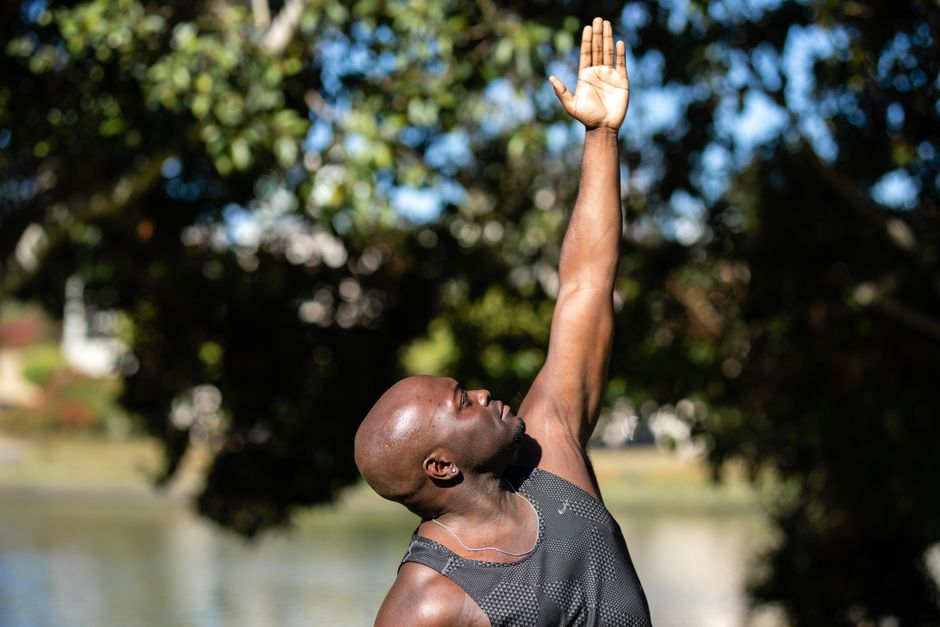
Self-actualisation is the drive to become everything you are capable of becoming. Psychologist Abraham Maslow placed it at the top of his famous hierarchy of needs, describing it as the ongoing process of realising your full potential rather than a finish line you cross. Reaching it involves meeting your basic needs first, then deliberately cultivating self-awareness, purpose, and growth over time.
Maslow did not view self-actualisation as a permanent state. He described it as a series of moments — choices, actions, and attitudes — that accumulate into a life of meaning. Research and clinical practice since then have added practical detail to that framework. What follows is an honest look at what the evidence supports, what remains unclear, and how to apply it.
What Is Self Actualisation, Really?
Maslow defined self-actualisation as the desire to become more and more of what one is, to become everything that one is capable of becoming. He studied people he considered self-actualising — including historical figures like Abraham Lincoln and Albert Einstein — and identified shared traits: realism, spontaneity, acceptance of self and others, deep relationships, and a strong sense of purpose.
An important clarification: Maslow did not claim self-actualising people were perfect. He noted they had flaws, anxieties, and moments of doubt. The difference was that they were engaged in meaningful growth, not that they had arrived at a state of permanent contentment.
Later research has questioned parts of Maslow’s hierarchy. The strict order — food and safety before belonging and esteem — does not always hold. Studies of people in hardship have shown that belonging and meaning can be pursued even when lower needs are unmet. The hierarchy remains useful as a general map, not a rigid law.
How To Reach Self Actualisation? Expert Tips
There is no single protocol for self-actualisation, and no clinical trial has confirmed a step-by-step method. What exists is a combination of psychological research, clinical observation, and Maslow’s own writing. The following approaches have the strongest support.
Know yourself honestly
Self-awareness is the foundation. This means observing your own thoughts, emotions, and behaviour without immediately judging or defending them. Practices like journaling, mindfulness, and structured reflection have been studied for decades. Research consistently shows that mindfulness-based practices can reduce rumination and increase emotional clarity, though effects on something as broad as self-actualisation are harder to measure.
Meet your basic needs first
Maslow’s original point stands: growth is difficult when survival needs are unmet. Chronic sleep deprivation, untreated illness, food insecurity, and unsafe living conditions all compete for the mental resources that growth requires. Addressing these is not selfish. It is a prerequisite.
Choose growth over safety again and again
Maslow described self-actualisation as a series of daily choices. Each time you choose a slightly uncomfortable growth action over comfortable stagnation, you reinforce the pattern. This is not about constant discomfort. It is about not letting fear make every decision.
Pursue purpose beyond yourself
Research on meaning and purpose suggests that people who feel their life contributes to something larger than themselves report higher life satisfaction. This can be family, community, work, faith, or creative output. The specific source appears to matter less than the sense of contribution.
Build deep relationships
Maslow identified deep, meaningful relationships as a hallmark of self-actualising people. Decades of research on social connection support this. Loneliness is associated with worse mental and physical health outcomes, while strong relationships are associated with better ones.
Why Basic Needs Come Before Growth
Maslow’s hierarchy is often drawn as a pyramid with five levels: physiological needs, safety, belonging, esteem, and self-actualisation. The idea is that lower needs generally take priority when unmet.
This does not mean you cannot grow while struggling. It means growth is harder. When you are worried about rent, sleep, or a health problem, the brain devotes resources to those concerns. Growth-oriented activity — reflection, creativity, learning — competes for the same limited attention.
Practical implication: if self-actualisation feels impossible right now, look at what is unmet. Sleep, financial stability, health, and safety are not distractions from growth. They are the ground it grows from.





What Self Actualisation Is Not
Self-actualisation is not the same as happiness. Maslow was explicit about this. Self-actualising people often experience more struggle, not less, because they engage deeply with problems that matter. They are not perpetually calm or content.
It is also not a destination. The term “self-actualised” can sound like a permanent badge. Maslow treated it as a direction, not an endpoint. People move toward it and away from it depending on circumstances.
And it is not about achievement alone. A person can accumulate accomplishments without ever feeling that their life expresses who they are. Self-actualisation is about congruence — the match between your values and how you actually live.
Common Myths About Self Actualisation
Several ideas circulate online that do not match the evidence or Maslow’s original writing.
- Myth: Self-actualisation is a solo journey. Maslow and later researchers emphasised relationships and community. Growth happens in connection, not isolation.
- Myth: You must “find your passion” first. Research on passion suggests it is often developed through engagement, not discovered fully formed. Waiting for clarity can delay action indefinitely.
- Myth: Self-actualisation requires extraordinary talent. Maslow studied exceptional people, but the process he described is available to anyone willing to grow.
- Myth: It happens after you fix yourself. Growth and healing tend to happen together, not in sequence.
When to Seek Professional Support
Self-actualisation work assumes a baseline of mental health. If you are experiencing persistent low mood, anxiety, trauma symptoms, or thoughts of self-harm, those need clinical attention first. A therapist or physician can help address these directly.
Some clinicians use Maslow’s framework as a lens for understanding client goals, but it is not a diagnostic tool or a treatment protocol. If a coach or program promises self-actualisation as a guaranteed outcome, treat that claim with caution. No clinical evidence currently confirms that any program reliably produces it.
Frequently Asked Questions
Can anyone reach self-actualisation?
Maslow believed the potential exists in everyone, though he estimated only a small fraction of people fully realise it. The process is available to anyone, but unmet basic needs, trauma, and mental health conditions can make it much harder.
How long does it take to become self-actualised?
There is no timeline, and Maslow did not treat it as a state you finish reaching. It is better understood as an ongoing direction of growth rather than a goal with a completion date.
Is self-actualisation the same as happiness?
No. Maslow explicitly distinguished the two. Self-actualising people often engage more deeply with difficult problems and may experience more struggle, not less, than those focused primarily on comfort.
Do I need therapy to reach self-actualisation?
Not necessarily, but therapy can help if unresolved mental health issues are blocking growth. Self-actualisation is not a clinical treatment, and no therapy protocol is specifically designed to produce it.
