
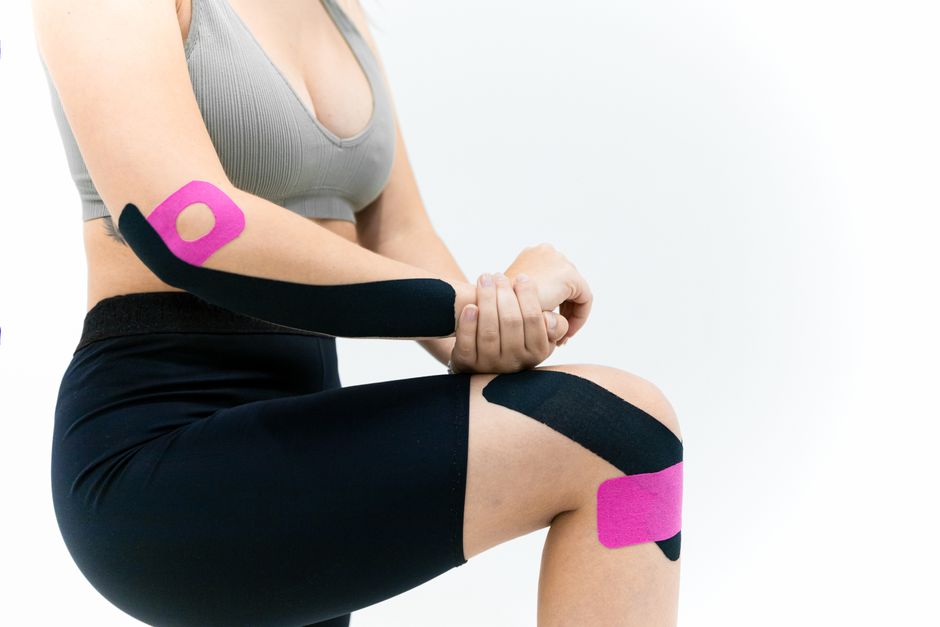
Kinesio tape is a thin, elastic cotton tape that some people use to support muscles and joints. To put it on your knee, you clean the skin, cut the tape into a Y-shape or I-strips, and apply it with the knee slightly bent. The ends of the tape go on without stretch, while the middle section can be stretched 25% to 50% depending on your goal. Rub the tape gently to activate the adhesive. You can leave it on for 3 to 5 days.
What is kinesio tape and how does it work?
Kinesio tape was developed in the 1970s by Dr. Kenzo Kase. It is designed to mimic the elasticity of human skin. When applied correctly, the tape lifts the top layer of skin away from the tissue underneath. This lifting creates a small space that may improve circulation and reduce pressure on pain receptors.
The tape also provides sensory feedback to your brain. This can change how you move your knee, which may help with coordination and muscle activation. However, the evidence for pain relief is not strong. Some studies show modest benefits for swelling and proprioception (your sense of joint position). Others find no difference compared to sham taping.
What do you need before taping?
You need three things: kinesio tape, scissors, and clean skin. Kinesio tape comes in rolls of various widths. For the knee, a 2-inch wide roll is standard. Scissors that cut cleanly are important because ragged edges make the tape peel off faster.
Do not apply lotion, oil, or cream to your knee before taping. The adhesive works best on dry, oil-free skin.
How to prepare the knee for taping
Start with clean, dry skin. If your knee has thick hair, shave the area a day before. Shaving right before taping can irritate skin and cause itching. Position your knee in a slightly bent position — about 30 degrees of flexion. You can sit on a chair with your foot flat on the floor, or prop your heel on a stool.
Round the corners of each tape strip with scissors. Sharp corners catch on clothing and peel off early.





How to apply kinesio tape for knee pain
There are several common taping patterns. Choose the one that matches your reason for taping.
- For general support around the kneecap: Cut a Y-strip about 8 inches long. Cut from the middle of the tape to one end, creating a fork. Anchor the base (uncut end) below the kneecap without stretching. Then, with 25% to 50% stretch, wrap the two tails around each side of the kneecap, crossing above it. End the tails without stretch.
- For swelling (edema): Use a fan cut. Cut a long strip and make several slits from one end to create a fan shape. Anchor the solid end above the swelling. Apply the fan tails with no stretch over the swollen area. This pattern is meant to lift skin and encourage fluid drainage.
- For quadriceps or hamstring support: Use an I-strip (a single straight strip). Measure from the muscle belly to below or above the knee. Apply the anchor at one end with no stretch. Stretch the middle section 25% to 50% and lay it along the muscle. End with no stretch.
Always apply the tape along the muscle or joint line, not across it randomly. Rub the tape firmly with your hand for 10 seconds after application. The heat activates the adhesive.
How tight should kinesio tape be?
Kinesio tape is not meant to restrict movement. It should not feel tight or painful. The correct tension is light — enough to wrinkle the skin slightly when you move. If the tape pulls your skin painfully or limits your range of motion, you have stretched it too much.
Most patterns use 0% stretch at the ends (the anchors) and 25% to 50% stretch over the target area. Some specific techniques use 75% to 100% stretch for mechanical correction, but those should only be done by a trained therapist. For home use, stay under 50% stretch.
How long can you wear kinesio tape on the knee?
Kinesio tape is water-resistant. You can shower and swim with it. Pat it dry with a towel afterward — do not rub. Most people can wear it for 3 to 5 days. The edges may start curling after a few days. Remove the tape if you develop itching, redness, or a rash.
To remove the tape, soak it in baby oil or adhesive remover, then pull it off slowly in the direction of hair growth. Ripping it off quickly can damage your skin.
Does kinesio tape actually work for knee pain?
The evidence is mixed. Some research suggests kinesio tape can improve proprioception and reduce swelling in the short term. However, large reviews have not found consistent reductions in pain compared to placebo or no tape. The effect, if any, is small and may not be clinically meaningful for everyone.
Kinesio tape is not a treatment for structural knee problems like torn ligaments or advanced arthritis. It may provide temporary symptom relief, but it does not replace strengthening, stretching, or medical care.
What are the risks and when to avoid taping?
Kinesio tape is generally safe for most people. Do not apply it over open wounds, rashes, sunburn, or active infections. Avoid it if you have deep vein thrombosis, fragile skin, or a known allergy to acrylic adhesives. If you have diabetes or poor circulation, check with your doctor before using tape.
Sensations of tingling, numbness, or increased pain after taping mean the tape is too tight or placed wrong. Remove it immediately.
Common mistakes when applying kinesio tape to the knee
- Too much stretch at the ends. Anchors must be applied with no stretch, or the tape pulls at the skin and peels off quickly.
- Not cleaning the skin. Oils, lotion, or sweat prevent the adhesive from bonding.
- Not rounding corners. Sharp edges catch on clothing and lift.
- Applying over hair without shaving. This makes removal painful and can irritate hair follicles.
- Stretching the tape before the anchor touches skin. The anchor must be placed flat first, then you stretch the tape as you lay it down.
- Using too much tension. Tape should not feel restrictive or uncomfortable.
Frequently Asked Questions
Can you wear kinesio tape on your knee overnight?
Yes, you can sleep with kinesio tape on your knee. Make sure the tape is not too tight and does not cause discomfort.
Can you shower with kinesio tape?
Yes, kinesio tape is water-resistant. Pat it dry with a towel after showering; do not rub it.
Does kinesio tape help knee arthritis?
Some people report temporary symptom relief, but studies have not found strong evidence that it reduces arthritis pain. It may improve joint position sense.
How do you remove kinesio tape without pain?
Soak the tape in baby oil or adhesive remover for a few minutes, then pull it off slowly in the direction of hair growth.
