
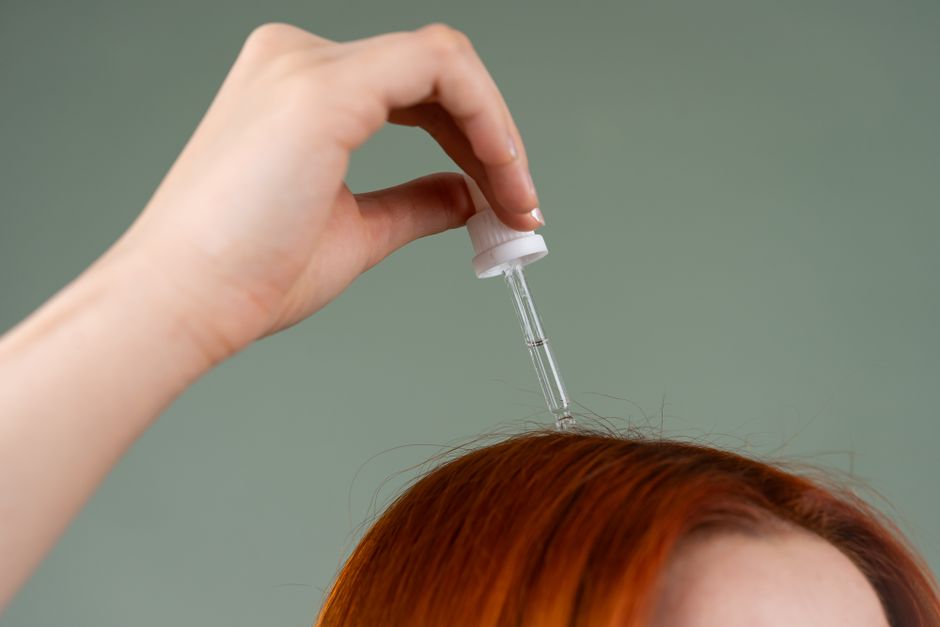
Castor oil is a thick, sticky oil pressed from castor beans. To put it in your hair, warm a small amount — about a teaspoon for short hair, up to a tablespoon for long hair — rub it between your palms, and work it through your scalp and strands with your fingertips. Let it sit for 30 minutes to overnight, then wash it out with shampoo. You may need to lather twice.
That is the basic method. The details are where people run into trouble — how much to use, how long to leave it, and who should probably skip it entirely. This guide walks through the process step by step and explains what castor oil can and cannot do for your hair.
What Is Castor Oil and Why Do People Put It in Their Hair?
Castor oil is a vegetable oil pressed from the seeds of the castor plant, Ricinus communis. Its main fatty acid is ricinoleic acid, which makes up roughly 85 to 90 percent of the oil. That unusually high concentration is what gives castor oil its thick, syrupy texture and sets it apart from lighter oils like jojoba or argan.
People use it on hair for a few reasons. It is an emollient, meaning it coats the hair shaft and can temporarily smooth the surface, which reduces friction and makes hair feel softer. It also slows water loss from the hair, so strands stay hydrated a little longer. And because it is so thick, many people use it as a sealant over lighter oils or leave-in conditioners.
What castor oil does not do is grow hair. There is no clinical evidence that applying castor oil increases hair growth rate, thickness, or density. Ricinoleic acid has been studied for its effects in other contexts, but the idea that it stimulates hair follicles is not supported by human trials. If you have thinning hair, castor oil is not a treatment. A dermatologist can evaluate the cause and discuss options that actually have evidence behind them.
How To Put Castor Oil In Hair? Step By Step
Here is the full process from start to finish.
- Step 1: Start with dry or damp hair. Dry hair works fine. Damp hair absorbs oil slightly more evenly, but either is acceptable. Do not apply to soaking wet hair — the oil will just sit on top.
- Step 2: Warm the oil. Pour your measured amount into a small bowl and set it in a cup of warm water for a minute or two. Warm oil spreads more easily. Do not microwave it directly — hot oil can burn your scalp.
- Step 3: Section your hair. Use a comb or your fingers to divide hair into four to six sections. This keeps the application even.
- Step 4: Apply to the scalp first. Dip your fingertips in the oil and massage it into your scalp using small circular motions. Focus on areas that feel dry or flaky.
- Step 5: Work through the strands. Pull the oil from your scalp down to the ends. If you have fine hair, use very little on the lengths — castor oil is heavy and can weigh hair down.
- Step 6: Comb through. A wide-tooth comb distributes the oil and removes tangles.
- Step 7: Cover and wait. Wrap your hair in a shower cap or old towel. Leave it on for at least 30 minutes. Overnight is common, but not required.
- Step 8: Wash it out. Shampoo as usual. You will likely need to lather twice to remove the oil completely.
How much oil you use matters. A teaspoon is enough for short hair or fine hair. Medium-length hair usually needs one to two teaspoons. Long or thick hair may need a tablespoon. Using more than that makes the oil harder to wash out and increases the chance of buildup.
How Often Should You Apply Castor Oil?
Once a week is a reasonable starting point for most people. Some apply it every two weeks. Others do it more often and find their hair gets greasy or weighed down.
There is no official recommended frequency. No clinical guidelines exist for castor oil use on hair, so any schedule you see online is based on personal experience rather than research. Start with once a week, see how your hair responds, and adjust. If your hair feels heavy, sticky, or limp after washing, you are using too much or leaving it on too long.
People with fine or thin hair often do better with less frequent use, or by applying castor oil only to the scalp and avoiding the lengths. Those with thick, coarse, or highly textured hair may tolerate more.





Can You Leave Castor Oil in Overnight?
Yes, overnight application is common. Cover your hair with a shower cap or a pillowcase you do not mind staining, and wash it out in the morning.
There is no evidence that leaving it on longer makes it more effective. A 30-minute application and an overnight application leave hair feeling similar for most people. The main difference is convenience and mess.
One practical caution: castor oil is sticky. If you sleep on it without covering your hair, it will transfer to your pillowcase and possibly your face. For people prone to acne, oil on the pillowcase can contribute to breakouts along the hairline and jaw.
Does Castor Oil Clog Pores or Cause Hair Loss?
Castor oil is considered comedogenic, meaning it can clog pores. On the scalp, that matters less than on the face, but it can be a problem for people who already have oily scalps or seborrheic dermatitis. A heavy oil layer can trap dead skin cells and oil, which may worsen flaking or itching in some people.
The claim that castor oil causes hair loss is not well supported. What does happen is that castor oil is very thick, and if you do not wash it out thoroughly, it can cause buildup that makes hair look flat and feel greasy. That is not hair loss — it is residue. If you notice more shedding after starting castor oil, the more likely explanation is that you are handling your hair more than usual during application and washing, which can pull out hairs that were already loose.
That said, some people do react to castor oil. If you develop redness, itching, or a rash on your scalp, stop using it. A patch test on your inner forearm 24 hours before your first full application is a reasonable precaution.
Who Should Avoid Castor Oil on Hair?
Castor oil is generally well tolerated when applied to the skin and hair. But there are situations where it is not the right choice.
- Seborrheic dermatitis or scalp psoriasis: Heavy oils can worsen flaking and irritation for some people. Ask a dermatologist before using.
- Active scalp infection or open sores: Do not apply oil to broken or infected skin.
- Fine, low-density hair: Castor oil is heavy and can make thin hair look flatter.
- Acne-prone skin: Oil transfer to the face may trigger breakouts.
- Allergy to castor beans: Rare, but possible. Do a patch test first.
One important note: castor oil sold for hair use is cosmetic grade. Do not use industrial castor oil or any product not labeled for cosmetic use. And never ingest castor oil as a hair treatment — oral castor oil is a laxative and can cause serious side effects, especially in large doses.
Castor Oil vs. Other Hair Oils
Castor oil is not the only option, and for many people it is not the best one. Here is how it compares to oils commonly used on hair.
| Oil | Texture | Common Use | Notes |
|---|---|---|---|
| Castor | Very thick, sticky | Scalp massage, sealing ends | Hard to wash out; can weigh hair down |
| Coconut | Medium, solid at cool temps | Pre-wash treatment, conditioning | Penetrates the hair shaft; may not suit all hair types |
| Jojoba | Light, liquid wax | Scalp and leave-in | Closest to human sebum; less buildup |
| Argan | Light | Finishing, frizz control | Absorbs quickly; expensive |
| Olive | Medium-heavy | Deep conditioning | Inexpensive; can be greasy |
If your goal is softer, smoother hair, lighter oils are often easier to work with. If you want a thick oil for scalp massage, castor oil works. There is no evidence that any of these oils grow hair.
Tips for Getting Castor Oil Out of Hair
Castor oil is notoriously difficult to remove. A few adjustments make it easier.
- Apply conditioner to dry, oiled hair before you get in the shower. Conditioner helps break up the oil.
- Use a sulfate shampoo if you do not have a sulfate sensitivity. Sulfates cut through oil more effectively than sulfate-free formulas.
- Lather, rinse, and repeat. One wash is often not enough.
- If residue remains, a small amount of dish soap on the scalp can help, but do not make this a habit — it strips hair.
If you consistently struggle to wash it out, you are probably using too much. Cut back to a teaspoon and see if that solves the problem.
Frequently Asked Questions
How long should I leave castor oil in my hair?
Thirty minutes is enough for most people, though many leave it on overnight. There is no evidence that longer application works better.
Can castor oil make my hair grow faster?
No. There is no clinical evidence that castor oil increases hair growth, thickness, or density in humans.
Is it okay to put castor oil on my scalp every day?
Daily use is not recommended because the oil is heavy and can cause buildup. Once a week is a more common starting point.
What if castor oil makes my hair feel greasy after washing?
You are likely using too much or not washing it out completely. Try a smaller amount and lather twice with shampoo.
