
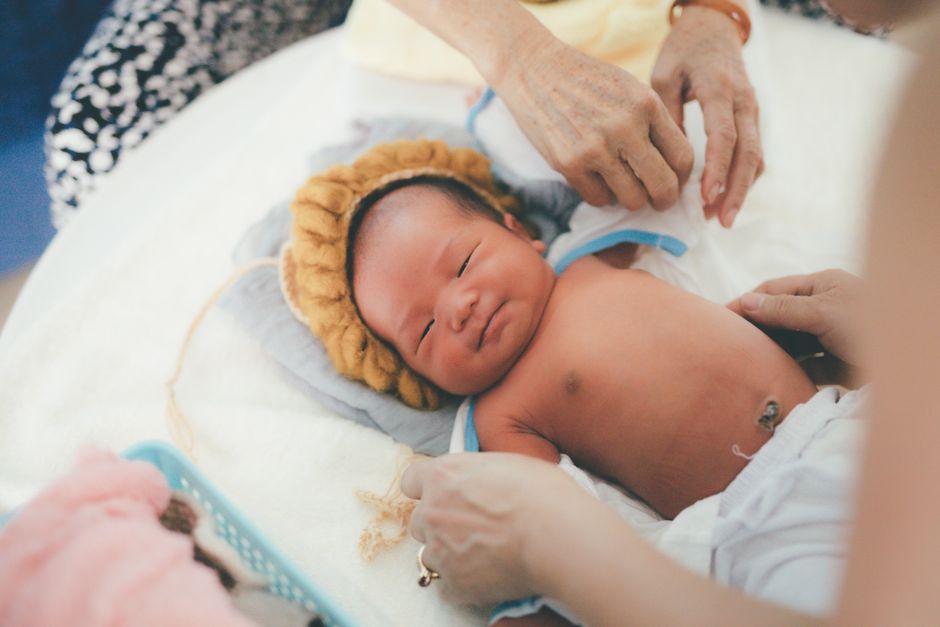
Putting a drowsy baby down for a nap is a skill that takes practice. The goal is to help your baby fall asleep independently in their safe sleep space, not to achieve a perfectly silent house. Most babies need help settling, and learning a consistent, calm routine is the most reliable path to successful naps.
What Is the Best Way to Put a Baby Down for a Nap?
The most effective approach is to put your baby down when they are drowsy but still awake. This teaches them to connect sleep cycles on their own, which is the foundation of longer, more restful naps.
Start by watching for sleep cues. These are signs like eye rubbing, yawning, or looking away from you. When you see these cues, act quickly. A baby who is overtired is much harder to settle.
Follow the same short routine before every nap. It does not need to be long. A simple pattern of diaper change, sleep sack, and a few minutes of rocking or singing signals to your baby that sleep is coming. Consistency is what matters most.
Why Does My Baby Fight Naps?
Babies fight naps for several common reasons. The most frequent cause is being overtired. When a baby misses their sleep window, their body produces stress hormones like cortisol, which makes it harder for them to fall asleep and stay asleep.
Another common reason is a mismatch between the baby’s natural sleep rhythm and the scheduled nap time. Babies have short sleep cycles, typically around 45 to 60 minutes. If a nap is timed poorly, the baby may not be biologically ready to sleep.
Developmental changes also play a role. Growth spurts, teething, or learning a new skill like rolling over can temporarily disrupt sleep. These phases usually pass in a few days.
How Do I Create a Safe Nap Environment?
A safe sleep environment is non-negotiable for every nap. The American Academy of Pediatrics recommends that babies always sleep on their backs, on a firm, flat surface, in their own sleep space.
This means the crib or bassinet should have only a fitted sheet. No blankets, pillows, bumper pads, stuffed animals, or crib bumpers. These items increase the risk of suffocation and sudden infant death syndrome (SIDS).
The room should be cool and well-ventilated. A temperature between 68 and 72 degrees Fahrenheit is generally comfortable for a sleeping baby dressed in a sleep sack. Overheating is a known risk factor for SIDS.
Use a firm mattress that fits snugly in the crib. You should not be able to fit more than two fingers between the mattress and the crib frame.





What Is the Difference Between a Sleep Routine and Sleep Training?
A sleep routine and sleep training are two different things, and both are useful.
A sleep routine is the set of calming activities you do before every nap or bedtime. It can include feeding, bathing, reading, or singing. The purpose is to signal to your baby that sleep is coming. It is a gentle, universally recommended practice.
Sleep training is a method for teaching a baby to fall asleep independently. It involves putting the baby down awake and allowing them to settle without your active help. Methods range from gradual approaches like the Ferber method, where you check in at increasing intervals, to extinction methods like “cry it out,” where you do not check in at all.
Sleep training is not recommended for newborns. Most experts suggest waiting until a baby is at least 4 to 6 months old. The evidence on the best method is mixed, and the right choice depends on your family’s values and your baby’s temperament.
Some parents never formally sleep train, and their babies learn to sleep independently on their own schedule. Both approaches can work.
How Long Should a Baby Nap?
Nap length depends heavily on age. Newborns sleep in short bursts and do not have a predictable nap schedule. As babies grow, their naps consolidate into longer, more predictable blocks.
| Age | Typical Nap Pattern |
|---|---|
| Newborn (0-3 months) | Several short naps, 30 minutes to 2 hours each, with no set schedule |
| 4-6 months | 3-4 naps per day, often 30-60 minutes each |
| 6-9 months | 2-3 naps per day, naps may lengthen to 1-2 hours |
| 9-12 months | 2 naps per day, often 1-2 hours each |
| 12-18 months | 2 naps transitioning to 1 midday nap |
These are general patterns, not strict rules. Some babies naturally take shorter naps, and that is often normal. A nap is considered restorative if the baby wakes up happy and alert, regardless of its length.
A single sleep cycle in a baby is about 45 to 60 minutes. Some babies wake at the end of a cycle and need help going back to sleep. Others connect cycles naturally and sleep for longer stretches.
Why Does My Baby Only Nap for 30 Minutes?
Short naps are extremely common in the first 6 months. A 30-minute nap often corresponds to exactly one sleep cycle. When a baby wakes at the end of a cycle, they may not know how to transition into the next one.
This is sometimes called the “catnap” phase. Many babies grow out of it naturally as their sleep cycles mature and they learn to connect them.
If your baby consistently wakes after 30 minutes but seems rested and happy, that nap may be sufficient for them. If they wake cranky and tired, they likely need help settling back to sleep. You can try patting them gently, offering a pacifier, or waiting a few minutes before going in to see if they resettle on their own.
Some research suggests that short naps are a normal part of infant sleep development, not a problem that needs fixing. Pressuring a baby to nap longer can create stress for both of you.
Should I Use a Pacifier for Naps?
Pacifiers are a well-supported tool for infant sleep. Research has shown that offering a pacifier at sleep time is associated with a reduced risk of SIDS. The exact reason is not fully understood, but the protective effect is consistent.
For naps, a pacifier can help a baby settle. If the pacifier falls out during sleep, you do not need to replace it unless the baby wakes and fusses.
Some parents worry about pacifier dependence. If you choose to use one, you can gradually phase it out later, usually between 6 and 12 months. The SIDS protection is strongest in the first 6 months, which is also the highest-risk period.
What If My Baby Cries When I Put Them Down?
Some crying when being put down is normal. Babies are wired to seek physical closeness, and being placed in a crib can feel like separation.
For a newborn, respond to crying promptly. Hold them, soothe them, and try again when they are calm. Newborns cannot self-soothe, and responding to their needs builds trust and security.
For an older baby, 4 months and up, you have more options. You can try a gradual approach where you put them down and pat or shush them until they are calm. You can also try picking them up when they cry and putting them back down when they settle. This is called the “pick up, put down” method.
If you are sleep training, some crying is expected. The goal is not to eliminate crying but to give your baby the space to learn a new skill. Crying during sleep training typically decreases over several nights.
Trust your instincts. If something feels wrong, check on your baby. A full-blown cry that escalates is different from a brief protest cry.
What Is the Ideal Wake Window Before a Nap?
A wake window is the time your baby is awake between sleeps. Getting this timing right makes a big difference in how easily your baby falls asleep.
Wake windows change quickly in the first year. A newborn may only tolerate 45 to 60 minutes of awake time. A 6-month-old might handle 2 to 3 hours. A 12-month-old often manages 3 to 4 hours.
These are general ranges, and individual babies vary. The best way to find your baby’s ideal wake window is to watch their sleep cues and track their patterns. If your baby is consistently hard to settle, they may be either undertired or overtired. Adjust the timing by 15-minute increments and observe the response.
Frequently Asked Questions
Should I put my baby down awake or asleep for a nap?
Putting your baby down drowsy but awake is the best way to teach independent sleep skills. This allows them to learn how to fall asleep without relying on being rocked or fed to sleep.
How long should I let my baby cry during nap time?
There is no single correct answer, and it depends on your chosen method and your baby’s age. If you are not formally sleep training, respond to your baby’s cries and soothe them as needed.
Is it okay to rock my baby to sleep for naps?
Yes, rocking is a normal and comforting way to help a baby fall asleep, especially in the first few months. Just be aware that if you always rock to sleep, your baby may need that same help to return to sleep when they wake between cycles.
When do babies drop to one nap a day?
Most babies transition from two naps to one nap between 12 and 18 months. The exact timing varies, and some babies make the change earlier or later.
