
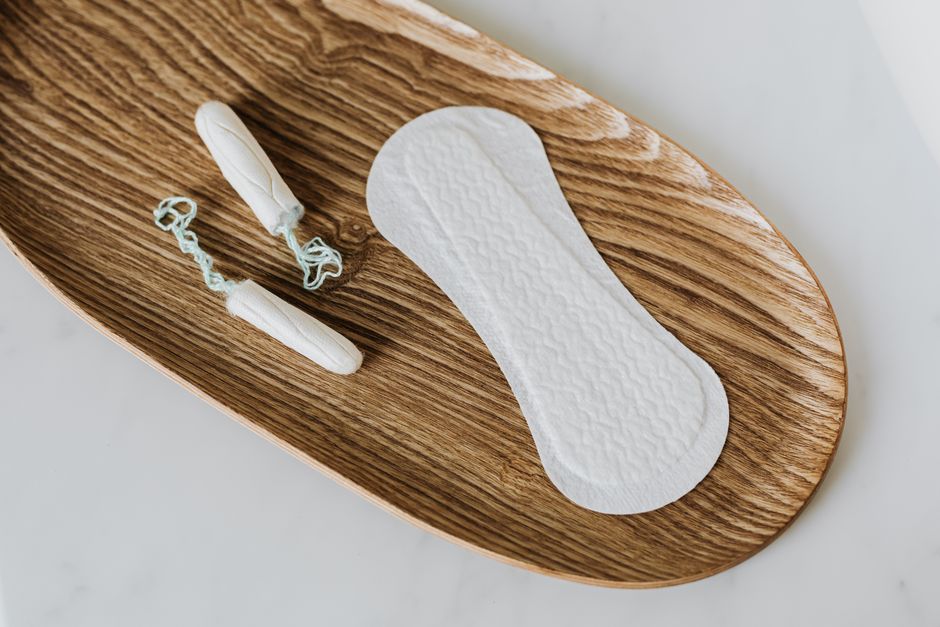
Putting in a tampon comes down to four moves: wash your hands, find a comfortable position, angle the applicator toward your lower back, and slide it in until your fingers touch your body. If it goes in without pain and you cannot feel it once it is in, you did it correctly. If it hurts or you feel it sitting there, it is not in far enough — and that is the single most common mistake.
This guide walks through the whole process in plain steps, including what to do when it does not work the first time. It also covers the safety information that matters, because tampon use carries one rare but serious risk that every user should know about.
What Do You Need Before You Start?
You need a tampon, clean hands, and about two minutes of privacy. That is the whole list.
Tampons come in absorbency levels, usually labeled light, regular, super, and super plus. Absorbency refers to how much fluid the tampon holds, not to how well it works. For most people on a lighter or medium flow day, regular is a reasonable starting point. Using the lowest absorbency that manages your flow for the length of time you wear it is the standard guidance from regulators and clinicians, and there is a real safety reason for that, which this article covers below.
Most tampons sold in the US come with either a plastic or cardboard applicator. Some are applicator-free and inserted with a finger. Both work. Applicator tampons tend to be easier for beginners because the applicator does the positioning for you.
You do not need to be relaxed in some special way. You do not need to time it to a particular day of your cycle. You do not need to be a certain age.
How To Put A Tampon In Real Life Example, Step By Step
Here is the sequence, start to finish.
Step 1: Wash your hands. Soap and water, then dry them. This is not a formality. Your hands are the main thing touching the tampon and the area around your vagina, and clean hands lower the chance of introducing bacteria.
Step 2: Get into a position that gives you access. Three positions work well. Sitting on the toilet with your knees apart is the most common and the easiest for most beginners. Standing with one foot up on the toilet seat or the edge of the tub also works. Squatting works too. Try one; if it feels awkward, try another. There is no correct position, only the one where you can reach comfortably.
Step 3: Find the opening. The vaginal opening sits between the urethra (where urine comes out) and the anus. If you are unsure, use a hand mirror the first time. There is nothing unusual about needing to look.
Step 4: Hold the applicator correctly. On a standard applicator tampon, the outer tube holds the tampon and the inner tube is the plunger. Grip the outer tube with your thumb and middle finger, near the middle. Rest your index finger on the end of the inner tube, ready to push.
Step 5: Angle it toward your lower back, not straight up. This is the part most people get wrong. The vagina does not run vertically. It angles toward the tailbone. Aiming the applicator up and slightly back, at roughly a 45-degree angle from the standing position, follows the natural path. If you aim straight up, you will hit the vaginal wall and it will hurt.
Step 6: Slide the outer tube in until your fingers touch your body. Push gently. It should glide, not force. Stop when your thumb and middle finger are resting against the outer labia. That is the depth marker — the point where the applicator is in far enough.
Step 7: Push the plunger all the way in. Use your index finger to press the inner tube fully into the outer tube. This releases the tampon into the upper part of the vagina, which is the area with the least nerve sensitivity.
Step 8: Withdraw both tubes together. Pull the applicator out gently and dispose of it in the trash. Do not flush it.
Step 9: Check that you cannot feel it. The upper vagina has relatively few nerve endings, so a correctly placed tampon should be undetectable. If you feel pressure, fullness, or a dull ache, the tampon is sitting too low. Remove it and try again with a fresh one. Never push a partially inserted tampon deeper with your fingers — start over.
The string should hang outside your body. If it does not, the tampon is not in far enough. You can gently pull the string to remove it.
Why Does It Hurt When I Try?
Pain almost always has one of four causes, and all four are fixable.
The most common is not inserting far enough. A tampon sitting in the lower vagina presses against tissue that is much more sensitive than the upper vagina. The fix is to push the applicator in further before pressing the plunger, until your fingers meet your body.
The second is the wrong angle. Aiming straight up instead of toward the lower back pushes the applicator into the vaginal wall.
The third is tension. If you are clenching your pelvic floor muscles — which many people do without noticing when they are nervous — insertion will resist. Taking a slow breath out as you push can help the muscles relax. This is not about “just relaxing.” It is a real muscular response, and it can be worked with.
The fourth is an underlying condition. If insertion is consistently painful or impossible despite trying different angles, positions, and absorbencies, that is worth mentioning to a clinician. Conditions such as vaginismus, where the pelvic floor muscles involuntarily tighten, can make insertion very difficult. So can certain anatomical variations and some skin conditions. These are medical issues, not personal failures, and they have treatments.





How Do You Know It Is In Right?
You cannot feel it. That is the test.
A correctly placed tampon sits in the upper vagina, above the ring of muscle at the vaginal opening. That area has far fewer nerve endings, so a properly inserted tampon produces no sensation at all. You should be able to walk, sit, and move normally.
If you feel it, it is too low. Remove it and insert a new one. Do not try to adjust it by pushing on the string.
You also should not be able to see it. Only the string should be visible externally.
How Long Can You Leave A Tampon In?
Change your tampon every 4 to 8 hours, and use the lowest absorbency that controls your flow.
This guidance comes from regulators and clinical bodies, and it exists because of toxic shock syndrome, or TSS. TSS is a rare but serious illness caused by bacterial toxins, and it has been linked to tampon use — particularly with higher-absorbency tampons and longer wear times. TSS is not common. It is also not something to treat casually, because it can become life-threatening quickly.
Symptoms to know: sudden high fever, vomiting, diarrhea, a sunburn-like rash, muscle aches, and dizziness or fainting. If these appear while you are using tampons, remove the tampon and get medical care right away.
Practical steps that reduce risk:
- Use the lowest absorbency that works for your flow
- Change every 4 to 8 hours
- Do not wear a tampon overnight if it means going longer than 8 hours
- Alternate tampons with pads during your period
- Never use a tampon between periods or for non-menstrual discharge
TSS has also been associated with other causes, including skin wounds and surgery, so it is not exclusively a tampon issue. But the tampon link is well documented and the prevention steps are simple.
What If It Still Does Not Work?
Give it a few tries across a few different days. First attempts often fail, and that is normal.
If you have tried multiple times with different positions, angles, and absorbencies and it still will not go in, or if it is consistently painful, talk to a healthcare provider. This is a common reason for a gynecology visit and there is no reason to be embarrassed about it. A clinician can check for anatomical reasons, discuss conditions like vaginismus, and offer options. Sometimes a smaller absorbency or a different product type solves it. Sometimes there is something treatable going on.
Pads and menstrual cups are reasonable alternatives if tampons are not working for you. There is no rule that says you have to use tampons.
Frequently Asked Questions
How far does a tampon need to go in?
In far enough that your fingers touch your body when holding the applicator, and far enough that you cannot feel the tampon once it is in place. If you can feel it, it is not in far enough.
Why can I feel my tampon when I sit down?
It is sitting too low in the vagina, where nerve endings are more concentrated. Remove it and insert a new one, pushing the applicator in further before pressing the plunger.
Can a tampon get lost inside you?
No. The vagina is a closed canal, so a tampon cannot travel into the body. If you cannot reach the string, a clinician can remove it.
How long can you leave a tampon in?
Change it every 4 to 8 hours and use the lowest absorbency that controls your flow. Leaving a tampon in longer than recommended raises the risk of toxic shock syndrome, a rare but serious illness.
