
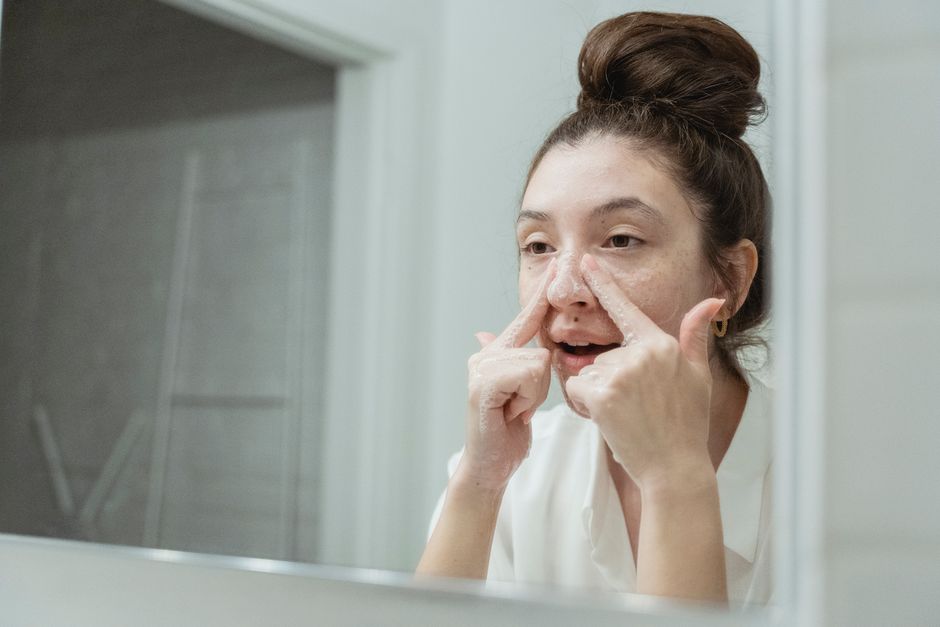
If your skin suddenly looks worse after starting a new product, you might be dealing with skin purging rather than a breakout. Purging happens when a product speeds up your skin’s natural cell turnover, pushing clogs to the surface all at once. Breakouts are inflammation from bacteria, oil, or hair follicles reacting to something that doesn’t agree with you. The key difference is timing and location: purging appears where you usually break out and clears up within weeks, while a breakout can happen anywhere and may spread.
What Exactly Is Skin Purging?
Skin purging is a temporary reaction to ingredients that increase cell turnover. These ingredients tell your skin to shed dead cells faster than normal. When that happens, everything trapped beneath the surface—oil, dead skin, debris—comes up at once. The result looks like a breakout, but it is not an infection or a reaction to a bad product.
The most common purging culprits are retinoids (like retinol and tretinoin), chemical exfoliants (AHAs and BHAs like glycolic acid and salicylic acid), and vitamin C in high concentrations. These are active ingredients that change how fast your skin renews itself. When you start them, your skin needs time to adjust.
Not everyone experiences purging. Some people start a new retinol and see nothing but smooth skin. Others see a wave of bumps within the first week. Genetics, skin type, and the strength of the product all play a role. Purging is not a sign that the product is working better than expected—it is simply a side effect of faster cell turnover.
How Is Purging Different From a Breakout?
Location matters. Purging shows up in the areas where you already get breakouts. If your breakouts are usually on your chin and jawline, purging will appear there. A true breakout can appear anywhere, including spots that have been clear for years.
Timing matters too. Purging starts within the first few weeks of using a new product and should begin to improve by week four to six. A breakout from an irritating product can start immediately and may get worse over time. If your skin is still getting worse after six weeks, it is probably not purging.
The appearance is similar—both look like red bumps, whiteheads, or small pimples. But purging often looks like small, uniform bumps that come and go quickly. Breakouts tend to be larger, more inflamed, and may feel painful or tender to the touch.
One more clue: how fast do they heal? Purging pimples heal quickly because they are just surface clogs being pushed out. Breakouts involve inflammation deep in the skin, so they take longer to heal and may leave dark marks behind.
How Long Does Purging Last?
Most purging lasts between four and six weeks. That is roughly one full skin cell turnover cycle. Your skin replaces itself about every 28 days, though this slows with age. When you introduce a cell-accelerating ingredient, your skin needs one full cycle to clear out everything that was already trapped.
If you are using a prescription-strength retinoid, purging can last up to eight weeks. Over-the-counter retinoids and exfoliating acids usually cause a shorter purge, around two to four weeks. The stronger the ingredient, the longer your skin may take to adjust.
Purging should not last forever. If you are still breaking out after eight weeks of consistent use, the product is likely causing irritation or clogging your pores rather than purging them. At that point, it is worth stopping the product and talking to a dermatologist.




How To Purge Safely Without Damaging Your Skin
You cannot skip the purge if it is going to happen, but you can make it less damaging. The goal is to let your skin adjust without adding more irritation.
Start slowly. Do not apply a new retinoid or acid every night. Start with two to three nights per week and increase gradually over a month. This gives your skin time to build tolerance without overwhelming it.
Use a gentle cleanser. During a purge, your skin barrier is already stressed. Harsh cleansers with sulfates or physical scrubs will make things worse. Use a mild, fragrance-free cleanser and lukewarm water.
Moisturize every single day. Even if your skin is oily, a basic moisturizer helps protect the barrier. Look for ceramides, glycerin, or squalane. Avoid heavy creams that could clog pores further.
Wear sunscreen daily. Ingredients that cause purging—especially retinoids and acids—make your skin more sensitive to the sun. Sun exposure can worsen inflammation and cause hyperpigmentation. Use a broad-spectrum SPF 30 or higher every morning.
Do not pick. Picking at purging pimples can cause scarring and spread bacteria. Let them come out on their own. If a whitehead is truly bothering you, a dermatologist can extract it safely.
Do not add more active ingredients. This is the most common mistake. People see purging and think the product is not working, so they add another acid or scrub. That increases irritation and prolongs the purge. Stick to one active ingredient at a time.
When Is It a Breakout, Not Purging?
If you start a new product and break out in areas where you never had acne, that is a reaction, not purging. Purging follows a pattern—it happens where you already have congestion. A breakout in new territory means the product is irritating your skin or clogging your pores.
Another sign: the timing. Purging happens within the first few weeks of starting a product. If you have been using a product for months and suddenly break out, that is not purging. That is a reaction, a change in your environment, or a shift in your hormones.
Some ingredients are more likely to cause breakouts than purging. Heavy oils, waxes, and certain silicones can clog pores. If a product contains these and you break out within days, it is probably comedogenic for your skin type. Stop using it and see if your skin clears.
If you are unsure, stop the product for a week. If your skin improves, it was a reaction. If it stays the same or gets worse, it may be purging. Purging does not stop just because you pause the product—the cell turnover process continues until it finishes.
What Can You Do To Speed Up Recovery?
You cannot speed up the purge itself, but you can help your skin recover faster afterward. The process will end on its own timeline. Your job is to keep your skin healthy while it happens.
Some research suggests that niacinamide can help reduce inflammation and support the skin barrier. It is a gentle ingredient that works well alongside retinoids and acids. A 2% to 5% niacinamide serum is a reasonable addition during a purge.
Azelaic acid is another option. It has anti-inflammatory properties and is often used alongside retinoids for acne treatment. Some dermatologists recommend it for redness and post-acne marks. It is available in over-the-counter formulations at 10%.
Keep your routine simple. Cleanser, moisturizer, sunscreen, and your active ingredient. That is enough. The more products you add, the higher the risk of irritation. If your skin feels tight, red, or burning, you are overdoing it. Scale back the active ingredient to once a week until your skin calms down.
When Should You See a Dermatologist?
If your skin is painful, oozing, or covered in deep cysts, stop the product and see a dermatologist. Purging should not cause severe pain or large, painful nodules. That level of inflammation is a sign that the product is not right for your skin.
See a dermatologist if the purge lasts longer than eight weeks. A normal purge resolves within one to two skin cycles. If it drags on, you may be dealing with a product reaction or an underlying skin condition that needs professional treatment.
If you have a history of acne and are starting a new treatment, it is wise to check with a dermatologist first. They can help you choose the right strength and guide you through the adjustment period. This is especially important if you are using prescription retinoids or treating acne during pregnancy.
Skin purging is uncomfortable, but it is temporary. It is not a sign that your skin is damaged or that the product is failing. It is a predictable response to ingredients that change how fast your skin renews itself. Give it time, keep your routine gentle, and your skin will settle.
Frequently Asked Questions
How can I tell if my skin is purging or breaking out?
Purging appears only where you normally get breakouts and heals within four to six weeks. A breakout can appear anywhere, lasts longer, and often involves larger, more painful pimples.
How long does skin purging last?
Most purging lasts four to six weeks, which is one full skin cell turnover cycle. Prescription-strength retinoids can cause purging that lasts up to eight weeks.
Should I stop using a product if my skin is purging?
No, stopping the product will not stop the purge—the process continues until your skin finishes clearing. If the purge lasts longer than eight weeks or causes severe pain, stop and see a dermatologist.
Can I use salicylic acid while my skin is purging?
Adding more active ingredients during a purge increases irritation and prolongs the process. Stick to one active ingredient, a gentle cleanser, moisturizer, and sunscreen until your skin adjusts.
