
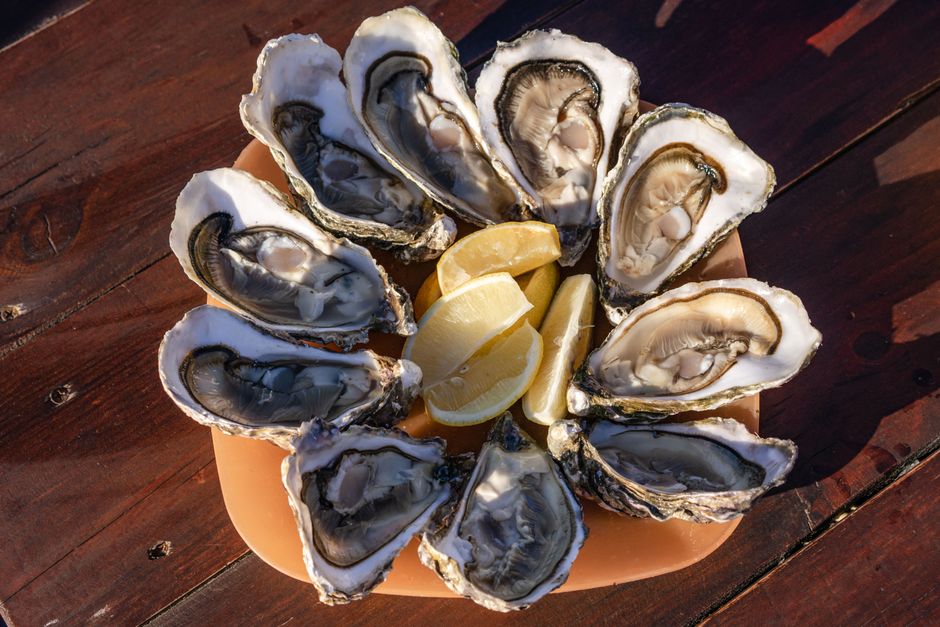
Oysters filter water for a living. A single adult oyster can move several gallons of water through its gills in an hour, trapping algae, sediment, and whatever else is suspended in it. That is exactly why purging matters. Purge oysters by holding them in clean, cold, salted water for several hours so they expel sand, grit, and muddy water from inside the shell. After that, scrub the outside under cold running water and shuck. Purging cleans the inside. Scrubbing cleans the outside. You need both.
What Does Purging Actually Do To An Oyster?
An oyster is a living filter. Water enters through its gills, particles get sorted, and the edible tissue ends up holding whatever the oyster pulled from its environment. Sand, silt, and grit collect in the mantle cavity and along the gills.
Purging works because the oyster keeps feeding. Put a live oyster in clean saltwater and it opens, pumps, and clears its own system. The dirty water inside gets replaced with clean water. The grit settles out or gets expelled.
This is not a chemical process and it does not sterilize anything. It is mechanical flushing, driven by the oyster’s own biology. That distinction matters. Purging removes grit and mud. It does not remove bacteria or viruses that may already be in the tissue. Those are handled by cooking, not by soaking.
One thing worth knowing: purging only works on live oysters. A dead oyster will not pump water. If the shell stays open and does not close when you tap it, it is dead. Discard it. Soaking a dead oyster does nothing except let it sit in water.
How To Purge Oysters Remove Grit Before Shucking?
The method is simple and the timing is the part people get wrong. Too short and nothing happens. Too long in the wrong water and the oyster weakens or dies.
Start with live oysters that are closed or that close when tapped. Rinse the shells first under cold running water to knock off loose mud and barnacles. Do not scrub yet.
Make a saltwater bath that matches seawater. The standard ratio is about one-third cup of non-iodized salt per gallon of cold water. Use sea salt or kosher salt without additives. Iodized table salt can harm the oysters. Do not use chlorinated tap water if you can avoid it, since chlorine is designed to kill organisms and oysters are organisms.
Submerge the oysters in a single layer or a loose pile. They should be covered but not crushed. Put the container in the refrigerator. Cold slows their metabolism but does not stop it, and cold water holds more dissolved oxygen, which the oysters need.
Leave them for two to twelve hours. Three to four hours is a reasonable middle ground for most home cooks. During that window the oysters pump clean water through and flush grit. Change the water once if it turns cloudy.
After soaking, lift the oysters out. Do not pour them out, because the grit has settled at the bottom of the container and pouring drags it right back over the shells. Lift them by hand or with tongs.
A note on cornmeal and saltwater myths
You may have read that adding cornmeal makes oysters plump up or purge faster. Cornmeal does not do this. Oysters feed on phytoplankton, not cornmeal, and the cornmeal just settles as sludge at the bottom of the container. It is harmless but pointless. Skip it.
Why The Water You Use Matters More Than The Time
The salinity of your soak is the single biggest variable. Water that is too fresh stresses or kills the oyster. Water that is too salty does not help either.
Seawater runs roughly 3.5 percent salt by weight, which is why the one-third cup per gallon guideline works. If you live somewhere with access to clean natural seawater, that is the ideal soak. Otherwise, the salt-and-water mix is the practical substitute.
Temperature matters almost as much. Warm water speeds up the oyster’s metabolism, which sounds helpful, but it also depletes oxygen and encourages bacterial growth in the soak. Cold water in the refrigerator is the safer choice. Oysters are also a food safety concern when held above refrigeration temperatures, so keeping the soak cold is doing double duty.
Chlorine is the quiet problem. Municipal tap water is treated to kill microorganisms. An oyster is a microorganism-rich filter feeder. Heavy chlorination can shorten how long the oyster stays alive in the bath. If your tap water is strongly chlorinated, letting it sit uncovered for a few hours before mixing the salt can reduce chlorine levels, though this is not a perfect fix.





How Long Is Too Long To Soak Oysters?
Beyond about twelve hours, the trade-off turns negative. The oyster is using energy the whole time it pumps, and it has no new food coming in. Long soaks can leave the meat watery and less flavorful, and they raise the odds the oyster dies before you shuck it.
There is no benefit to soaking overnight for grit removal. The grit is gone within a few hours. If you need to hold oysters longer than that before serving, store them the way you would store any live shellfish: cold, damp, and out of standing water, with the shells cupped side down so they retain their natural liquor.
Standing water is a storage mistake, not a purge method, once the soak is done. Live oysters stored in a sealed container of water will suffocate.
Scrubbing And Shucking After The Purge
Purging handles the inside. The outside still has mud, sand, and sometimes barnacles stuck to the shell. Those particles are the ones that end up in your bowl when you shuck.
Scrub each oyster under cold running water with a stiff brush. A dedicated vegetable brush works. Get into the hinge and around the edges where grit hides. Rinse again.
Then shuck over a bowl, not over the sink, so you keep the oyster liquor. The liquor is the small pool of liquid inside the shell. It is flavorful and it is one of the reasons fresh oysters taste the way they do.
If you are serving raw, hold the shucked oysters cold and serve them soon. If you are cooking, the purge still matters because grit does not cook away. Sand in a baked oyster is just as unpleasant as sand in a raw one.
Food Safety Basics That Purging Does Not Cover
Purging is about grit. It is not a food safety step. This is the part that gets blurred in a lot of online advice.
Raw oysters can carry bacteria and viruses, including Vibrio species and norovirus, that are naturally present in coastal waters and can concentrate in oyster tissue. Purging in saltwater does not remove them. Cooking does kill these organisms. People with liver disease, diabetes, weakened immune systems, or certain other conditions are at higher risk from raw shellfish, and public health agencies have long advised those groups to avoid raw oysters.
Buy oysters from a reputable source. Shellfish harvested from approved waters and handled under a shellfish sanitation program carry a lower risk than oysters from unknown sources. In the United States, shellfish tags track where and when oysters were harvested, and retailers are required to keep them for a period after sale.
Keep live oysters cold, use them within a few days, and discard any that are dead before you cook. A dead oyster is a food safety problem, not just a quality problem.
Does Purging Work For All Shellfish?
Clams and mussels purge the same way and for the same reason. The saltwater soak works because they are all filter feeders with the same basic plumbing. Clams tend to hold more sand than oysters, so the soak is arguably more important for them.
Scallops are different. The part people eat is the adductor muscle, and whole live scallops in the shell are less common in home kitchens. The purge logic does not apply the same way.
For oysters specifically, the sequence is fixed: purge in cold salted water, lift out, scrub the shell, then shuck. Skipping the purge means grit ends up in the meat. Skipping the scrub means grit ends up on the shell and then in your bowl. Both steps exist for a reason.
Frequently Asked Questions
How long should you soak oysters to remove grit?
Two to twelve hours in cold salted water is the working range, with three to four hours being enough for most home cooks. Longer soaks do not remove more grit and can weaken the oyster.
Does cornmeal really purge oysters?
No. Oysters feed on phytoplankton, not cornmeal, so cornmeal does not speed up purging or plump the meat. It only settles as sludge at the bottom of the container.
Can you purge oysters in regular tap water?
Plain fresh water will stress or kill them because oysters need saltwater to survive. Use cold water mixed with non-iodized salt at roughly one-third cup per gallon, which approximates seawater.
Does purging make raw oysters safe to eat?
No. Purging removes grit and mud but does not remove bacteria or viruses such as Vibrio or norovirus. Cooking kills those organisms, and people at higher risk from raw shellfish should avoid them.
