
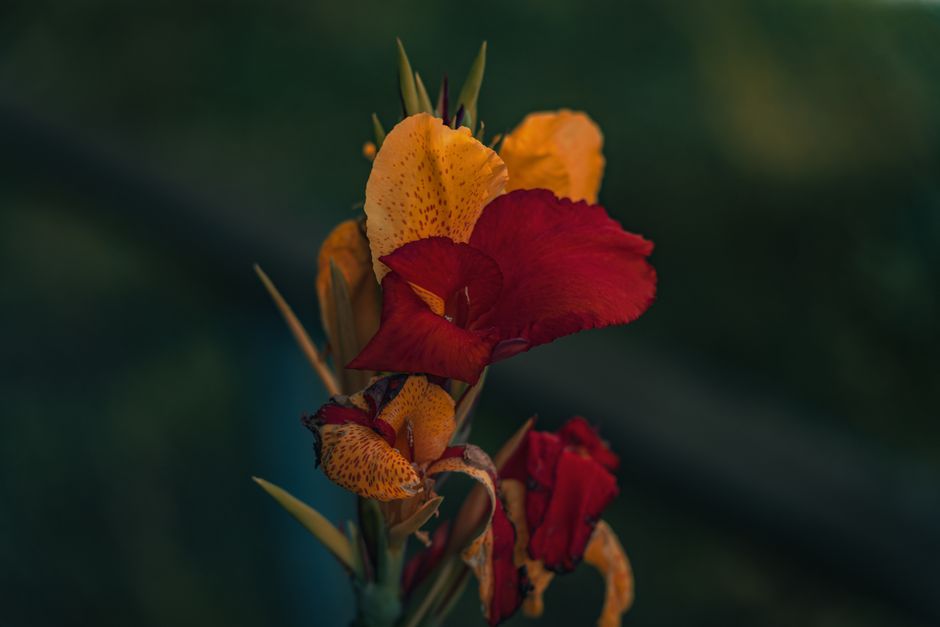
Pruning canna lilies is simple: cut off spent flowers and dead leaves any time during the growing season, and cut the whole plant down to about 2 to 4 inches above the soil after the first killing frost. Cannas are herbaceous perennials, not woody shrubs, so there is no complicated branch structure to manage. The main goals are removing dead tissue, encouraging more blooms, and preparing the rhizomes for winter.
If you have ever wondered whether you are cutting too much or too little, the answer is usually forgiving. Cannas tolerate hard cutting well. What they do not tolerate is cold, wet soil sitting on their rhizomes through winter.
How To Prune Canna Lilies And When To Do It
During the growing season, pruning is mostly about cleanup and deadheading. Cut individual spent flowers back to the stem, and remove any leaf that has turned brown or yellow by cutting it at the base where it meets the main stalk.
Deadheading matters because a canna that is allowed to set seed puts energy into seed production rather than new flowers. Removing the faded flower head before seeds form encourages the plant to keep blooming. This is standard practice for many flowering perennials, and cannas respond the same way.
At the end of the season, after frost has blackened the foliage, cut all stems down to roughly 2 to 4 inches above ground level. This is the one cut that is not optional in cold climates, because leaving tall stems attached to rhizomes through winter can allow rot to travel down into the storage organ.
Timing rules that hold up:
- Deadhead flowers as they fade, throughout the bloom period.
- Remove damaged or diseased leaves as soon as you notice them.
- Do the big cutback after the first frost blackens the leaves, not before.
- In frost-free climates, cut back after flowering finishes or when foliage looks tired.
One clarification worth making: pruning a canna does not make it grow taller or bushier the way pinching a basil plant does. Cannas grow from a rhizome, and each new shoot comes up from that underground structure. Cutting a stem back does not create branching on that stem. It redirects the plant’s resources toward new shoots and flowers.
What Tools Do You Need To Prune Canna Lilies?
You need less than most people expect. A pair of sharp bypass pruners handles stems up to about the thickness of your finger. For thick, mature stalks near the base, loppers or a clean, sharp garden knife work better than forcing dull pruners through the tissue.
Clean cuts matter more than the specific tool. A crushed or torn stem creates an open wound that invites fungal and bacterial problems. Sharp blades slice; dull blades bruise.
Two practical points:
- Wipe blades with rubbing alcohol between plants if you are cutting anything that looks diseased. This is a common recommendation among gardeners and extension sources, and it is reasonable even where direct trial evidence is limited.
- Wear gloves. Canna sap is not known to be seriously toxic, but it can stain skin and clothing, and the stems are slippery when wet.
You do not need sealants, wound dressings, or pruning paint. Those products are not recommended for herbaceous plants and can actually trap moisture against the cut surface.
Should You Cut Back Canna Lilies Before Winter?
Yes, in any climate that gets frost. Cut the stems down to 2 to 4 inches above the soil after the foliage has been killed by cold. The plant has already moved what it can into the rhizome by then, so you are not robbing it of anything.
What happens next depends on your climate. In USDA zones roughly 8 and warmer, canna rhizomes can often stay in the ground over winter with a thick layer of mulch for insulation. In colder zones, the rhizomes need to be dug, cleaned, dried, and stored indoors in a cool, dry place. The exact zone cutoff varies by source and by local conditions, so treat zone maps as a general guide rather than a guarantee.
The reason winter care matters so much: canna rhizomes are storage organs, and they rot readily in cold, saturated soil. A rhizome that survives a mild winter can still be killed by a wet one. Good drainage often matters more than the lowest temperature the plant technically tolerates.





Can You Prune Canna Lilies During The Growing Season?
Yes, and you should. Light pruning during the season keeps the plant looking tidy and can extend bloom time.
Remove a leaf when it has turned mostly yellow or brown, or when it is clearly damaged. Cut it at the base, close to the main stem, rather than leaving a stub. Stubs die back and can harbor rot.
Deadhead faded flowers regularly. Once a flower head has finished and started to form green seed pods, that energy is already committed. Removing the head earlier, while the petals are dropping, is generally more effective.
Do not cut healthy green leaves just to shape the plant. Those leaves are the plant’s engine. Removing them reduces photosynthesis and, in turn, reduces the energy available for flowers and for rhizome storage going into winter.
What Happens If You Do Not Prune Canna Lilies?
The plant usually survives. Cannas are tough. But several things tend to happen when they are left alone.
Flowering slows or stops once plants set seed. Dead foliage accumulates and can smother new shoots coming up from the rhizome. Dense, wet leaf litter around the base raises the risk of fungal problems and, in cold climates, increases the chance of rhizome rot over winter.
In frost-free climates, an unpruned canna can become quite large and floppy, and stems may fall over under their own weight. Some gardeners like that wild look. Others find it messy. Either way, the plant is not harmed by skipping a season of pruning.
The one situation where skipping the fall cutback is genuinely risky is a cold, wet winter. Tall stems left standing can channel moisture and decay down toward the rhizome. That is the scenario where cleanup protects next year’s plant.
Common Pruning Mistakes To Avoid
Most problems come from a handful of habits. Cutting too early in fall is one. If you cut stems while leaves are still green and actively photosynthesizing, you remove the plant’s ability to store energy in the rhizome before dormancy.
Cutting too close to the soil is another. Leaving a short stub above ground is safer than cutting flush, because the stub marks where the rhizome sits and reduces the chance of nicking it with your blade.
Other mistakes worth knowing:
- Using dull tools that crush stems instead of cutting them.
- Cutting healthy green leaves during the growing season for no reason.
- Leaving removed plant material piled at the base of the plant.
- Applying pruning sealant to cuts.
If a stem looks mushy, dark, and foul-smelling, that is a sign of rot, not normal dieback. Cut below the affected area into clean, firm tissue if any exists, and remove the diseased material from the garden rather than composting it.
Does Pruning Make Canna Lilies Bloom More?
Deadheading can extend the bloom period. Removing faded flowers before they set seed keeps the plant investing in new flowers rather than seed production. This is a well-established principle in flowering plant care, though the size of the effect varies by variety and growing conditions.
Heavy pruning during the growing season does not increase bloom count and can reduce it. Cutting back green growth removes the leaves that feed flower production. The relationship is straightforward: more healthy leaf area supports more flowers, up to the limits of light, water, and nutrients.
The strongest lever for more blooms is not pruning at all. It is full sun, consistent moisture, and fertile soil. Cannas are heavy feeders and heavy drinkers compared with many ornamentals. Pruning supports that growth. It does not replace it.
How Do You Prune Canna Lilies In Containers?
The same rules apply, with one adjustment: container plants dry out faster and are more exposed to cold at the roots. Cut spent flowers and dead leaves during the season as usual.
At the end of the season, cut stems to 2 to 4 inches and either move the container to a frost-free spot or dig and store the rhizomes. A container left outdoors in a cold climate can freeze solid, which will kill the rhizomes. In-ground plants have soil mass for insulation. Container plants do not.
When you repot in spring, cut away any soft, darkened rhizome sections before planting. Firm, healthy rhizome tissue is the part worth keeping.
Frequently Asked Questions
When should canna lilies be cut back?
Cut them back to 2 to 4 inches above the soil after the first frost blackens the foliage. In frost-free climates, cut back after flowering ends or when the leaves start to look worn.
Do you deadhead canna lilies?
Yes, remove faded flowers before they form seed pods to encourage continued blooming. Cut the spent flower head back to the stem, just above a leaf or node.
What happens if you don’t cut back canna lilies for winter?
In cold, wet conditions the leftover stems and foliage can promote rot that spreads into the rhizomes. In mild climates, plants often survive without a fall cutback, though they may look untidy.
Can you cut canna lilies all the way to the ground?
Cutting to about 2 to 4 inches above the soil is safer than cutting flush with the ground. The short stub marks where the rhizome sits and reduces the chance of slicing into it.
