
Hearing damage from noise is permanent, and it happens gradually enough that most people don’t notice until it’s already done. The single most effective protection is reducing the loudness of sound reaching your ears and limiting how long you’re exposed. When you can’t turn the volume down, well-fitted hearing protection and simple distance from the source make the biggest difference.
Your ears don’t have a reset button. Hair cells inside the inner ear convert sound into nerve signals, and once enough of them are damaged, the loss is irreversible. The good news is that noise-induced hearing loss is almost entirely preventable — if you act before the damage accumulates.
How Does Loud Noise Actually Damage Your Hearing?
Inside your inner ear sits a snail-shaped structure called the cochlea. It contains thousands of tiny hair cells that bend in response to sound waves and trigger nerve signals your brain reads as sound.
Loud noise is physically violent to these cells. It can shear the delicate structures that hold them in place. A single very loud event — an explosion, a gunshot, a firecracker near your head — can cause immediate and lasting damage. Repeated exposure to moderately loud sound does something slower but equally permanent: it wears the hair cells down over years until they stop working.
There is a detail many people miss. Hair cells do not regenerate in humans. Once a meaningful number are gone, you lose the ability to hear certain frequencies — usually high pitches first. That’s why people with early hearing loss often struggle to follow conversation in a noisy room while still hearing low sounds fine.
Noise also damages the nerve fibers connecting the ear to the brain. Some research suggests this can happen even when a hearing test looks normal, which may help explain why some people have trouble understanding speech after years of noise exposure despite passing standard tests.
How Loud Is Too Loud, and How Long Is Too Long?
Sound is measured in decibels (dB). The risk to your ears depends on two things working together: how loud the sound is and how long you’re exposed to it.
As a rule, the louder the sound, the shorter the safe exposure time. Every 3-decibel increase roughly doubles the sound’s intensity, which means the safe listening window shrinks fast as volume climbs.
Here are approximate decibel levels for common sounds, based on widely used occupational and public health references:
- Normal conversation: about 60 dB
- Heavy city traffic from inside a car: about 80–85 dB
- A gas-powered lawn mower or motorcycle: about 90–100 dB
- A personal audio player at full volume through earbuds: can exceed 100 dB
- Live music, a nightclub, or a stadium concert: about 100–110 dB
- Sirens, chainsaws, or a rock concert near the speakers: about 110–120 dB
- Firecrackers, gunshots, or an explosion: 140 dB and above
Federal workplace safety standards require hearing protection when noise exposure averages 85 dB over an 8-hour workday. That 85 dB figure is a reasonable practical benchmark for the public too. Sounds at or below that level are generally considered low risk for most of a day. Sounds above it need limits on time or protection for your ears.
Sounds at 85 dB are safe for a full workday. At 100 dB — roughly a loud concert — the safe window drops to minutes, not hours. At 120 dB, even short exposure can cause harm.
What Are the Warning Signs You’re Being Harmed?
Your ears often tell you when they’ve had enough. The problem is that people ignore the signals because they fade.
Watch for these signs during or after loud exposure:
- Ringing, buzzing, or hissing in your ears (tinnitus)
- A feeling of fullness or pressure in the ears
- Sounds seem muffled or “stuffed” afterward
- You need people to repeat themselves in conversation
- You have to turn the TV or music up louder than before
Temporary muffling or ringing after a concert is a real warning, not a normal part of a good time. It usually fades within hours or a day, but the underlying damage to hair cells does not necessarily reverse. Repeated episodes like this are how gradual hearing loss builds up.
If ringing or muffling lasts more than a day or two after noise exposure, or if you notice ongoing difficulty hearing, see a doctor or an audiologist. Hearing loss can have other causes, and a proper evaluation is the only way to know what’s going on.





How To Protect Your Hearing From Noise Damage
The most reliable protection is to turn down the volume, step away from the source, and use hearing protection when you can’t do either. These three moves cover most situations.
Reduce the volume. On personal audio devices, keep the volume at roughly half or less and use the device’s built-in volume limit if it has one. A useful test: if someone an arm’s length away can hear your music through your headphones, it’s probably too loud.
Increase distance. Sound intensity drops quickly as you move away from the source. Stepping back from speakers, standing farther from machinery, and putting space between you and loud equipment all reduce what reaches your ears.
Limit time. Take breaks from loud environments. Even short quiet periods give your ears a chance to recover from temporary strain, though they don’t undo permanent damage.
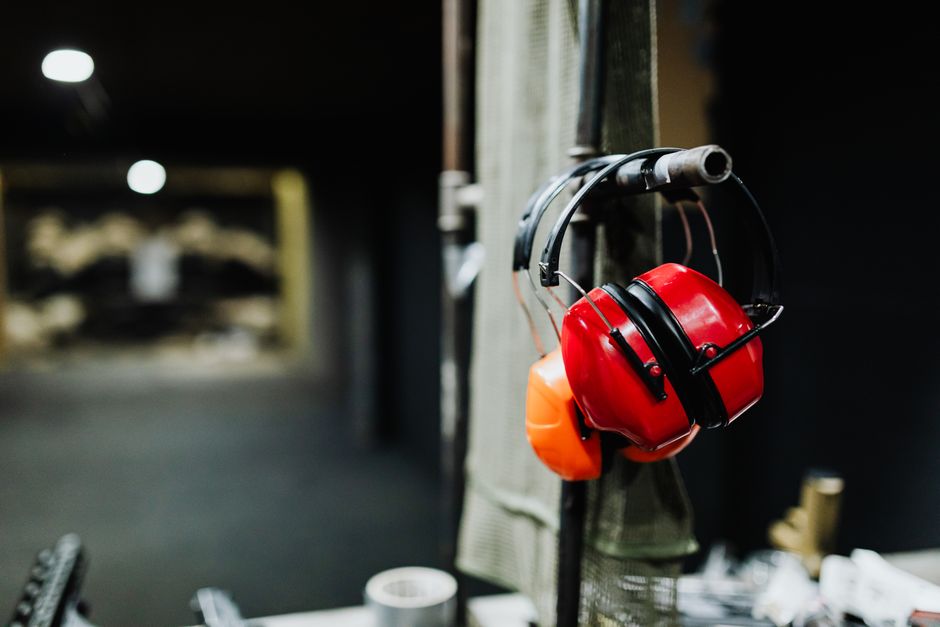
Use hearing protection. Foam earplugs, when inserted correctly, can reduce sound by a meaningful amount. Reusable high-fidelity earplugs are designed for concerts and events so music stays clear but quieter. Earmuffs work well for power tools and machinery. For very loud impulse sounds like gunfire, combine earplugs and earmuffs for the best protection.
Correct insertion matters more than most people realize. A foam earplug that’s only partly pushed in blocks far less sound than one rolled and seated properly in the ear canal. If you can hear a big difference when you wiggle it, it isn’t in far enough.
Does Music Through Headphones Really Cause Hearing Loss?
Yes, when it’s loud and long enough. The device itself isn’t the problem — the volume and duration are.
Modern earbuds can deliver sound levels well above 100 dB. Because the sound goes straight into your ear canal, it can be louder than you’d guess from how it feels. Many people listen for hours at a time, which stacks up the exposure.
Two habits help. First, follow the 60/60 guideline: no more than about 60% of maximum volume for no more than 60 minutes at a stretch. It’s a simple rule of thumb, not a precise medical threshold, but it’s a sensible way to keep daily exposure low. Second, use noise-canceling headphones when you’re in loud places. They let you hear your audio at a lower volume because they block background noise, so you’re not turning up the music to compete with a train or a busy street.
Watch for the signs after a long listening session — ringing, muffling, or a sense of fullness. Those are your ears asking you to turn it down.
When Should You See a Professional?
Get your hearing checked if you notice problems that don’t go away. That includes ringing that persists, muffled hearing that lasts more than a day or two after loud exposure, trouble following conversations in background noise, or people telling you the TV is too loud.
An audiologist can test your hearing across frequencies and tell you whether you have measurable loss. Early detection doesn’t reverse noise damage, but it lets you protect what you have left and avoid the exposures that would make things worse.
If you work around loud equipment, in construction, manufacturing, farming, or music, regular hearing checks are worth building into your routine. Some workplaces offer them. Hearing loss from noise often develops so slowly that people don’t notice until it affects daily life.
There is no proven way to restore damaged hair cells. Some research into protective compounds and treatments is ongoing, but no therapy has been established to reverse noise-induced hearing loss. Prevention remains the only reliable strategy.
Frequently Asked Questions
Can noise-induced hearing loss be reversed?
No. Damage to the hair cells in your inner ear is permanent because humans cannot regrow these cells. Prevention is the only reliable protection.
How loud is too loud for my ears?
Sounds above about 85 decibels can cause harm over time, and the louder the sound, the shorter the safe exposure window. As a practical test, if you have to shout to be heard by someone an arm’s length away, the noise is likely loud enough to damage your hearing.
Do earplugs at concerts really protect your hearing?
Yes, when worn correctly and fitted well. High-fidelity earplugs reduce volume while keeping music clear, and properly inserted foam plugs block more sound than most people expect.
Is ringing in my ears after a concert a sign of damage?
It can be. Temporary ringing or muffling after loud exposure is a warning sign that your ears were strained, and repeated episodes contribute to gradual hearing loss.
