
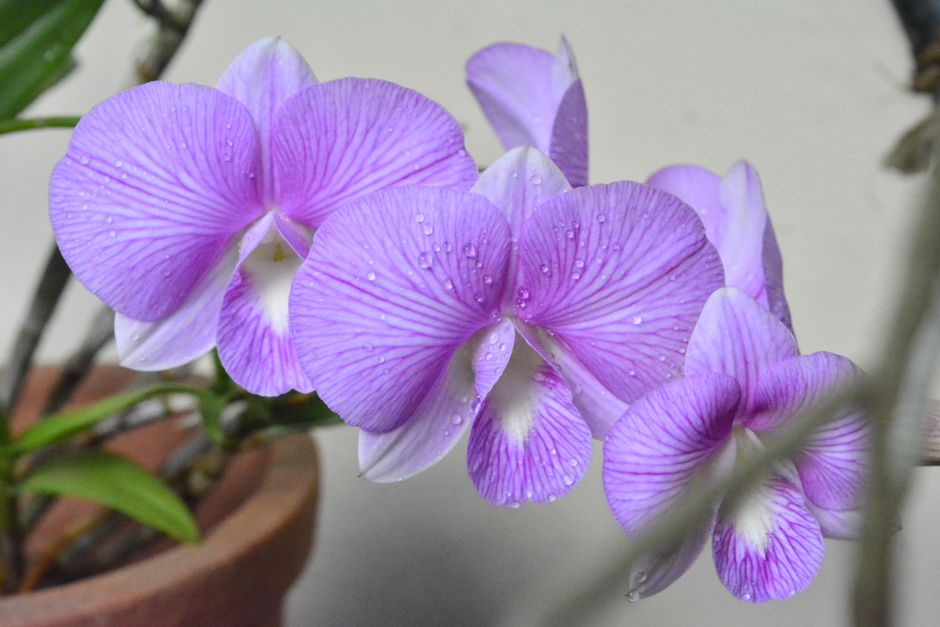
Watering an orchid grown in bark means soaking the pot thoroughly until water runs freely out the bottom, then waiting until the bark has partly dried before you water again. Most orchids in bark fail not from underwatering but from watering too often. The bark holds moisture longer than it looks, and the roots need air between waterings. Pour water through the pot until it drains, let the pot drain completely, and never let it sit in standing water.
Why Is Watering an Orchid in Bark Different From Watering Other Houseplants?
Bark is not soil. It is chunky, airy, and drains fast, which is exactly why orchids are grown in it. Most orchids sold as houseplants are epiphytes. In nature they grow attached to tree branches, not buried in the ground. Their roots are adapted to grab onto a surface, absorb moisture when it rains, and then dry out in the air.
That changes how water moves through the pot. A standard potting mix holds water like a sponge. Bark holds some water on its surface and inside the chunks, but a lot of water passes straight through. The roots get a drink during the soak and then spend the next several days drying.
This is the core reason orchid watering is different. You are not keeping the roots moist all the time. You are giving them a wet period followed by a dry period. The wet-dry cycle is what keeps orchid roots healthy. Roots that stay wet and airless begin to rot, and root rot is the most common way a houseplant orchid dies.
How To Properly Water An Orchid In Bark?
The method is straightforward. Take the pot to a sink. Pour room-temperature water over the bark until it flows out the drainage holes. Let it run for a few seconds so the whole root ball gets soaked, not just the top. Then let the pot drain completely before putting it back.
Some growers use a soak. They set the pot in a bowl of water for a short time, then lift it out and let it drain. Both methods work. The soak can be useful if the bark has dried out so much that water runs straight through without wetting it. Bark that has gone bone-dry can become water-repellent, a property sometimes called hydrophobicity. Soaking re-wets it.
A few practical points matter more than the exact method:
- Use room-temperature water. Cold water can shock roots.
- Water in the morning if you can. Any water that splashes on the leaves has time to evaporate before cooler nighttime temperatures.
- Keep water out of the crown, the tight center where new leaves emerge. Standing water there can lead to crown rot. If water gets in, blot it out with a paper towel.
- Let the pot drain fully. Never leave the pot sitting in a saucer of water.
- If your tap water is very hard or heavily treated, some growers prefer filtered water or rainwater. The evidence that this makes a large difference for most common orchids is limited, but it is a reasonable choice.
How often you do this depends on your home, not a calendar. More on that below.
How Often Should You Water an Orchid in Bark?
There is no fixed schedule that works for every home. The right interval depends on pot size, bark age, room temperature, humidity, airflow, and the season. What matters is checking the bark itself before you water.
Stick a finger about an inch into the bark, or use a wooden skewer pushed near the center of the pot. If it feels moist, wait. If it feels dry, it is time to water. This single habit prevents most orchid watering mistakes.
As a rough guide, many orchids in bark need water roughly once a week to once every ten days in a warm, bright home. In cooler conditions or a more humid room, that can stretch longer. In a hot, dry, sunny spot, it can be shorter. Treat any interval as a starting point and adjust based on what the bark tells you.
One thing that surprises many people: fresh bark dries out faster than old bark. New bark is still chunky and lets air move freely. Over months, bark breaks down, compacts, and holds water longer. So a plant that needed water every five days in fresh bark may need it every ten days a year later. The root zone is changing even when the plant looks the same.





What Does an Orchid in Bark Look Like When It Needs Water?
The plant gives you signals. The clearest are in the roots and the leaves.
Orchid roots change color with moisture. When they are wet, healthy roots look green. As they dry, they turn silvery or grayish-white. If you can see roots through a clear pot, which many orchids are sold in, this color shift is a reliable cue. Silvery roots plus dry bark means it is time to water.
Leaves also respond. A plant that is too dry may show slightly limp or leathery leaves. But be careful here. Limp leaves can also mean the roots are damaged and cannot take up water, which is often a sign of overwatering and root rot, not underwatering. This is one of the most common misreadings. A wilted orchid is not automatically a thirsty orchid.
If the bark is wet and the leaves are limp, do not add more water. Check the roots instead. Healthy roots are firm. Rotting roots are mushy, dark, and hollow, and they may smell sour. If you find rot, the problem is too much water, not too little.
What Happens If You Overwater an Orchid in Bark?
Overwatering is the more common and more dangerous mistake. When bark stays constantly wet, the air spaces between the chunks fill with water. Roots that evolved to sit in moving air are now smothered.
The roots weaken and become vulnerable to rot. Once roots rot, the plant loses its ability to absorb water. That is why an overwatered orchid can look wilted and thirsty even though its bark is soaked. The plant is not short of water. It has lost the roots it needs to drink.
Signs of trouble include yellowing leaves, mushy dark roots, a sour smell from the pot, and a plant that keeps declining despite regular watering. If you suspect root rot, the fix is usually to repot into fresh bark, trim away the mushy roots with clean tools, and then water less often.
Underwatering is possible too, but it is usually easier to correct. A plant that has been too dry will perk up after a good soak, provided the roots are still healthy.
Does the Type and Age of Bark Change How You Water?
Yes, and this is easy to overlook. Bark is not a permanent material. It breaks down over time, and as it does, it holds more water and provides less airflow. A pot of fresh, chunky bark behaves very differently from a pot of old, crumbly bark.
Most growers repot orchids in fresh bark every one to two years, depending on how fast the bark breaks down and how the plant is growing. When bark has decomposed into a dense, muddy layer, it stays wet far too long and the risk of root rot rises. Repotting refreshes both the moisture balance and the airflow around the roots.
The bark grade matters as well. Fine bark holds more water than coarse bark. Fine bark suits small pots and moisture-loving setups. Coarse bark drains faster and suits larger pots and plants that like to dry out. If you change the bark grade at repotting, expect your watering rhythm to change too.
Should You Mist or Use Ice Cubes Instead?
Misting the surface does not water the roots. It briefly wets the top layer of bark and the leaves, but it does not deliver enough water to the root ball. As a way to raise humidity around the plant, misting has some value. As a way to water, it does not replace a proper soak.
Ice cubes are a popular shortcut. The idea is that the ice melts slowly and waters the plant gently. In practice, ice delivers a small and uneven amount of water, and cold water near tropical roots is not ideal. For a thorough watering in bark, running water through the pot is more reliable. If you use ice cubes, understand that you are giving a light watering, not a full one.
The bottom line is simple. Soak the bark, let it drain, and wait until it partly dries before soaking again. Watch the roots and the bark rather than the calendar, and you will avoid both of the mistakes that kill most houseplant orchids.
Frequently Asked Questions
How do I know when to water an orchid in bark?
Check the bark about an inch down, or use a wooden skewer near the center of the pot. If it feels dry and the roots look silvery rather than green, it is time to water.
Should I soak my orchid in bark or just pour water through?
Both work. Pouring water through the pot until it drains is simple and effective, while soaking is useful when the bark has dried out so much that water runs straight through.
Can I water an orchid in bark with ice cubes?
Ice cubes deliver only a small, uneven amount of water and expose roots to cold. For a full watering in bark, running room-temperature water through the pot is more reliable.
Why is my orchid wilting even though the bark is wet?
Wet bark plus limp leaves usually points to root rot, not thirst. Check the roots: firm roots are healthy, while mushy dark roots mean the plant is being overwatered.
