
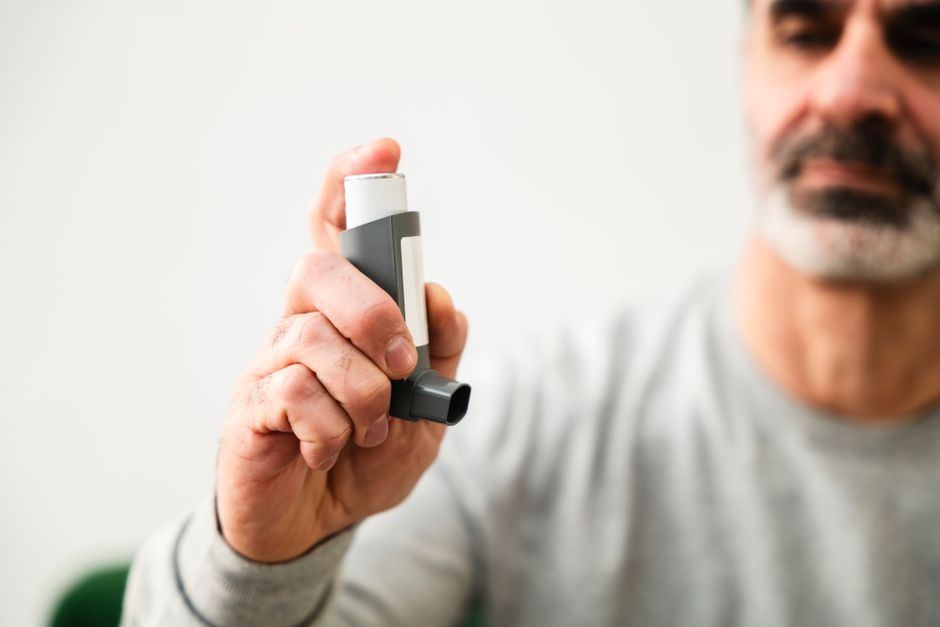
Most people who use an inhaler do it wrong. That is not an insult. It is what the research shows. Studies that watch patients use their inhalers consistently find that a large share make at least one error, and some make errors serious enough that little or no medicine reaches their lungs. The fix is not a better prescription. It is better technique. Shake the canister, breathe all the way out, seal your lips around the mouthpiece, press and breathe in slowly at the same time, hold your breath for about 10 seconds, then wait about 30 seconds before the next puff. Those steps are the difference between medicine in your lungs and medicine on the back of your throat.
Why Does Inhaler Technique Matter So Much?
An inhaler only works if the medicine lands in the airways. Medicine that hits the tongue, the back of the throat, or the top of the mouth does not treat asthma or COPD. It just gets swallowed or absorbed in a place where it cannot help.
This matters most with a metered-dose inhaler, the familiar press-and-breathe canister. The medicine comes out fast, and the spray has to meet the right breath at the right moment. If you press before you start breathing, or breathe in too fast, the medicine slams into the back of your throat instead of riding down into the lungs. If you do not hold your breath, the medicine you did inhale gets breathed back out.
Poor technique does not always announce itself. You may feel the spray hit your throat and assume it worked. Some people decide their inhaler “doesn’t work” when the real problem is that they never got a full dose. That gap between how the inhaler is used and how it should be used is the single biggest avoidable problem in inhaled therapy.
How To Properly Use An Inhaler And Avoid Mistakes: Step by Step
The steps below apply to a standard metered-dose inhaler. Read them once, then check them against your own routine. Most mistakes are small and easy to correct.
- Check the dose counter. Shake the canister if your inhaler instructions say to. Many do.
- Take the cap off and look at the mouthpiece. If anything is inside, rinse it out.
- Breathe out fully before you start. Get as much air out of your lungs as you comfortably can.
- Seal your lips around the mouthpiece. No gaps. If your inhaler has a spacer, use it — see below.
- Press the canister and start a slow, deep breath at the same time. Slow is the key word. A fast gasp sends medicine to the throat.
- Keep breathing in until your lungs feel full. Then take the inhaler out of your mouth.
- Hold your breath for about 10 seconds, or as long as you comfortably can.
- Breathe out slowly. If you need a second puff, wait about 30 seconds and shake again first.
- Rinse your mouth and spit after steroid inhalers. This reduces the risk of a sore mouth and thrush.
One detail many people miss: rinsing and spitting matters specifically for inhaled corticosteroids, not every inhaler. The rinse removes medicine that settled in the mouth so it does not sit on the tissues. For a reliever inhaler, rinsing is not the same priority.
What Are the Most Common Inhaler Mistakes?
The same handful of errors show up again and again when clinicians watch patients use their inhalers. Knowing them helps you catch your own.
- Pressing too early or too late. The spray and the breath have to happen together. Pressing before you breathe, or after you have already started, wastes the dose.
- Breathing in too fast. A quick, forceful breath is the wrong motion for a metered-dose inhaler. Slow and steady gets the medicine deeper.
- Not shaking the canister. Many inhalers separate if they sit, and shaking mixes the medicine back together.
- Skipping the breath hold. Without the pause, the medicine leaves before it can settle.
- Poor lip seal. Air leaking around the mouthpiece means the medicine escapes.
- Not using a spacer when one is recommended. A spacer is not a crutch. It is a tool that makes correct technique easier.
- Not priming a new inhaler. A brand-new canister may need priming per its instructions before the first real dose.
There is also a subtler error: using a rescue inhaler more often than prescribed without telling anyone. That is not a technique problem, but it is a signal worth raising with a clinician.
Do You Need a Spacer, and How Do You Use One?
A spacer is a hollow tube or chamber that attaches to the inhaler. You spray into the chamber, then breathe the medicine in from it. The spacer holds the medicine in the air for a moment so you do not have to time your breath to the spray perfectly.
This is where evidence is strongest. Spacers reduce the amount of medicine that lands in the mouth and throat and increase how much reaches the lungs compared with a metered-dose inhaler used alone. For many people, especially children and anyone who struggles with coordination, a spacer makes correct use far easier. Many clinicians recommend one for most metered-dose inhaler users.
Using a spacer is simple. Shake the inhaler and attach it to the spacer. Breathe out. Seal your lips around the spacer mouthpiece. Press the canister once and take a slow, deep breath, then hold for about 10 seconds. Some spacers allow you to take several breaths from the chamber instead of one big breath — follow the instructions that came with yours. Clean the spacer regularly according to its instructions so it keeps working well.
What About Dry Powder and Soft Mist Inhalers?
Not all inhalers work the same way, and using the wrong technique for your device is a common mistake. Dry powder inhalers do not use a propellant spray. You load the dose, breathe out away from the device, seal your lips, and breathe in fast and deep. The force of your breath pulls the powder into your lungs, so a slow breath is wrong for these devices.
Soft mist inhalers release a slow, fine mist. They usually call for a slow, deep breath, similar to a metered-dose inhaler, but the specific steps vary by device. The lesson is consistent: the correct technique depends on the device in your hand. Read the instructions that came with your inhaler, or ask a pharmacist to walk you through them.
How Do You Know If You Are Using Your Inhaler Correctly?
You cannot always tell from how it feels. The best check is to have someone watch you use it. Ask a pharmacist or your clinician to observe your technique and correct it on the spot. This is a short visit that catches problems no one can spot from the outside.
Technique also drifts over time. People who were taught correctly years ago often slip into shortcuts without noticing. A periodic recheck, especially after a change in symptoms or a new inhaler, is worth the few minutes. If your symptoms are not controlled on your current regimen, technique is one of the first things to rule out before assuming the medicine itself is not working.
Keep your inhaler clean and stored as directed, and track doses with the counter so you are not caught empty. None of this replaces your prescribed plan. It simply makes sure the medicine you were given actually gets where it needs to go.
Frequently Asked Questions
How long should you hold your breath after using an inhaler?
Hold your breath for about 10 seconds, or as long as you comfortably can. This pause gives the medicine time to settle in your airways instead of being breathed back out.
Should you rinse your mouth after using an inhaler?
Rinse and spit after using an inhaled corticosteroid to reduce the risk of mouth irritation and thrush. Rinsing is not the same priority for reliever inhalers.
Do you breathe in fast or slow with an inhaler?
With a standard metered-dose inhaler, breathe in slow and deep. Dry powder inhalers are the opposite — they require a fast, forceful breath to pull the powder into your lungs.
Why does my inhaler not seem to work?
Technique errors are a common reason medicine does not reach the lungs, so have a pharmacist or clinician watch you use it. If symptoms remain uncontrolled, talk to your clinician rather than adjusting doses on your own.
