
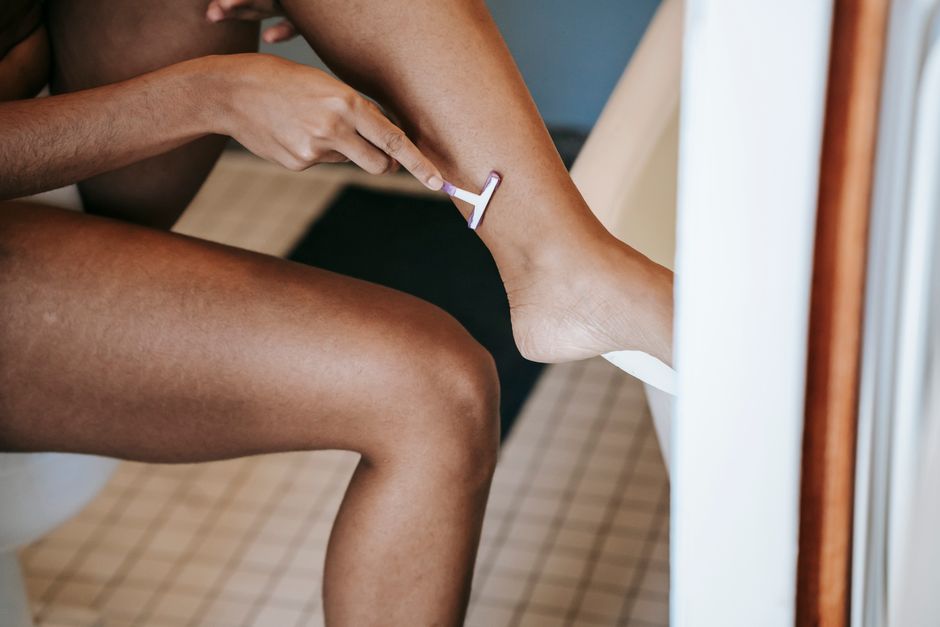
Shaving pubic hair without irritation comes down to three things: preparing the skin and hair first, shaving with the direction of hair growth rather than against it, and protecting the area afterward while the skin recovers. The pubic region has thin, sensitive skin, curved surfaces, and hair that grows in several different directions, which is why a technique that works on your legs can leave this area red, itchy, and bumpy. Most irritation after shaving is not an allergy or an infection. It is mechanical damage and inflammation from the blade itself.
Why Does Shaving Pubic Hair Cause So Much Irritation?
The skin of the pubic area is thinner and more mobile than the skin on your legs or underarms. It also sits in a warm, moist environment, and it rubs against clothing and itself throughout the day. That combination makes it more reactive to friction and more prone to inflammation after the skin barrier is disturbed.
When a razor drags across skin, it does more than cut hair. It removes a thin layer of the outermost skin cells, the stratum corneum, which is part of the barrier that holds moisture in and keeps irritants out. On delicate skin, that removal is enough to trigger redness, stinging, and itching.
The bumps people call razor burn are usually a form of irritation or folliculitis — inflammation around the hair follicle. Shaving can also cause ingrown hairs, where a growing hair curls back into the skin or gets trapped under a layer of skin, creating a small red or dark bump. This is more common when hair is cut very short or when the hair naturally curls.
Shaving against the direction of growth gives a closer result, but it also lifts and tugs the hair before cutting it. On curved, sensitive skin that tugging increases the chance of cutting below the surface and inflaming the follicle. The trade-off between closeness and irritation is real, and it is the main reason technique matters here more than it does on your legs.
What Should You Do Before You Start Shaving?
Start with clean skin and softened hair. Warm water is the single most useful prep step. Showering first softens the hair and makes it easier to cut with less resistance, which means less pulling on the skin.
Wash the area gently with mild soap and warm water, then rinse well. You do not need harsh scrubs or exfoliating acids before shaving. Abrasive scrubbing on top of shaving is more likely to add irritation than prevent it. Some clinicians suggest gentle exfoliation in the days between shaves to help prevent ingrown hairs, but the evidence for this is limited, and doing it right before shaving is not clearly helpful.
Use a shaving product made for sensitive skin. Shaving cream, gel, or a thick conditioner all reduce friction between the blade and the skin. The goal is a slick layer that lets the razor glide instead of scrape. If your skin is easily irritated, avoid heavily fragranced products and anything with strong exfoliating ingredients.
Use a sharp, clean razor. A dull blade does not slice cleanly. It pulls and tugs at hair, which increases friction and irritation. Rinse the razor thoroughly before and after use and store it somewhere it can dry, since a razor left damp in a closed space can harbor bacteria.
How Should You Actually Shave the Pubic Area?
Shave with the direction of hair growth, not against it. This is the most important single change most people can make. Going with the grain gives a slightly less close shave, but it cuts the hair at the surface rather than yanking it, which lowers the risk of razor burn and ingrown hairs.
Hair in this area grows in multiple directions. Before you start, look at which way the hair lies and follow that pattern. You may need to change your stroke direction several times across the area because the grain shifts from one patch of skin to the next.
Work in small, short strokes rather than long sweeps. Long strokes cover more ground but drag the blade across more skin with each pass, which increases friction. Rinse the blade often so it does not clog and start pulling.
Use light pressure. Pressing harder does not give a closer shave. It presses the blade deeper into the skin, which is exactly what causes nicks and follicle irritation. Let the blade do the work and keep your hand relaxed.
Pull the skin gently taut as you go. This flattens the surface so the blade moves over it more evenly. Be careful not to over-stretch, which can cause the hair to retract and get cut too short.
Limit how many times you pass over the same spot. Going over the same patch again and again to get it smoother is a common cause of irritation. One or two passes with the grain is usually enough. If you want a closer result, that is a reason to shave more often rather than to press harder or go against the grain.
Avoid shaving over bumps, moles, or broken skin. Shaving over an existing ingrown hair or a small cut can make it worse and increase the chance of infection.




What Should You Do After Shaving?
Rinse with cool water. Cool water soothes the skin and helps calm the inflammation that shaving causes. Then pat the area dry with a clean towel rather than rubbing, since friction on freshly shaved skin adds to irritation.
Apply a gentle, fragrance-free moisturizer or a soothing product. A light moisturizer helps support the skin barrier while it recovers. Some people use products containing soothing ingredients like aloe or oat, though the evidence for any specific after-shave product preventing irritation is limited. What matters most is that the product is mild and does not sting.
Avoid alcohol-based aftershaves and heavily fragranced lotions on this area. They can sting and dry out skin that is already stressed. Skip tight clothing for the rest of the day if you can, since friction against fabric is a common trigger for irritation and ingrown hairs.
Do not shave again immediately. Give the skin time to recover. Shaving over skin that is still irritated tends to compound the problem. How long to wait varies from person to person and depends on how your skin responds.
If you do develop ingrown hairs, do not pick or squeeze them. That can push bacteria into the skin and cause a real infection. Warm compresses and leaving the area alone are the usual first steps. If a bump becomes painful, hot, swollen, or starts to drain pus, that suggests infection and is worth having looked at by a clinician.
Is Shaving the Only Option, and Is It the Best One?
Shaving is not the only way to remove pubic hair, and for many people it is not the least irritating. The method that causes the least irritation varies by person and by hair type, so there is no single best answer.
- Shaving is fast, cheap, and available, but it cuts hair at the surface and is a common cause of razor burn and ingrown hairs.
- Trimming with a trimmer or scissors leaves hair short without cutting it down to the skin. It causes far less irritation and is a good option if your main goal is less hair rather than smooth skin.
- Depilatory creams dissolve hair chemically. They can irritate sensitive skin and are not recommended for use on the genitals by most manufacturers, so check the label carefully.
- Waxing and sugaring pull hair out at the root and can give longer-lasting results, but they are painful and can also cause ingrown hairs and irritation.
- Laser hair removal reduces hair growth over time and is done in clinical settings. It is the most expensive option and results vary.
If irritation is your main problem, trimming is often the simplest change to make. It removes the razor from the equation entirely.
When Should You See a Doctor?
Most irritation after shaving settles on its own within a few days. See a clinician if you develop signs of infection — increasing pain, heat, swelling, pus, or a fever — or if a bump keeps growing or will not heal.
Some people develop a condition called pseudofolliculitis, where inflamed bumps form repeatedly after hair removal. This is more common in people with tightly curled hair. It can look like acne but is not acne, and it sometimes needs treatment rather than just better shaving technique.
If you notice a new lump, a sore that does not heal, or any change in the skin that concerns you, have it checked. It is easy to assume every bump is a shaving problem, but not every bump is. That distinction is worth taking seriously.
Frequently Asked Questions
Should you shave pubic hair with or against the grain?
Shave with the grain to reduce irritation. Going against the grain gives a closer shave but raises the risk of razor burn and ingrown hairs on this sensitive skin.
How do you prevent razor bumps after shaving pubic hair?
Use a sharp razor, shave with the grain using light pressure, and moisturize afterward with a fragrance-free product. Avoiding tight clothing and not shaving over irritated skin also helps.
Is it better to trim instead of shave pubic hair?
Trimming generally causes less irritation than shaving because it does not cut hair down to the skin. If razor burn is a recurring problem for you, trimming is a reasonable alternative.
How long does razor burn last in the pubic area?
Most mild razor burn settles within a few days. If it worsens, becomes painful or hot, or develops pus, that suggests infection and should be checked by a clinician.
