
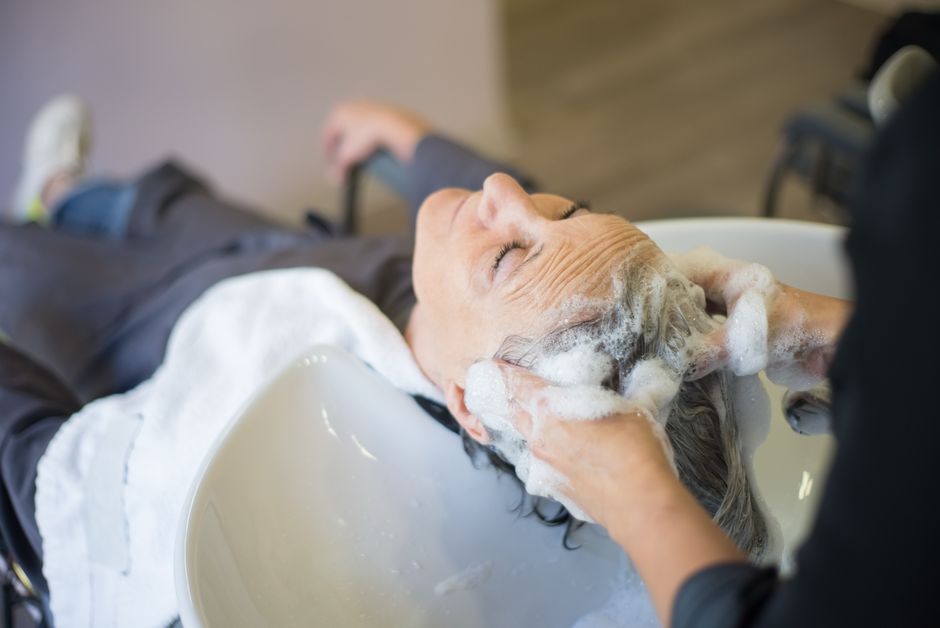
Most people learn to wash their hair as children and never think about it again. The basic method is simple: wet your hair thoroughly, apply shampoo to the scalp, massage it in gently with your fingertips, and rinse well. Follow with conditioner on the mid-lengths and ends, leave it on for the time the product label states, then rinse. That is the whole routine — the details below explain why each step matters and where common habits go wrong.
How To Properly Shampoo And Condition Your Hair?
Shampoo cleans the scalp. Conditioner protects the hair fiber. Treating these as two separate jobs — rather than one combined scrub — is the core of doing both well.
Shampoo contains surfactants, molecules with one end that binds to oil and dirt and another that binds to water. When you rinse, water carries the oil away with it. That process is efficient, and it does not distinguish between sebum your scalp needs and sebum you want gone. This is why technique matters: you want enough cleaning to remove buildup, not so much that you strip the scalp.
Conditioner works differently. It deposits conditioning agents — often fatty alcohols, silicones, or plant oils — onto the hair surface. These smooth the cuticle, the outer layer of overlapping scales on each strand. A smoother cuticle reflects light better and feels less rough. It also reduces friction, which means less breakage when you comb wet hair. Wet hair is more fragile than dry hair, so this matters more than most people realize.
The practical takeaway: focus shampoo on the scalp, focus conditioner on the lengths and ends, and rinse both thoroughly.
How Often Should You Wash Your Hair?
There is no single correct answer, and anyone who tells you otherwise is guessing. Wash frequency depends on your scalp’s oil production, your hair texture, how much you sweat, and how your scalp responds to less frequent washing.
People with fine, straight hair often find it looks oily within a day or two. People with thick, curly, or coily hair often wash less often — sometimes once a week or less — because their hair is drier and more prone to breakage from repeated wetting and manipulation. Dermatologists generally do not set a universal schedule. The signal to watch is your scalp: persistent itching, flaking, or irritation suggests something needs adjusting, whether that means washing more often or less.
One non-obvious point: the popular idea that you can “train” your scalp to produce less oil by washing less often is not well supported. Sebum production is largely driven by hormones and genetics. Washing less may make the oil less noticeable over time, but there is no strong evidence your scalp recalibrates its output.
Does Shampoo Technique Actually Matter?
Yes, mostly because of how you handle the hair, not because of any secret application method. The common mistakes are mechanical.
- Scrubbing with fingernails. This can scratch the scalp and cause irritation. Use your fingertips and gentle circular motions.
- Piling hair on top of your head. This creates tangles and friction. Let the lather run down the lengths instead of scrubbing them.
- Applying shampoo to the ends first. The ends are the oldest, driest part of the hair. They usually get clean enough from the lather rinsing through.
- Rinsing too briefly. Leftover product can leave hair feeling heavy or dull and may irritate the scalp.
Shampooing the scalp and letting the runoff handle the lengths is standard advice from dermatologists and trichologists. It is not a rigid rule, but it reflects a real difference: the scalp produces oil, and the ends do not.





How Should You Apply Conditioner?
Apply conditioner from about the mid-lengths down to the ends, avoiding the scalp unless your hair is very dry or your product is designed for scalp use. The scalp already has natural oils. Adding heavy conditioner there can make roots look flat and, in some people, contribute to buildup.
Leave it on for the time the label recommends. Many conditioners work within a minute or two. Deep conditioners and masks often call for longer. There is no evidence that leaving standard conditioner on for an hour does more than leaving it on for a few minutes — once the conditioning agents have bound to the hair, extra time adds little.
Rinse with cooler water if you can tolerate it. Cooler water does not “seal” the cuticle in the way some beauty advice claims — the cuticle does not open and close like a door — but it can reduce the appearance of frizz and feels soothing on an irritated scalp. The effect is cosmetic and temporary.
What About Sulfates, Silicones, and “Natural” Shampoos?
Sulfates are the surfactants that make shampoo lather and clean effectively. Some people find them drying, particularly those with dry or color-treated hair. Sulfate-free shampoos exist and can work well, though they often lather less and may require more mechanical effort to distribute.
The claim that sulfates are harmful to health is not supported by current evidence at the concentrations found in consumer shampoos. They can be irritating to the scalp and eyes, and they can fade color-treated hair faster, but the “toxin” framing is marketing rather than science.
Silicones are conditioning agents that coat the hair and make it feel smooth. Some marketing claims say they “build up” and suffocate hair. Silicones can accumulate with heavy use, particularly on fine hair, and some people prefer to clarify periodically with a stronger shampoo. But the idea that silicones are damaging is not supported. They are among the most studied conditioning ingredients in hair care.
“Natural” is not a regulated term in cosmetics and does not guarantee a product is gentler or safer. Some botanical ingredients are common allergens. Patch testing new products is reasonable, especially if you have sensitive skin or a history of reactions.
What Causes Hair Damage During Washing?
Most wash-day damage comes from friction and heat, not from the products themselves. Wet hair stretches more than dry hair and is more vulnerable to breaking. Rough towel-drying, aggressive combing, and tight hairstyles on wet hair are common culprits.
Pat hair dry with a soft towel rather than rubbing. Detangle with a wide-tooth comb, starting at the ends and working upward. If you use heat styling, apply a heat protectant and keep the tool moving — holding a hot iron or dryer in one spot causes localized damage that accumulates over time.
Color-treated, chemically relaxed, or bleached hair is more porous and fragile. It generally benefits from gentler cleansing, more frequent conditioning, and less heat. There is no product that repairs split ends — trimming is the only fix — but conditioning can reduce further breakage.
Do You Need to Change Your Routine Seasonally or With Age?
Possibly, and it is worth paying attention. Scalp oil production tends to decline with age, and hair can become drier and thinner over time. What worked in your twenties may feel stripping in your fifties. Seasonal humidity changes can also affect how hair behaves — more frizz in summer, more static in winter.
If your scalp becomes persistently itchy, flaky, or irritated despite reasonable care, that is worth discussing with a dermatologist. Dandruff and seborrheic dermatitis are common and treatable, and they are not caused by poor hygiene. Assuming a scalp problem is a washing failure can delay getting the right help.
Frequently Asked Questions
Should you shampoo twice?
A single wash is enough for most people. A second wash can help if you use a lot of styling products or go several days between washes, but it is not required and may dry out some scalps.
Does conditioner cause hair loss?
No. Conditioner does not cause hair loss. It can make hair look flatter if applied too close to the roots, but that is a styling effect, not a change in hair growth.
Is it bad to wash your hair every day?
Not inherently. Daily washing suits some scalps and hair types, especially fine or oily hair. It can be drying for dry, curly, or color-treated hair, so frequency should match how your hair and scalp respond.
Can you use conditioner without shampoo?
Yes, a “co-wash” routine uses conditioner alone to cleanse. It can work for dry or curly hair, but it may not remove heavy product buildup as effectively as shampoo.
