
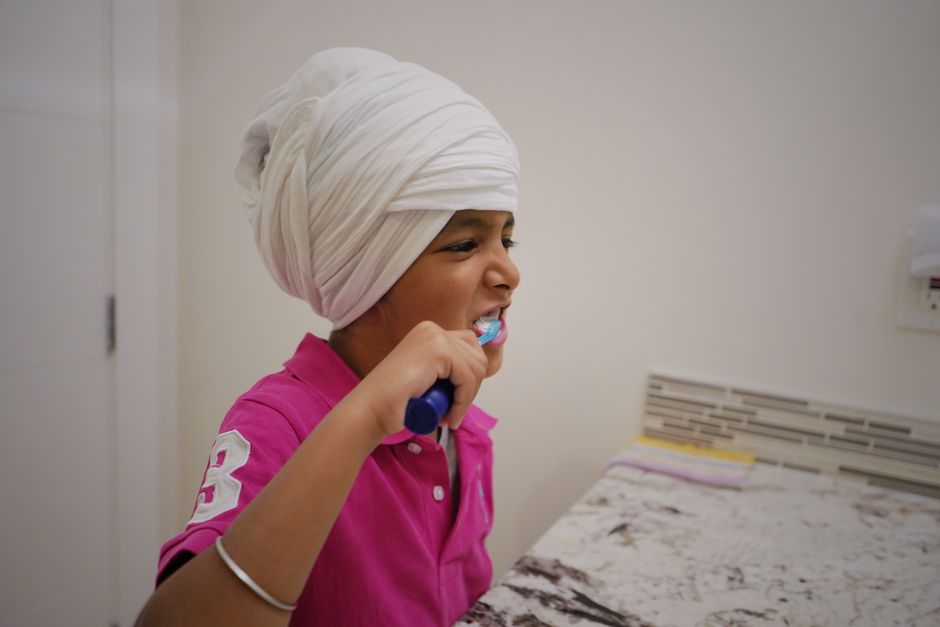
Brushing your teeth with grills requires removing the grill first, cleaning your natural teeth with a soft-bristled brush and fluoride toothpaste, then cleaning the grill itself before putting it back in. Never brush your teeth while a removable grill is in place — you cannot reach the tooth surfaces underneath, and the bristles cannot clean the grill’s inner surface either. If your grill is permanently fixed, you need a different approach built around interdental brushes and professional maintenance.
How To Properly Brush Your Teeth With Grills?
Start by taking the grill out. This is the single most important step, and it is not negotiable for removable grills.
With the grill out, brush your natural teeth the way you normally would. Use a soft-bristled toothbrush and fluoride toothpaste. Angle the bristles toward the gumline and brush in small circles. Cover every surface — front, back, and chewing edges. Two minutes is the standard most dental organizations recommend.
Then clean the grill separately. Rinse it under warm water. Use a separate soft brush — not the one you use on your teeth — to scrub the inside surface where it contacts your teeth and gums. A mild antibacterial soap or a denture cleanser works for this. Rinse it thoroughly before putting it back in.
Do this every time you brush. If you wear your grill all day, that means two to three times daily. If you only wear it occasionally, clean your teeth and the grill both before and after each wear period.
The reason this matters is straightforward. A grill creates a sealed space against your teeth. Saliva can’t wash the area. Food particles and bacteria get trapped. That environment is exactly what cavity-causing bacteria need to multiply.
Why Can’t You Just Brush Over a Removable Grill?
Because the bristles never reach the tooth surface. A grill sits between the brush and your enamel.
Think about what brushing actually does. It physically disrupts the bacterial film — plaque — that forms on teeth. If a layer of metal, plastic, or gold is covering that surface, the brush is cleaning the grill, not the tooth. Plaque keeps building underneath.
There is a second problem. The inside of a grill is not smooth in the way tooth enamel is. It has crevices, edges, and contact points where bacteria collect. A quick pass with a toothbrush over the outside of the grill does almost nothing for those areas.
Some people assume that because the grill feels smooth and looks clean, the teeth underneath are fine. They usually are not. Decay under a grill can progress for a long time before it causes pain. By the time it hurts, the damage is often significant.
What About Permanent or Fixed Grills?
Fixed grills — the kind cemented or bonded in place — cannot be removed for cleaning. This changes the routine completely, and it raises the risk to your teeth.
A regular toothbrush cannot get under a fixed grill. You need interdental brushes, floss threaders, or a water flosser to reach the margins where the grill meets the tooth and gum. Some clinicians recommend these tools for fixed grills, though the evidence for how well they prevent decay under a permanently bonded grill is limited. The mechanical problem is real: any surface you cannot reach with a cleaning tool is a surface where plaque accumulates.
If you have a fixed grill, the most important thing you can do is see a dentist regularly. Professional cleaning and examination can catch problems in areas you cannot see or reach. Ask your dentist specifically to check the margins around the grill. General brushing advice does not fully apply here, and no home routine substitutes for professional monitoring.
This is also worth saying plainly: permanently bonded grills carry a real risk of long-term tooth damage, and some dentists advise against them for that reason. That is a conversation to have with a dental professional who can examine your specific situation.
What Supplies Do You Actually Need?
You need two separate brushes and a fluoride toothpaste. Keeping them separate matters because the brush you use on the grill should not go back into your mouth on your teeth.
- A soft-bristled toothbrush for your natural teeth
- A second soft brush for cleaning the grill
- Fluoride toothpaste for your teeth
- Mild antibacterial soap or a denture cleanser for the grill
- Interdental brushes or floss for between teeth, especially with fixed grills
Fluoride toothpaste is the one product here with strong evidence behind it. It remineralizes enamel and reduces cavity risk. That protection matters more, not less, when you wear a grill, because the grill limits your saliva’s natural cleaning action.
Be cautious with abrasive whitening toothpastes on grills and on teeth that sit under grills. Abrasives can scratch the grill surface, and scratched surfaces hold more bacteria. There is no strong evidence that any special grill-cleaning product outperforms basic soap and water plus a soft brush, despite what some products claim.
How Often Should You Clean Your Grill and Teeth?
Brush your teeth at least twice a day, and clean the grill every time you remove it.
If you wear a grill for long stretches, add a cleaning session. The longer the grill stays on, the more bacteria accumulate underneath. A mid-day rinse and brush of both the teeth and the grill is reasonable if you wear it all day.
Never eat with a removable grill in. Food gets packed against your teeth, and the grill can also be damaged by chewing. Remove it before meals, then clean your teeth and the grill afterward before putting it back.
Do not sleep in a removable grill either. Overnight wear gives bacteria hours of undisturbed time against your enamel, and it also increases the chance you swallow or damage the grill.
What Are the Real Risks of Wearing Grills?
The main risk is tooth decay under the grill. This is well established and not a rare complication.
When a grill covers teeth, it traps plaque and limits saliva contact. Saliva normally helps neutralize acids and wash away food. Blocking that process raises cavity risk on the covered surfaces. Gum irritation is common too, especially if the grill fits poorly or presses on the gums.
Some grills contain base metals. Reports of allergic reactions and gum inflammation from certain grill materials exist, and some metals used in jewelry grills have raised separate health concerns. If your gums look red, swollen, or tender where the grill sits, that is a sign to remove it and get it checked rather than push through.
There is no evidence that any grill design protects teeth. Grills are decorative. They do not clean, whiten, or strengthen teeth, and no study shows otherwise. Treat them as something you wear for appearance and manage the added risk deliberately.
When Should You See a Dentist?
See a dentist if you wear grills regularly, and be direct about it. Tell them you wear one so they know to check the surfaces it covers.
Get in sooner if you notice any of these:
- Pain or sensitivity in a tooth that sits under the grill
- Red, swollen, or bleeding gums around the grill
- A bad taste or persistent bad breath
- Visible dark spots or pits on tooth surfaces
- Loose or damaged grill that no longer fits well
These can signal decay or gum disease that has been developing out of sight. Early treatment is far simpler than waiting. A dentist can also tell you whether your grill is putting specific teeth at risk based on how it fits.
Frequently Asked Questions
Can you brush your teeth with a grill in?
No. A removable grill blocks the brush from reaching your tooth surfaces, so plaque keeps building underneath. Always remove the grill before brushing your teeth.
How do you clean a grill before wearing it?
Rinse it with warm water, scrub the inside with a separate soft brush and mild soap or denture cleanser, then rinse thoroughly. Use a different brush than the one for your teeth.
How often should you clean your teeth if you wear a grill?
Brush your natural teeth at least twice a day and clean the grill every time you take it out. If you wear it all day, a mid-day cleaning of both is reasonable.
Do grills cause tooth decay?
They can. A grill traps plaque and limits saliva contact with the covered teeth, which raises cavity risk on those surfaces. Regular dental checkups help catch problems early.
