
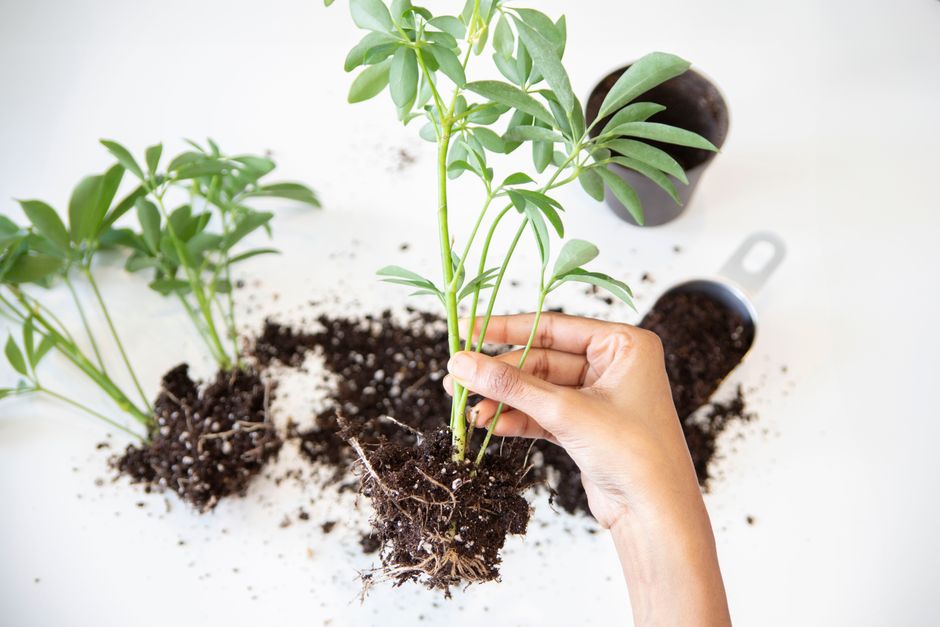
Periwinkle propagates easily from stem cuttings and by division, and both methods work best in early spring or early fall when the plant is actively growing but not stressed by peak summer heat. Take 4 to 6 inch cuttings from healthy stems, strip the lower leaves, and root them in water or moist potting mix. For division, dig up a mature clump in cool weather, separate the rooted sections by hand or with a sharp spade, and replant each section at the same depth it grew before.
What Plant Is Commonly Called Periwinkle?
Two different plants share the name periwinkle, and they propagate in similar ways. Knowing which one you have helps you predict how it will behave in your garden.
Vinca minor, or common periwinkle, is a low-growing evergreen groundcover with blue-purple flowers. It spreads by long stems that root wherever they touch soil. Vinca major, or greater periwinkle, looks nearly identical but has larger leaves and grows more aggressively. Both are in the dogbane family, Apocynaceae.
There is also Catharanthus roseus, often sold as Madagascar periwinkle. It is a tender tropical plant grown as an annual in most of the United States. It is not related to the two Vinca species, and its propagation works a little differently.
One thing all three share: the stems and leaves contain alkaloids that make them toxic if eaten. Keep them away from pets and small children who might chew on plants.
How To Propagate Periwinkle From Cuttings And Division?
Cuttings and division both produce a plant identical to the parent. There is no seed variation, no waiting for germination, and no guesswork about what the flower will look like. That is why these two methods are the standard way periwinkle gets passed around gardens.
The choice between them comes down to what you have and what you want.
- Use cuttings when you want many new plants from one stem, when you are starting with a small amount of plant material, or when you want to root pieces without disturbing the parent plant.
- Use division when you have an established clump that needs thinning anyway, or when you want a large, ready-to-plant section immediately.
Cuttings take longer to reach a full size, but you get more plants per stem. Division gives you instant coverage, but you can only divide a plant into as many pieces as it has distinct rooted sections.
How Do You Take Periwinkle Cuttings?
Take cuttings in early spring or early fall. Avoid the hottest part of summer, when cuttings lose water faster than they can replace it, and avoid freezing weather.
Choose a healthy stem with no yellowing, spots, or pest damage. Using clean sharp scissors or pruners, cut a 4 to 6 inch section just below a leaf node. The node is the bump where a leaf meets the stem, and it is where new roots form most readily.
Strip the leaves from the bottom 2 inches of the cutting so the bare stem can contact the rooting medium. If you are taking several cuttings, keep them in a plastic bag with a slightly damp paper towel until you pot them, so they do not dry out.
You can dip the cut end in rooting hormone powder, though periwinkle roots readily without it. Rooting hormone is most useful when conditions are less than ideal, such as cool temperatures or a cutting that has been sitting for a while.





Should You Root Periwinkle Cuttings In Water Or Soil?
Both work. Water rooting lets you watch roots develop, which is satisfying and useful for a beginner. Soil rooting produces a plant that is already adapted to growing in potting mix, so there is no shock when you transplant it.
For water rooting, place the cuttings in a glass or jar with the bottom inch or two submerged. Change the water every few days to keep it from clouding. Roots typically appear within a couple of weeks. Once roots are an inch or two long, move the cutting into potting mix so it can get nutrients.
For soil rooting, fill a small pot with a light potting mix or a mix of peat and perlite. Push the cut end about 2 inches into the mix, firm it gently, and water it in. Keep the mix consistently moist but not soggy. A plastic bag over the pot or a humidity dome helps keep the leaves from drying out, but open it now and then for airflow.
Either way, keep the cuttings out of direct sun. Bright, indirect light is enough. Roots usually form within two to four weeks, though the exact timing depends on temperature and how healthy the cutting was to start.
How Do You Divide An Established Periwinkle Plant?
Division works best in early spring or early fall, when the plant is growing but the weather is mild. Water the plant well a day before you plan to dig it up. Moist soil holds together better and puts less stress on the roots.
Use a spade or garden fork to dig around the outer edge of the clump, then lift the whole root ball out. Shake off loose soil so you can see where the natural divisions are. Periwinkle often separates into sections on its own, especially where stems have rooted at the nodes.
Pull the sections apart by hand when you can. If the roots are tightly tangled, use a sharp spade or knife to cut through them. Each new section needs roots and several healthy stems to survive on its own.
Replant each division at the same depth it was growing before. Planting too deep can bury the crown and cause rot. Water thoroughly after planting and keep the soil moist for the first few weeks while the roots re-establish.
What Conditions Help New Periwinkle Plants Establish?
Periwinkle is not fussy, but new plants do better with a little attention at the start.
- Light: Periwinkle tolerates full sun to part shade. In hot climates, afternoon shade reduces stress on young plants.
- Soil: It grows in most soils but prefers well-drained ground. Standing water is the main thing that kills it.
- Water: Keep new plantings evenly moist for the first few weeks, then let the soil dry slightly between waterings.
- Spacing: Space plants about 8 to 12 inches apart if you want them to fill in as a groundcover.
Once established, periwinkle is drought-tolerant and needs little care. That toughness is part of why it spreads so readily, and why it can become a problem in the wrong spot.
Is Periwinkle Invasive?
In many parts of the United States, yes. Vinca minor and Vinca major are both listed as invasive in various regions, particularly in the Pacific Northwest, the Mid-Atlantic, and parts of the Southeast. They spread by rooting stems and can form dense mats that crowd out native plants.
This matters for where you plant it. A patch in a contained bed or a tough spot where nothing else grows is manageable. A patch near a woodland edge or a natural area is a different situation, because it can escape into surrounding habitat.
If you want the look without the risk, consider native groundcovers for your region. Your local extension office can tell you what is invasive where you live. That is more reliable than a general rule, since invasive status varies by state and even by county.
Can You Propagate Madagascar Periwinkle The Same Way?
Madagascar periwinkle (Catharanthus roseus) roots from cuttings using the same basic method, but it is a tender plant. It does not survive frost, so in most of the country it is grown as an annual or brought indoors for winter.
Take cuttings from healthy stems in late summer if you want to overwinter the plant indoors. Root them in water or potting mix, then keep them in a bright window. Division is less practical for Madagascar periwinkle because it usually grows as a single-stemmed plant rather than a spreading clump.
Madagascar periwinkle also grows easily from seed, unlike the Vinca species, which are usually propagated vegetatively because seed is slow and unreliable.
Common Mistakes To Avoid
Most propagation failures come down to a few predictable problems.
- Cutting in the wrong season. Peak summer heat and freezing winter temperatures both make rooting harder. Early spring and early fall are the reliable windows.
- Letting cuttings dry out. A cutting has no roots yet, so it cannot replace water it loses. Keep it humid and out of direct sun.
- Planting divisions too deep. Burying the crown is a common cause of rot in new divisions.
- Overwatering. Consistent moisture is good. Soggy soil is not, and periwinkle roots rot in poorly drained ground.
- Planting where it can escape. Given how readily periwinkle spreads, site selection matters as much as technique.
Frequently Asked Questions
What is the best time to take periwinkle cuttings?
Early spring or early fall, when the plant is actively growing but not under heat or cold stress. Cuttings taken in these windows root more reliably than those taken in midsummer or winter.
How long do periwinkle cuttings take to root?
Roots usually form within two to four weeks, depending on temperature and the health of the cutting. Water-rooted cuttings show roots sooner because you can see them develop.
Can you propagate periwinkle in water?
Yes, periwinkle roots readily in water with the bottom inch or two of the stem submerged. Move the cutting into potting mix once roots reach an inch or two long.
Is periwinkle invasive in the US?
Vinca minor and Vinca major are listed as invasive in several regions of the United States, including parts of the Pacific Northwest and Mid-Atlantic. Check with your local extension office, since status varies by state.
