
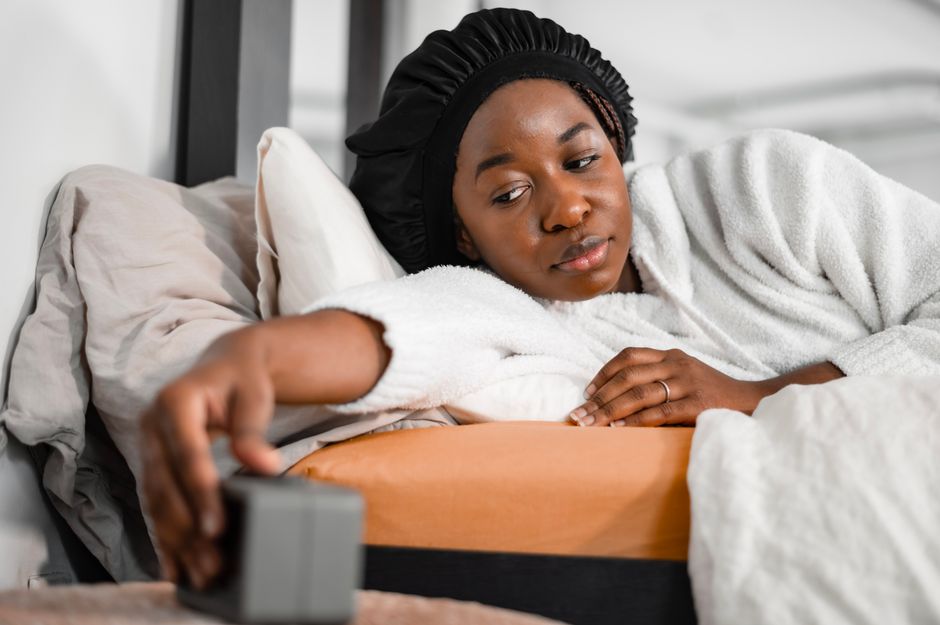
You can promote REM sleep with daily habits by keeping a consistent sleep and wake schedule, getting morning daylight, staying physically active earlier in the day, and protecting the final hours before bed from alcohol, late caffeine, and bright light. REM sleep arrives mostly in the second half of the night, so the single most effective habit is simply giving yourself enough time asleep. Most adults need seven or more hours, and shortchanging that window removes REM before it has a chance to happen.
REM stands for rapid eye movement sleep. It is the stage where most vivid dreaming occurs, and it plays a role in memory processing and emotional regulation. Unlike deep sleep, which is concentrated in the first part of the night, REM builds in cycles that lengthen toward morning. That timing is why your daily choices matter so much.
What Is REM Sleep and Why Does Timing Matter?
REM sleep is one of the four stages your brain cycles through several times a night, alongside three stages of non-REM sleep. During REM, your eyes dart beneath closed lids, your breathing becomes irregular, and most of your skeletal muscles go temporarily limp. Brain activity looks closer to wakefulness than to deep sleep.
Each sleep cycle lasts roughly 90 minutes in adults. Early cycles contain more deep non-REM sleep and only brief REM. As the night progresses, the REM portion of each cycle grows longer. By the final cycles before waking, REM can occupy a large share of the cycle.
This pattern has a practical consequence. If you go to bed late but wake at a fixed time, you cut off the REM-rich hours at the end of the night. If you wake early after a normal bedtime, you also lose REM. The takeaway is not a trick or a supplement. It is protecting a full sleep window.
How To Promote REM Sleep With Daily Habits?
The habits that support REM are mostly the same habits that support good sleep as a whole. There is no proven method to force the brain into REM on demand. What you can do is remove the things that fragment sleep and create conditions where normal sleep architecture can unfold.
Start with a fixed wake time, seven days a week. Anchoring your wake time stabilizes your internal body clock, called the circadian rhythm, more reliably than a fixed bedtime does. Your bedtime can flex; your wake time should not drift much, even on weekends.
Get outside in the morning. Bright light in the first hours after waking helps set the circadian clock and supports earlier, more consistent sleep onset at night. Indoor lighting is usually far dimmer than daylight, so a short walk outdoors does more than sitting near a window.
Move your body during the day. Regular physical activity is associated with better sleep quality in many studies. The evidence is strongest for moderate aerobic activity. Timing matters for some people: vigorous exercise close to bedtime can delay sleep for those who feel revved up afterward, so many clinicians suggest finishing intense workouts a few hours before bed.
Keep the bedroom cool, dark, and quiet. These are standard sleep hygiene recommendations supported by broad clinical guidance, though individual trials on each factor vary in strength.
Which Daily Habits Disrupt REM Sleep?
Alcohol is the most common self-inflicted disruptor of REM sleep. It can help you fall asleep faster, which is why people reach for it. But as the body metabolizes alcohol during the night, sleep becomes lighter and more fragmented, and REM is typically suppressed in the first part of the night. Some research suggests REM rebounds later, often alongside awakenings. The net effect is usually poorer quality sleep, not better.
Caffeine is a stimulant with a long half-life. A substantial portion of a dose can still be active in your body many hours after drinking it. For people sensitive to caffeine, an afternoon coffee can make sleep lighter and reduce total sleep time, which in turn trims REM. Cutting caffeine in the late afternoon is a reasonable habit for most adults.
Late heavy meals and large amounts of fluid close to bedtime can cause reflux or nighttime urination, both of which fragment sleep. Fragmentation is the enemy of the longer REM cycles that occur late in the night.
Nicotine is another stimulant that disturbs sleep. And some medications, including certain antidepressants, are known to suppress REM sleep as a side effect. That is a conversation to have with a prescriber, not a reason to stop a medication on your own.
Does Light Exposure and Screen Time Affect REM?
Light is the most powerful signal your body uses to set its internal clock. Bright light in the evening, including from screens, can delay the release of melatonin and push your sleep timing later. That delay matters because a later sleep onset, combined with a fixed alarm, shortens the total sleep window and squeezes the REM-rich morning hours.
The evidence on screens specifically is more mixed than headlines suggest. Some studies find associations between evening screen use and poorer sleep; others find the effect depends more on what the screen displaces, such as delaying bedtime, than on the light itself. The practical move is straightforward. Dim your environment in the last hour or two before bed and keep the bedroom dark.
Morning light is the other half of the equation. Bright light early in the day helps advance and stabilize your clock, which supports earlier, more consolidated sleep at night.
Can Exercise and Stress Habits Change Your REM Sleep?
Exercise and stress management both influence sleep architecture, though the evidence is more nuanced than marketing suggests. Regular moderate exercise is linked with better sleep quality in observational studies and some trials. Whether it specifically increases REM is less clear; findings vary across studies.
What is well established is that psychological stress and anxiety fragment sleep. Racing thoughts at bedtime delay sleep onset, and frequent awakenings interrupt the cycles that carry you into REM. Habits that lower arousal before bed, such as slow breathing, reading a paper book, or a consistent wind-down routine, are widely recommended by clinicians. The strength of evidence for any single technique is modest, but the general principle of reducing pre-sleep arousal is sound.
One clarification worth knowing: REM sleep is not the same as dreaming, though most vivid dreams happen in REM. You can dream in non-REM sleep too. So “I dreamed a lot” is not a reliable measure of how much REM you got.
How Much REM Sleep Do You Actually Need?
REM typically makes up about 20 to 25 percent of total sleep in healthy adults. That proportion shifts across the lifespan. Infants spend a much larger share of sleep in REM, and the percentage tends to decline gradually with age.
There is no reliable way to measure your own REM at home. Consumer sleep trackers estimate sleep stages from movement and heart rate patterns, but their stage-level accuracy varies and they are not diagnostic tools. If you are concerned about your sleep quality, a clinician can discuss whether a formal sleep study is appropriate.
The more useful question is whether you are getting enough total sleep and waking rested. Chasing a specific REM number is not something current evidence supports. Protecting a full, consistent sleep window is.
When Should You Talk to a Doctor About Sleep?
Talk to a clinician if you snore loudly, gasp or choke during sleep, wake unrefreshed despite adequate time in bed, or feel excessively sleepy during the day. These can be signs of sleep apnea, a condition where breathing repeatedly stops during sleep. Sleep apnea fragments sleep and can reduce REM, and it is a medical issue that habits alone will not fix.
Persistent insomnia, restless legs, and unusual movements during sleep are also worth raising. Some sleep disorders have effective treatments, and identifying them matters more than optimizing daily routines.
Frequently Asked Questions
What is the fastest way to increase REM sleep?
The fastest reliable way is to extend your time in bed, since REM concentrates in the final hours of sleep. There is no proven shortcut that forces extra REM on demand.
Does alcohol reduce REM sleep?
Yes, alcohol commonly suppresses REM in the first part of the night and tends to fragment sleep later. The result is usually lighter, less restorative sleep overall.
Can I get more REM sleep by waking up later?
Often yes, because REM cycles lengthen toward morning. Sleeping in occasionally can capture more REM, but a consistent wake time is generally better for overall sleep quality.
Do sleep trackers accurately measure REM sleep?
Consumer trackers estimate sleep stages and their accuracy varies, so they are not reliable for measuring REM precisely. A clinical sleep study is the standard method.
