
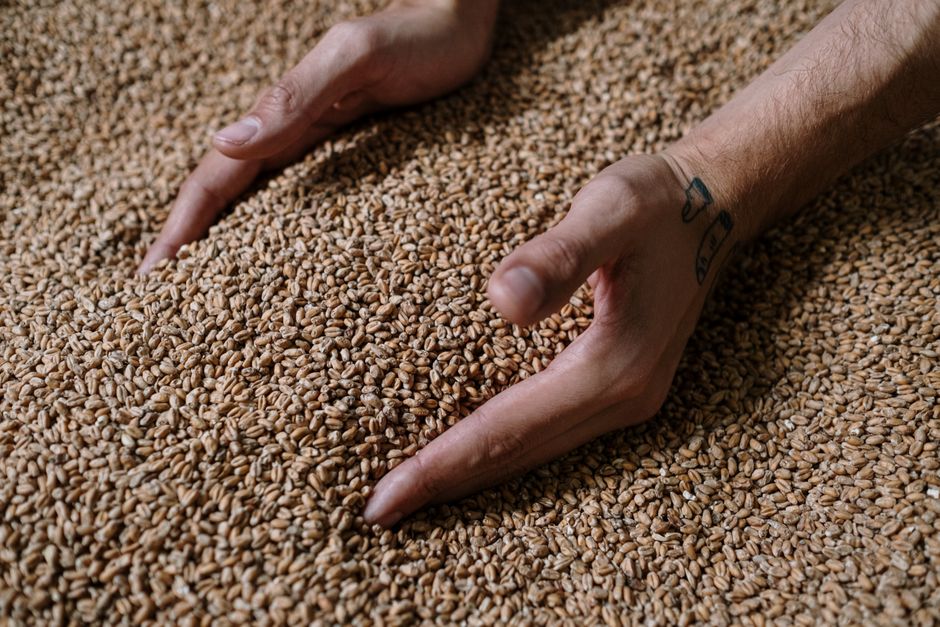
Turning wheat into flour is one of the oldest food processes on earth, and the basic idea has not changed in thousands of years. You clean the grain, condition it with a little moisture, grind it into a powder, and sift it to control the texture. Home cooks can do a simplified version with a grain mill or a high-speed blender, while commercial mills run the same steps at industrial scale with far more precision.
What Are the Main Steps in Processing Wheat Into Flour?
The process moves through a predictable sequence: cleaning, tempering, grinding, sifting, and sometimes blending or aging. Each step affects how the final flour behaves in baking.
Here is the full sequence, whether you are working with a sack of wheat berries at home or a commercial mill:
- Cleaning — removing stones, chaff, dust, and damaged kernels. Commercial mills also use magnets to catch metal and separators to pull out foreign seeds.
- Tempering (conditioning) — adding a controlled amount of water and resting the grain so the bran becomes slightly tough and the endosperm becomes easier to fracture cleanly.
- Grinding or milling — breaking the kernel apart into particles. This can be one pass (stone grinding) or many passes (roller milling).
- Sifting or bolting — separating bran and germ from the white endosperm to whatever degree you want.
- Optional blending and aging — recombining streams to make specific flour types, or letting flour rest so it oxidizes and whitens.
Every flour on a store shelf is a variation on this same path. The differences come from how far each step is pushed.
How Do You Clean and Prepare Wheat Before Milling?
Cleaning matters more than most people realize. A single small stone can damage a home mill’s burrs, and residual dirt affects both flavor and shelf life.
At home, start by spreading the wheat berries on a tray and picking out anything that is not grain — broken kernels, pebbles, chaff. Then rinse the berries in water and dry them thoroughly. Wheat needs to be dry before grinding. Moisture makes the flour clump and can cause it to spoil faster.
Commercial mills take cleaning much further. They run grain through a series of screens, air classifiers, disc separators, and magnetic units. This is not fussiness — foreign material in flour is a food safety issue, and milling equipment is expensive to repair.
Tempering is the step home millers usually skip. In commercial milling, a small, precisely controlled amount of water is added to the grain and it rests for a period before grinding. The bran becomes leathery rather than brittle, so it breaks into larger flakes that separate more cleanly from the endosperm. The practical result is flour that sifts more easily and keeps better. You can approximate this at home by misting the berries lightly and letting them sit, but getting the moisture level right without a moisture meter is genuinely difficult. Many home millers simply grind dry grain and accept a coarser sift.
How To Process Wheat Into Flour Step By Step at Home
Home milling is straightforward once you have the right equipment. The quality of your flour will depend heavily on the grinder and on how fine you can sift.
What you need
- Wheat berries (hard red or hard white for bread; soft white for pastries and cakes)
- A grain mill, or a high-speed blender as a workaround
- A fine-mesh sieve or a flour sifter
- A clean, dry bowl and an airtight storage container
The steps
1. Inspect and clean the grain. Pick out debris and damaged kernels. Do not skip this.
2. Grind in small batches. Feed berries into the mill at the rate the manufacturer specifies. Overloading strains the motor and produces uneven flour. A blender can work in short pulses, but it tends to produce coarser, less uniform flour and can heat the grain, which affects quality.
3. Sift if you want white flour. Freshly ground whole wheat flour contains bran and germ. Sifting removes some of the bran, giving a lighter flour. A standard sieve will not produce truly white flour — commercial white flour requires equipment that separates the kernel before grinding. Expect a light whole wheat flour rather than a true white one.
4. Cool and store. Freshly ground flour is warm from friction. Let it cool before sealing it. Whole wheat flour contains the germ’s oils, which go rancid faster than white flour. Storing it in the refrigerator or freezer extends its usable life considerably.
One thing home millers notice quickly: fresh whole wheat flour absorbs more water than store-bought flour, and recipes often need adjustment. This is normal and not a sign you did something wrong.





How Does Commercial Flour Milling Work?
Commercial milling is the same process with far more control and many more passes. Modern mills use roller mills rather than stones, and the grain is broken down gradually rather than all at once.
The kernel is made of three parts: the bran (outer layers), the germ (the embryo), and the endosperm (the starchy bulk). Roller mills separate these deliberately. A series of steel rollers, each set slightly closer than the last, cracks the kernel open and scrapes the endosperm away from the bran in stages. Between each pass, sifting machines sort the particles by size. Coarse pieces go back through finer rollers.
This gradual approach does something stone grinding cannot: it separates bran and germ cleanly from endosperm. That is how white flour is made — not by bleaching, but by physically excluding the bran and germ. The germ is often set aside because its oils shorten shelf life, though some mills sell it separately as a nutritional product.
After milling, flour may be aged or treated. Aging allows natural oxidation, which strengthens gluten and whitens the flour slightly. Some commercial flours are also enriched with vitamins and minerals to replace nutrients lost when the bran and germ are removed. Enrichment is a standard practice in the United States and is regulated.
What Is the Difference Between Whole Wheat and White Flour?
The difference comes down to what gets removed. Whole wheat flour contains all three parts of the kernel. White flour contains only the endosperm.
| Flour type | What it contains | Typical use |
|---|---|---|
| Whole wheat | Bran, germ, endosperm | Breads, heartier baked goods |
| White (all-purpose, bread) | Endosperm only | Most baking, lighter texture |
| Stone-ground whole wheat | All three parts, ground together | Breads, rustic baking |
The bran and germ carry fiber, B vitamins, vitamin E, and healthy fats. Removing them lowers the fiber content and strips out much of the nutritional value — which is why enrichment exists. It replaces some, but not all, of what was lost. Fiber, for example, is not restored by enrichment.
Whole wheat flour also behaves differently in baking. Bran particles interfere with gluten development, so whole wheat doughs tend to be denser and need more water. This is a physical effect, not a flaw in the flour.
Does Freshly Milled Flour Need to Age?
Freshly milled flour works fine for most baking, but some bakers find it performs better after a short rest. The evidence on exactly how long and how much it matters is not strong.
Fresh flour contains compounds that can make dough stiffer and less extensible. Allowing it to rest lets natural oxidation occur, which some bakers report improves gluten strength and dough handling. This is widely practiced among home millers, though controlled studies comparing fresh versus aged home-milled flour are limited. Treat it as a reasonable practice rather than a proven requirement.
What is well established is storage. Whole grain flour goes rancid faster than white flour because of the oils in the germ. Keeping it cool and dry, and using it within a reasonable window, matters more than aging it.
Can You Grind Wheat Without a Mill?
You can, but the results are limited. A high-speed blender, a coffee grinder, or a food processor can break wheat berries into a coarse powder. None of them produces the fine, uniform flour a dedicated mill does.
The main problems are heat and inconsistency. Blenders generate friction heat that can affect flour quality, and the particle size comes out uneven. For small batches of coarse flour — for pancakes or rustic bread — this is workable. For fine pastry flour, it is not.
If you plan to mill regularly, a dedicated grain mill is the practical choice. It produces a more consistent grind and handles larger volumes without overheating.
Frequently Asked Questions
How long does it take to grind wheat into flour at home?
A home grain mill grinds a few cups of flour in a couple of minutes. Blenders take longer and require small batches to avoid overheating.
Do you have to wash wheat berries before grinding?
Rinsing removes surface dust, but the berries must be completely dry before grinding. Moisture makes flour clump and shortens its storage life.
Can you make white flour at home?
Not truly white flour, because home sifting cannot fully separate bran and germ from the endosperm. You can produce a lighter whole wheat flour by sifting out some bran.
How long does homemade flour last?
Whole wheat flour keeps for a few months stored in a cool, dry place and longer in the refrigerator or freezer. The germ’s oils make it go rancid faster than commercial white flour.
