
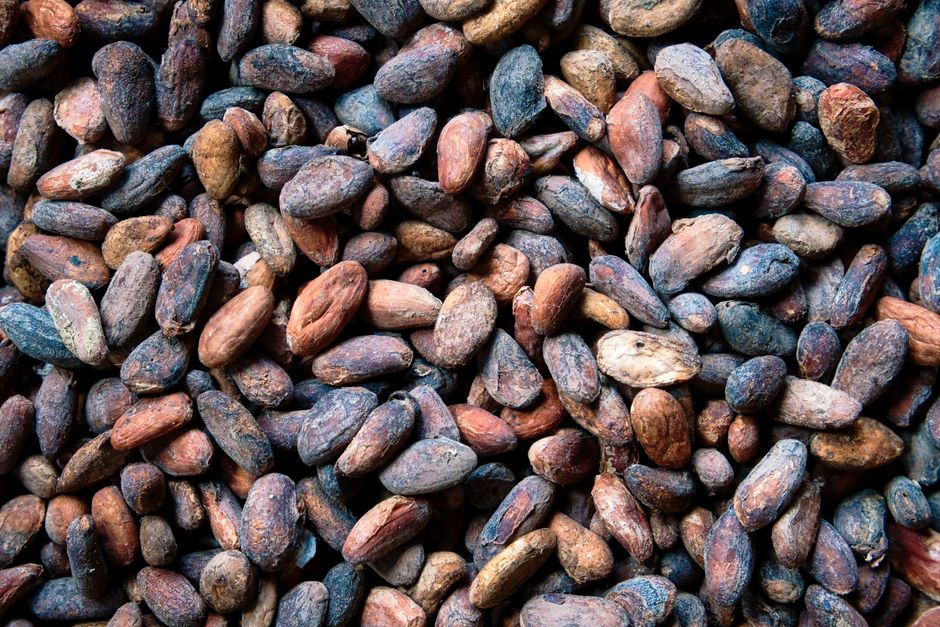
Turning cocoa beans into chocolate takes six basic steps: harvest and ferment the pods, dry and roast the beans, crack and winnow them to remove the shells, grind the nibs into a liquid cocoa mass, add sugar and other ingredients, then conch and temper the mixture into finished chocolate. Every step changes flavor, texture, or both. Skip one and the result is noticeably worse.
Most people picture chocolate as a simple farm-to-bar process. It is not. Fermentation alone can take five to seven days and depends on wild yeast and bacteria the farmer never controls directly. That single stage often decides whether the final bar tastes like fruit or like vinegar.
How To Process Cocoa Beans Into Chocolate
The process begins long before any factory. Cacao grows in pods on trees within roughly 20 degrees of the equator. Workers cut ripe pods, scoop out the seeds and surrounding pulp, and pile them in wooden boxes or banana-leaf bundles to ferment.
Fermentation is where flavor starts. Microbes break down the sugary pulp, the pile heats up, and chemical reactions inside the bean reduce bitterness and build the compounds that later read as chocolate, fruit, or floral notes. After fermentation, beans are spread out to dry in the sun until moisture drops low enough for safe storage and shipping.
At the chocolate maker, beans are cleaned, sorted, and roasted. Roasting develops flavor through the Maillard reaction, the same browning chemistry that gives bread crust and coffee their aroma. Then comes cracking and winnowing: the beans are broken and air blows away the light husks, leaving dark pieces called nibs.
The nibs are ground. Friction and heat melt the cocoa butter inside them, turning solid nibs into a thick liquid called cocoa mass or chocolate liquor. Despite the name, chocolate liquor contains no alcohol. It is simply pure ground cacao, and it is the foundation of all chocolate.
From there, makers add sugar, extra cocoa butter, and often milk powder or vanilla, then refine the mixture until particles are too small for the tongue to detect as gritty. Conching stirs and aerates the mass for hours or days to smooth flavor. Tempering carefully heats and cools the chocolate so the cocoa butter sets into a stable crystal form that gives a glossy snap.
What Happens During Fermentation and Why Does It Matter?
Fermentation is the most important step most people have never heard of. It is also the one chocolate makers cannot fully control, because it happens on farms using naturally occurring microbes.
When beans are piled with their pulp, yeasts start the process by converting sugars into alcohol. Bacteria follow, producing acids and heat. The pile can reach temperatures high enough to kill the seed embryo, which matters because a dead bean no longer fights off the chemical changes that build flavor.
Inside the bean, enzymes break down proteins and other compounds into the building blocks of chocolate aroma. Beans that ferment too little taste harsh and astringent. Beans that ferment too long or unevenly can develop unpleasant, vinegary, or rotten notes. Good fermentation is a balance, and it is largely a matter of farm skill and conditions.
This is why the same cacao variety can produce very different chocolate from one farm to the next. Origin matters, but so does the fermentation method, and the two are hard to separate.
How Are Cocoa Beans Roasted, Cracked, and Ground?
Roasting drives off moisture and develops the flavors fermentation created. Temperature and time are chosen by the maker. Light roasts preserve fruity, acidic notes. Darker roasts bring out deeper, more roasted, sometimes bitter flavors. There is no single correct roast; it depends on the bean and the intended bar.
After roasting, beans are cracked and winnowed. The goal is to separate the brittle shell from the nib without crushing the shell into the nib. Good winnowing keeps shell fragments out, since shell adds grit and dull flavor.
Grinding nibs into cocoa mass is a mechanical process. The heat generated by grinding melts cocoa butter naturally, and the result is a dark, thick liquid. At this point the material is unsweetened and intensely bitter. All the sugar and other ingredients come next.
Some small-scale makers grind for many hours in machines called melangers. The long grinding does two jobs at once: it reduces particle size and starts to smooth the flavor, a bit like early conching.
What Is Conching and Why Does Chocolate Need It?
Conching is a long stirring and aerating process that smooths texture and rounds off harsh flavors. The name comes from an old machine shaped like a conch shell, though modern equipment looks nothing like it.
During conching, moisture and some volatile acids escape, and the chocolate becomes less bitter and less astringent. Fat coats the solid particles more evenly, which improves mouthfeel. Conching can run from hours to several days depending on the maker and the desired result.
The evidence on exactly what conching does chemically is partly practical knowledge built over a century of chocolate making, not something fully mapped by controlled studies. Makers know it works. The precise mechanisms are still studied.
What Does Tempering Do to Chocolate?
Tempering controls how cocoa butter crystallizes. Cocoa butter can solidify into several different crystal forms, and only one of them gives chocolate its desirable qualities: a glossy surface, a clean snap, and a smooth melt.
The process involves heating chocolate to melt all crystals, cooling it to encourage the right crystals to form, then warming it slightly to melt the wrong ones. The result is chocolate that sets properly and resists the dull gray streaks called bloom.
Bloom is harmless. Fat bloom happens when cocoa butter separates and recrystallizes on the surface. Sugar bloom happens when moisture dissolves sugar and it re-crystallizes. Neither means the chocolate is spoiled, though bloom does affect texture and appearance.
How Is Industrial Chocolate Making Different From Bean-to-Bar?
The chemistry is the same. The scale is not. Large manufacturers buy beans in bulk, often blend many origins for consistency, and use automated equipment for roasting, refining, conching, and tempering.
Bean-to-bar makers, by contrast, usually work in small batches and often source single-origin beans to highlight specific flavors. They tend to control each step more closely, which allows more variation from bar to bar.
Neither approach is inherently better. Industrial chocolate is highly consistent and food-safe at scale. Craft chocolate can express more distinct flavor but varies more. Both depend on good beans and careful processing.
One detail worth knowing: white chocolate contains no cocoa solids at all, only cocoa butter, sugar, and milk. Dark chocolate contains cocoa solids and cocoa butter with little or no milk. Milk chocolate includes milk solids. The underlying cacao processing is the same for all three.
What Can Go Wrong in Chocolate Making?
Most problems trace back to a few common failures. Poor fermentation produces harsh or sour chocolate. Incomplete winnowing leaves gritty shell fragments. Under-refining leaves a sandy texture on the tongue. Bad tempering causes dull surfaces, weak snap, or bloom.
Moisture is another enemy. Water in melted chocolate can cause it to seize into a stiff, grainy paste. This is why equipment must be completely dry and why a single drop of water can ruin a batch.
Over-roasting can bury the fruit and floral notes that fermentation worked to create. Under-roasting can leave raw, green flavors. The right balance depends on the bean, and experienced makers adjust by taste and smell rather than a fixed formula.
Frequently Asked Questions
How long does it take to turn cocoa beans into chocolate?
From harvest to finished bar, the process typically spans several weeks, with fermentation alone taking about five to seven days and drying adding more time. Roasting, grinding, conching, and tempering then take hours to days depending on the maker.
Can you make chocolate at home from raw cocoa beans?
Yes, home chocolate making is possible with raw or roasted cocoa beans, though it requires equipment for cracking, winnowing, and long grinding. Home results vary widely because fermentation quality is fixed before the beans reach you and cannot be improved at home.
Why does chocolate need to be tempered?
Tempering controls cocoa butter crystallization so the chocolate sets glossy, snaps cleanly, and melts smoothly. Untempered chocolate can look dull, feel soft, and develop bloom.
What is the difference between cocoa mass and cocoa powder?
Cocoa mass is pure ground cacao containing both cocoa solids and cocoa butter. Cocoa powder is made by pressing most of the cocoa butter out of cocoa mass, leaving mainly the solids.
