
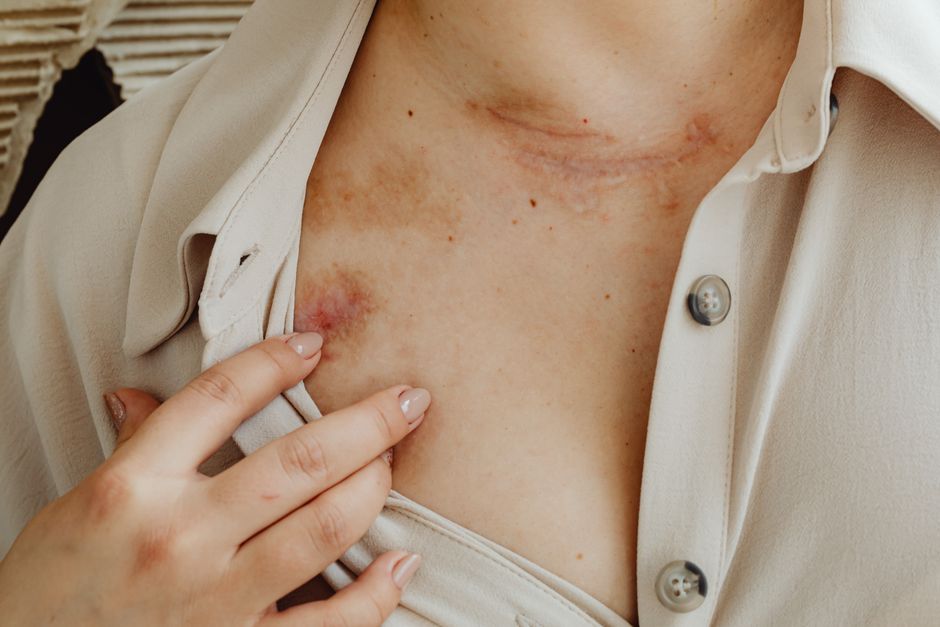
You can’t prevent a scar from forming after a C-section. What you can do is help it heal as well as possible. That means keeping the incision clean and supported in the early weeks, avoiding strain on the healing tissue, and being patient with a process that takes months, not days. Some scar tissue forms inside the abdomen too, and no cream or oil reaches it.
Good wound care can improve how the surface scar looks and feels. It does not guarantee a flat, faint line. Genetics, skin type, and how your body builds collagen all shape the final result. That part is largely outside your control.
How To Prevent Scar Tissue After A C Section: What Actually Helps
There is no proven way to stop scar tissue from forming. A C-section creates a surgical wound that cuts through skin, fat, and the uterine wall. The body repairs that damage by laying down collagen, and that collagen becomes scar tissue. This is normal healing, not a complication.
What you can influence is how well the wound closes and how the scar matures. The steps that matter most are unglamorous:
- Keep the incision clean and dry as instructed by your care team.
- Follow your hospital’s wound care directions exactly.
- Avoid lifting anything heavier than your baby until cleared.
- Support your abdomen when you cough, sneeze, or laugh.
- Attend your postpartum checkups so problems are caught early.
None of these erase scar tissue. They reduce the chance of infection, wound separation, and poor healing, which are the things most likely to make a scar worse.
Why Does a C-Section Create Scar Tissue in the First Place?
Scar tissue is the body’s patch job. When tissue is cut, the body sends collagen to the site to close the gap. Collagen is strong, but it does not rebuild the original tissue. It forms a fibrous patch instead.
A C-section involves several layers of cutting. The surgeon goes through skin, fatty tissue, the fascia (a tough layer over the abdominal muscles), and the uterus. Each layer heals with its own scar.
The scar you see on your skin is only the surface. The scar you cannot see sits in the fat, fascia, and uterus. This matters because internal scar tissue can form adhesions, which are bands of tissue that stick organs or tissues together. Adhesions are common after abdominal surgery and can sometimes cause pain or affect future surgery.
Adhesions are not something you can see or feel in most cases. Many people who have them have no symptoms at all.
Does Massaging the Scar Help?
Scar massage is widely recommended, and some evidence suggests it can improve scar appearance and reduce tightness. The evidence is not strong enough to call it proven, but it is low-risk and many physical therapists and wound care specialists teach it.
The timing matters. Do not massage a healing incision. Wait until the wound is fully closed and your care team says it is safe, which is usually several weeks after surgery. Massaging an open or healing wound can cause harm.
Once cleared, gentle massage may help soften the scar and keep it from pulling on surrounding tissue. Use light pressure and work slowly. Stop if you have pain, redness, or any sign of a problem.
Some clinicians also recommend silicone gel or silicone sheets once the wound has closed. Research suggests silicone products may help flatten and soften raised scars. Results vary, and they work best on newer scars.





What Makes a C-Section Scar Heal Poorly?
Several factors raise the risk of a worse scar or slower healing. Some you can control. Many you cannot.
- Infection at the incision site is one of the biggest risks. It can delay healing and lead to a larger, thicker scar.
- Wound separation, when the edges of the incision pull apart, can worsen the final result.
- Smoking reduces blood flow and slows healing. This is well established for surgical wounds in general.
- Diabetes and high blood sugar can impair wound healing.
- Steroids and some medications can slow tissue repair.
- Genetics and skin type affect how much collagen the body lays down. Some people form keloids or raised scars more easily.
If you have any of these risk factors, tell your care team. They may watch your wound more closely.
Can You Prevent Internal Scar Tissue and Adhesions?
You cannot prevent adhesions from forming after a C-section through anything you do at home. No cream, supplement, or exercise has been shown to prevent them.
Surgical technique plays a role, and this is something your surgeon manages. Research suggests that certain surgical methods, such as careful handling of tissue and specific closure techniques, may reduce adhesion formation. This is a decision made in the operating room, not something a patient can control afterward.
Some people worry that adhesions will cause ongoing pain or problems. Many adhesions cause no symptoms. When they do cause problems, they are usually found during later surgery or imaging for another reason.
Be cautious of any product claiming to prevent or dissolve internal adhesions. No clinical evidence currently confirms that any oral supplement, topical product, or home remedy can do this.
When Should You Call Your Doctor About Your Incision?
Most C-section incisions heal without major problems. But some signs mean you should contact your care team right away.
- Fever, especially with chills
- Increasing redness, warmth, or swelling around the incision
- Pus or foul-smelling drainage
- Opening of the wound edges
- Pain that gets worse instead of better
- Bleeding that does not stop
These can signal infection or another problem that needs treatment. Catching them early usually makes them easier to manage. Do not wait to see if they improve on their own.
What About Creams, Oils, and Home Remedies?
The market for scar products is large. The evidence behind most of them is small or missing.
Vitamin E oil is a popular choice. Some studies suggest it does not improve scar appearance and may cause skin irritation in some people. This is a good example of a remedy that is widely used but not well supported.
Silicone products have more support than most alternatives, though results are still modest and vary from person to person.
Onion extract gels, cocoa butter, and various oils are commonly marketed for scars. No strong clinical evidence confirms they change how a C-section scar heals.
If you want to try a product, ask your care team first, especially while the wound is still healing. Some ingredients can irritate healing skin.
How Long Does It Take for a C-Section Scar to Mature?
A C-section scar changes over many months. In the first weeks, it is often red, raised, and tender. Over the following months, it typically flattens and fades.
The scar is usually considered mature around a year after surgery, though this varies. Some scars stay more visible than others. A scar that remains raised, thick, and itchy well beyond the healing period may be a keloid or hypertrophic scar. These are more common in people with darker skin tones, though they can affect anyone.
If you are concerned about how your scar is healing, a dermatologist or your obstetric care team can assess it. There are treatments for raised or problematic scars, including injections and other procedures, but these are medical decisions best made with a clinician.
The Bottom Line on C-Section Scar Care
You cannot stop scar tissue from forming. You can give your body the best conditions to heal well. Keep the wound clean, avoid strain, follow your care team’s instructions, and be patient with the timeline.
Be skeptical of products that promise to erase or prevent scars. The honest position is that surface care may improve how a scar looks and feels, and nothing you do at home reaches the internal scar tissue. Focus on what is supported and skip the rest.
Frequently Asked Questions
Can I prevent scar tissue after a C-section?
No, you cannot prevent scar tissue from forming, because it is a normal part of how the body heals a surgical wound. You can support better healing with good wound care and by avoiding strain.
Does massaging a C-section scar help?
Some evidence suggests scar massage may improve how a scar looks and feels, though the evidence is not strong. Wait until the wound is fully closed and your care team clears you before starting.
Can I prevent internal adhesions after a C-section?
No, nothing you do at home has been shown to prevent internal adhesions. Surgical technique may play a role, but that is managed by your surgeon during the operation.
How long does a C-section scar take to heal?
The surface incision usually closes within a few weeks, but the scar continues to change and typically matures around a year after surgery. This timeline varies from person to person.
