
Most people who get sick from Salmonella never see it coming. The bacteria don’t change how food looks, smells, or tastes. Preventing Salmonella comes down to a small set of reliable habits: cook poultry and eggs to safe internal temperatures, keep raw meat away from ready-to-eat foods, wash your hands with soap and water after touching raw animal products, and refrigerate perishables promptly. These steps are backed by decades of food safety research and are the same ones public health agencies teach.
What Actually Causes Salmonella Infection?
Salmonella is a group of bacteria that live in the intestines of animals, especially poultry, cattle, and reptiles. When those bacteria end up in your mouth, they can multiply in your gut and cause illness.
There are two main routes. The first is undercooked food, most often chicken, turkey, eggs, and sometimes pork or unpasteurized dairy. The second is cross-contamination, where bacteria from raw meat or its juices spread to foods that won’t be cooked, like salad, fruit, or bread.
Hands are a major vehicle. If you handle raw chicken and then touch a cabinet handle, a knife, or your face, you’ve moved the bacteria along. This is why handwashing and surface cleaning matter as much as cooking temperature.
Some animals carry Salmonella without any sign of illness. Reptiles and amphibians, including turtles, lizards, and frogs, frequently carry it in their gut. The CDC has long advised that households with young children, pregnant women, or people with weakened immune systems avoid keeping these animals as pets. Pet rodents and backyard poultry flocks carry similar risks.
How To Prevent Salmonella Safe Food Handling?
The core of safe food handling is keeping raw animal products separate, cooking them thoroughly, and cleaning anything they touch. This applies in your kitchen, at a picnic, and anywhere you prepare food.
Start with temperature. Poultry, including chicken and turkey, should reach an internal temperature of 165°F (74°C). Ground meat should also reach 165°F. Whole cuts of beef, pork, and lamb should reach 145°F (63°C) with a rest time of at least three minutes. These figures come from USDA food safety guidance and are the standard used across the food industry.
Whole cuts of beef and pork are safer than ground meat for a simple reason. Bacteria like Salmonella live mostly on the surface of whole muscle. Grinding mixes the surface into the middle, so the inside of a burger needs the same thorough cooking as the outside.
Eggs deserve attention. The FDA advises cooking eggs until both the yolk and white are firm, or using pasteurized eggs in dishes that call for raw or lightly cooked eggs. Runny yolks carry a real risk, especially for people with weaker immune defenses.
Use a food thermometer. Color is not a reliable indicator of doneness. A chicken breast can look fully cooked and still be under the safe temperature inside.
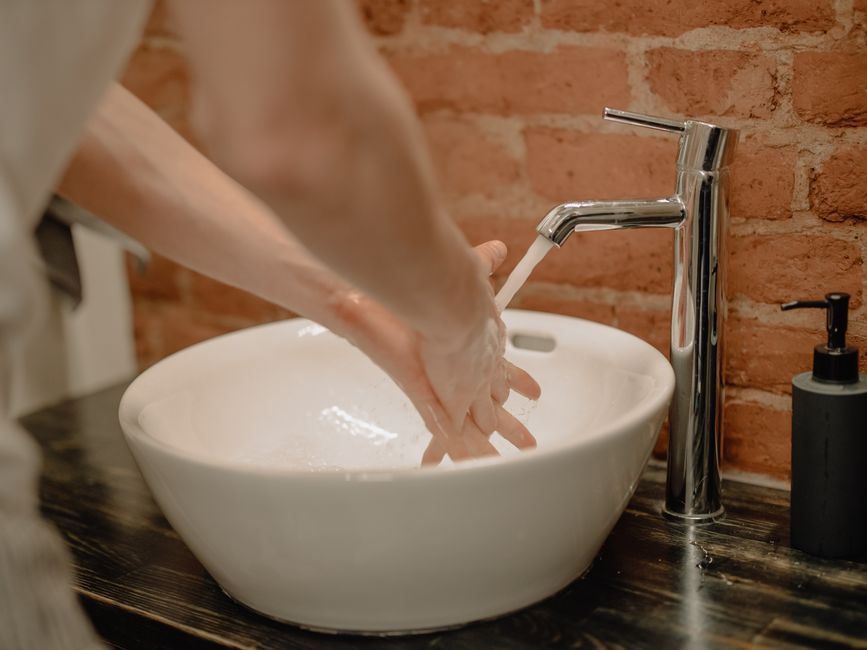
Wash your hands with soap and warm water for at least 20 seconds before cooking, after touching raw meat or poultry, after handling eggs, and after using the bathroom or changing diapers. That 20-second figure is a standard public health recommendation, not an arbitrary number.
Why Is Cross-Contamination So Easy to Miss?
Cross-contamination is the most common way Salmonella reaches food that looks perfectly safe. It happens quietly, through surfaces and tools rather than through the food itself.
Consider a typical kitchen scene. You cut raw chicken on a cutting board, then wipe the board with a damp cloth and slice tomatoes on it. The cloth and board now carry bacteria. The tomatoes get served raw.
Reducing this risk takes a few consistent habits:
- Use a separate cutting board for raw meat, poultry, and seafood, ideally one you can wash in hot soapy water or a dishwasher.
- Never place cooked food back on a plate or board that held raw meat, even briefly.
- Wash knives, tongs, and spatulas with hot soapy water after they touch raw animal products.
- Keep raw meat in sealed containers or bags on the bottom shelf of the refrigerator so juices can’t drip onto other food.
- Clean countertops and sinks with hot soapy water after preparing raw meat.
One point surprises many people: washing raw chicken under the tap is not recommended. The water splashes bacteria onto nearby surfaces, sponges, and utensils. Cooking kills the bacteria, so rinsing does not help and spreads contamination. Public health agencies such as the CDC and USDA advise against it.
Sponges and dishcloths are common hiding places for bacteria. Replace or sanitize them regularly, and let them dry fully between uses. A damp sponge is a good environment for bacteria to survive.
Does Refrigeration and Storage Timing Matter?
Yes. Salmonella and other foodborne bacteria multiply fastest between 40°F and 140°F, a range food safety agencies call the danger zone. Refrigeration slows this growth but does not stop it.
The USDA advises refrigerating perishable foods within two hours of cooking or purchasing. If the outdoor temperature is above 90°F, that window shrinks to one hour. This two-hour rule applies to cooked leftovers, cut fruit, deli meats, and any dish containing meat, eggs, or dairy.
Keep your refrigerator at 40°F or below and your freezer at 0°F or below. A refrigerator thermometer is a small investment that removes the guesswork.
Leftovers should generally be eaten within three to four days, per USDA guidance. When reheating leftovers, bring them to 165°F throughout.
Thawing matters too. Thaw frozen meat in the refrigerator, in cold water that you change every 30 minutes, or in the microwave. Leaving it on the counter lets the outer layer sit in the danger zone while the center stays frozen.
Which Foods Carry the Highest Salmonella Risk?
Poultry is the leading source of Salmonella infections in the United States, and eggs are a close second in many outbreaks. But the list is longer than most people expect.
Raw or undercooked eggs appear in homemade mayonnaise, some Caesar dressings, cookie dough, and certain sauces. Pasteurized eggs are a safe substitute in these recipes.
Unpasteurized milk and cheese can carry Salmonella along with other pathogens. Raw sprouts, including alfalfa and bean sprouts, have been linked to multiple outbreaks because the warm, humid growing conditions that sprout seeds also favor bacterial growth.
Fruits and vegetables can become contaminated too, through irrigation water, handling, or cross-contamination in the kitchen. Washing produce under running water and scrubbing firm-skinned items helps, though it does not sterilize them.
Certain groups face higher risk of severe illness: children under five, adults over 65, pregnant women, and people with weakened immune systems. For these groups, avoiding raw sprouts, unpasteurized dairy, and undercooked eggs is a reasonable precaution. The evidence for these precautions is well established.
What Should You Do If You Think You Have Salmonella?
Most healthy adults recover from Salmonella infection within about four to seven days without antibiotics. Symptoms usually begin six hours to six days after infection and include diarrhea, fever, and stomach cramps.
Hydration is the main concern. Diarrhea and vomiting cause fluid loss, so drinking water, oral rehydration solutions, and clear broths helps replace what’s lost. Watch for signs of dehydration: dry mouth, dark urine, dizziness, or unusual fatigue.
Seek medical care if you have bloody diarrhea, a fever above 102°F, vomiting that prevents you from keeping fluids down, signs of dehydration, or symptoms lasting more than a few days. Infants, older adults, and people with weakened immune systems should contact a doctor early.
Antibiotics are not routine for uncomplicated Salmonella. Some infections, particularly invasive ones, do require them, and the decision belongs to a clinician. Do not self-treat with leftover antibiotics.
Some people develop reactive arthritis weeks after infection, with joint pain, eye irritation, or painful urination. This is uncommon but documented. Mention any such symptoms to your doctor.
During illness, avoid preparing food for others until diarrhea has resolved. Salmonella can be shed in stool for several weeks after symptoms end, so careful handwashing remains important.
Frequently Asked Questions
What temperature kills Salmonella in chicken?
Cooking chicken to an internal temperature of 165°F (74°C) kills Salmonella. Use a food thermometer inserted into the thickest part of the meat, not touching bone.
Can you get Salmonella from washing raw chicken?
Washing raw chicken does not kill Salmonella and can spread bacteria to sinks, counters, and utensils through splashing water. Public health agencies advise against rinsing raw poultry.
How long does Salmonella last?
Most healthy people recover within four to seven days without treatment. Symptoms usually start six hours to six days after exposure.
Does freezing kill Salmonella?
No. Freezing stops Salmonella from multiplying but does not kill it. The bacteria can survive freezing and become active again once the food thaws, so proper cooking is still required.
