
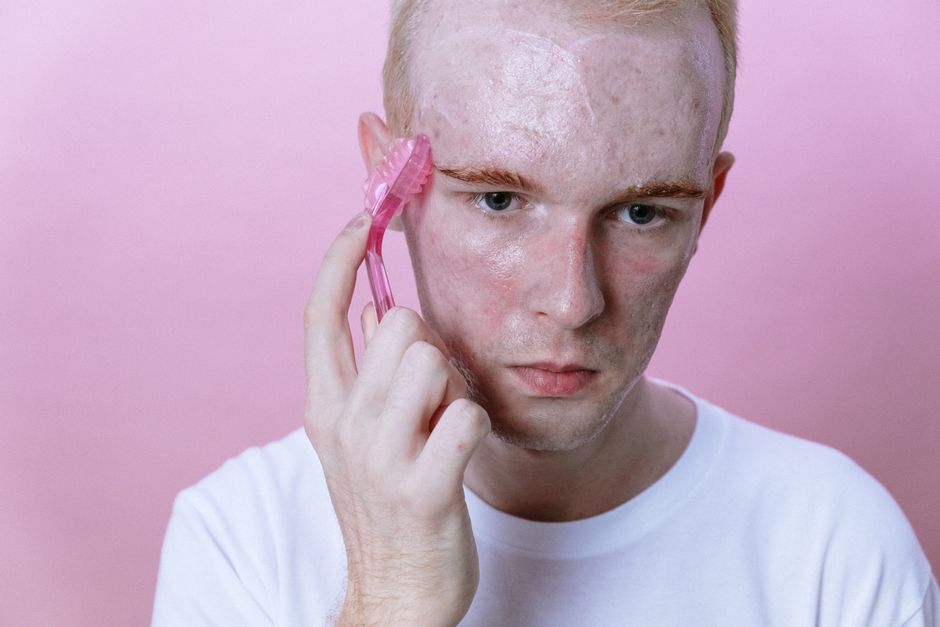
Acne redness comes from inflammation, and the fastest way to reduce it is to stop irritating your skin while the pimple heals. Do not squeeze or pick at acne — that is the single biggest cause of lasting red marks. Use gentle, non-drying products, protect your skin from the sun, and give inflamed spots time to settle. Most red marks from acne fade on their own within weeks to a few months.
What Actually Causes the Redness From Acne?
Acne redness is inflammation. When a pore clogs with oil and dead skin cells, the body sends immune cells to the area. Blood flow increases, and the surrounding skin turns red, warm, and sometimes swollen.
This is a normal immune response, not a sign that something is wrong with your skin. The redness is the visible part of your body repairing itself.
There are two different kinds of redness people lump together, and they behave very differently:
- Active inflammatory acne — the red, tender bump itself. This redness fades as the pimple resolves.
- Post-inflammatory erythema (PIE) — flat red or pink marks left behind after a pimple heals. These are not scars. They are dilated blood vessels and lingering inflammation in the skin.
There is also post-inflammatory hyperpigmentation (PIH), which is brown or dark marks rather than red. PIH is more common in people with darker skin tones and behaves differently from redness. This article focuses on the red type.
Understanding which one you have matters, because the approaches differ. Active acne needs treatment to stop new lesions. PIE needs time and gentle care while the vessels calm down.
Why Does Picking Make Acne Redness Worse?
Squeezing a pimple pushes bacteria and inflammatory material deeper into the skin. It also breaks the wall of the pore, which spreads inflammation into surrounding tissue.
The result is more redness, a bigger mark, and a higher chance of a true scar forming. A picked pimple often takes longer to heal and leaves a darker, longer-lasting mark than one left alone.
This is the most important and most controllable factor in acne redness. Hands off is not just advice — it is the mechanism.
If you have a pimple you cannot leave alone, a hydrocolloid patch can help by covering it and reducing the temptation to touch. These patches are widely used and generally well tolerated, though evidence for how much they speed healing on their own is limited.
How To Prevent Redness From Acne: Daily Skin Care Tips
Gentle, consistent care is the foundation. Harsh products strip the skin barrier, which triggers more inflammation and more redness — the opposite of what you want.
Here is what the evidence supports:
- Wash twice a day with a mild cleanser. More frequent washing does not help and can irritate skin.
- Use lukewarm water. Hot water strips oils and can worsen redness.
- Skip scrubs and abrasive tools. Physical exfoliation on inflamed skin increases irritation.
- Moisturize daily. A light, non-comedogenic moisturizer supports the skin barrier.
- Choose products labeled non-comedogenic. This means they are less likely to clog pores.
For active acne, ingredients like benzoyl peroxide and salicylic acid are established options. Benzoyl peroxide reduces the bacteria involved in acne and has decades of clinical use behind it. Salicylic acid helps unclog pores. Both can dry or irritate skin, especially at first, so introduce one at a time.
If over-the-counter products are not controlling your acne, a dermatologist can discuss prescription options. Some prescription treatments reduce inflammation directly, which in turn reduces redness. Which one fits you depends on your acne type, and that is a conversation with a clinician.
Does Sun Exposure Help or Hurt Acne Redness?
Sun exposure does not help acne redness, even though a tan can temporarily make red marks less noticeable. That effect is an illusion created by darker surrounding skin.
What actually happens is more concerning. Ultraviolet light can increase inflammation and can darken post-inflammatory marks, making them harder to fade. It also raises skin cancer risk and causes premature aging.
Daily sun protection is one of the more reliable habits for preventing acne marks from getting darker or lasting longer. A broad-spectrum sunscreen with an SPF of 30 or higher is the standard recommendation from dermatology organizations.
Some sunscreens can clog pores or feel heavy on acne-prone skin. Mineral formulas or those labeled non-comedogenic tend to be better tolerated. If a sunscreen breaks you out, try a different formulation rather than skipping it.
Can Skin Care Ingredients Fade Red Marks?
Some ingredients have evidence for calming redness, but none of them erase marks overnight. Results take weeks to months, and the evidence varies by ingredient.
Ingredients often used for redness and post-acne marks include:
- Niacinamide — some studies suggest it can reduce inflammation and support the skin barrier.
- Azelaic acid — used clinically for acne and rosacea-type redness; evidence is reasonably supportive.
- Centella asiatica — traditional use for calming skin; human trial evidence is limited.
- Green tea extracts — studied for anti-inflammatory effects; results in skin care are mixed.
- Vitamin C — more established for hyperpigmentation than for red marks.
Be skeptical of products promising to erase redness fast. No topical product removes post-inflammatory redness in days. If a claim sounds too fast, it usually is.
One clarification worth knowing: red marks and brown marks are not the same, and they do not respond to the same ingredients. Ingredients marketed for dark spots often target melanin, not the dilated vessels behind red marks. That is why some people see little change.
When Should You See a Dermatologist?
See a dermatologist if your acne is not improving after a few months of consistent over-the-counter care, or if it is causing scars, pain, or significant distress.
Some situations warrant earlier professional care:
- Deep, painful nodules or cysts
- Acne that is leaving marks or indentations
- Sudden severe acne
- Acne affecting your mental health
Prescription treatments can reduce both active acne and the inflammation that drives redness. For persistent red marks that linger long after acne clears, a dermatologist can assess whether in-office treatments are appropriate. Evidence for procedures like laser therapy and light-based treatments exists, but results vary and they are not first-line for everyone.
Timelines matter here. Most post-inflammatory redness improves gradually over weeks to several months. Some marks take longer. If redness is unchanged after many months, that is worth a professional evaluation.
What Makes Acne Redness Worse?
Several everyday habits keep redness going or make it worse. Avoiding them is often more effective than adding new products.
- Picking and squeezing — the biggest offender.
- Over-washing or harsh scrubs — damages the skin barrier.
- Skipping sunscreen — lets marks darken and linger.
- Layering too many active ingredients at once — increases irritation.
- Friction from helmets, tight collars, or resting your face on your hands — repeated pressure can worsen acne.
Stress and poor sleep do not directly cause acne, but they can affect overall skin health and healing. The relationship is not fully understood, so treat this as supportive context rather than a primary fix.
Diet is a common question. Some research suggests high-glycemic diets and certain dairy products may be linked to acne in some people, but findings are mixed and not strong enough to make firm recommendations for everyone. If you suspect a food trigger, discuss it with a clinician rather than cutting out entire food groups on your own.
Frequently Asked Questions
How long does acne redness last?
Most red marks from acne fade within weeks to a few months as inflammation settles and blood vessels return to normal. Some marks take longer, and picking or sun exposure can extend that time.
Does ice help acne redness?
A cold compress can temporarily reduce swelling and redness on an inflamed pimple by narrowing blood vessels. It does not treat the acne itself, and ice should never be applied directly to skin.
Can I prevent acne scars and red marks?
Not picking or squeezing is the most effective step, since most scars and marks start with trauma to an inflamed pimple. Treating active acne early also lowers the chance of lasting marks.
Is redness from acne a sign of infection?
Redness is a normal part of inflammation, not necessarily infection. However, spreading redness, increasing pain, or fever are signs to seek medical care promptly.
