
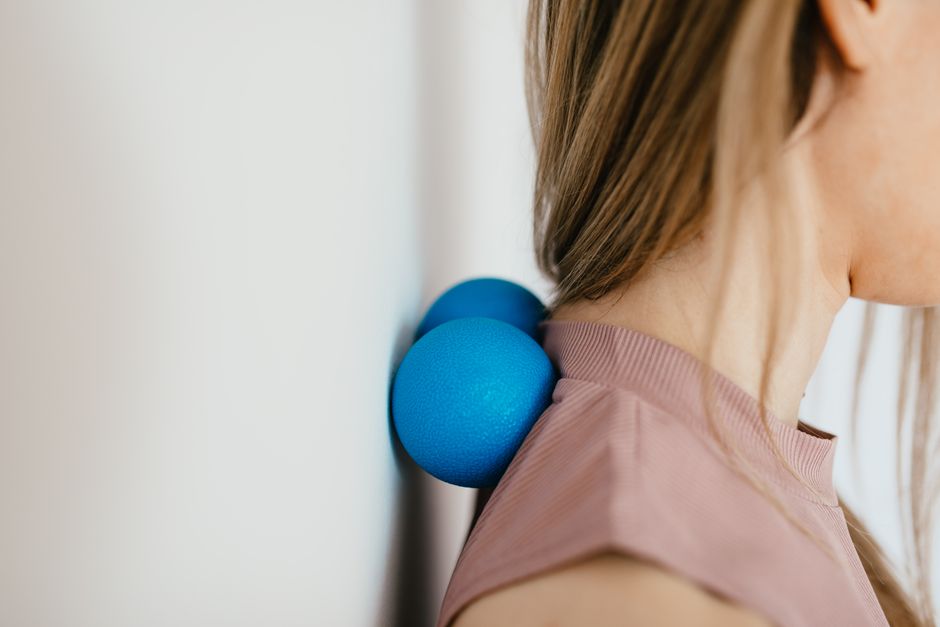
Most neck pain isn’t caused by a single dramatic injury. It builds slowly from hours of small repeated loads — a head drifted forward over a laptop, a pillow that props the neck at an angle it wasn’t built to hold, and deep neck muscles that quietly stop doing their job. The good news is that the same forces that create the problem can be reversed. Posture correction, the right pillow height, and targeted exercise are the three levers that matter most, and they work best together rather than alone.
Why Does Poor Posture Cause Neck Pain?
The average adult head weighs about 10 to 12 pounds in a neutral position. That weight sits directly over the spine, so the neck muscles do relatively little work to hold it up.
Tilt the head forward and the physics change fast. As the head moves forward, the effective load on the cervical spine rises sharply because the muscles and ligaments now have to counteract a longer lever arm. This is why holding a forward head position for eight hours feels very different from holding it for eight minutes.
The muscles that suffer most are the deep cervical flexors — a group of small muscles at the front of the neck. When the head sits forward, these muscles become underused and weak. At the same time, the muscles at the back of the neck and the upper shoulders work overtime to keep the head from falling further forward. Over months, that pattern becomes the default.
This is a mechanical and muscular problem, not a structural one for most people. That distinction matters, because it means the fix is also mechanical and muscular.
What Does Good Posture Actually Look Like?
Good posture is not a stiff military stance. It’s a position you can hold comfortably for long periods with minimal muscle effort.
In a healthy sitting position, the ears sit roughly over the shoulders, the shoulders rest back and down rather than rounded forward, and the natural curve of the neck is preserved. The chin is neither jutting forward nor tucked hard toward the chest.
Two cues help most people find this position:
- Imagine a string pulling gently from the top of your head toward the ceiling.
- Let your shoulder blades slide down and slightly back, without squeezing them together.
Here’s the part many people miss. There is no single correct posture. The problem isn’t sitting up straight — it’s staying in any one position too long. Muscles fatigue when they hold a static load, even a good one. Changing position every 30 minutes does more for neck comfort than perfecting your setup once.
How To Prevent Neck Pain Posture Pillows Exercise: Putting the Three Together
These three elements work as a system. Fixing one while ignoring the others rarely solves the problem.
Posture reduces the daily load. Pillows control the load during the 7 to 9 hours you spend asleep. Exercise builds the muscular capacity to handle load in the first place.
If you only adjust your desk setup, weak neck muscles still fatigue quickly. If you only exercise but sleep with your neck bent at a sharp angle, you undo some of the benefit every night. The combination is what changes the pattern.





How Should You Set Up Your Workstation?
Small setup changes remove a surprising amount of strain.
- Raise your monitor so the top of the screen sits at or slightly below eye level.
- Keep the screen about an arm’s length away.
- Place your keyboard and mouse close enough that your elbows stay near your sides.
- Support your forearms so your shoulders can relax.
- Keep your feet flat on the floor or on a footrest.
For laptop users, the built-in screen and keyboard force a compromise. An external keyboard lets you raise the screen without reaching up to type. If you use a phone heavily, bring it up to eye level instead of dropping your head to look down — this single habit removes a large share of daily neck load.
What Pillow Is Best for Neck Pain?
There is no single best pillow. The right one keeps your head and neck in a neutral alignment — roughly the same position as good standing posture — while you sleep.
What matters most is height relative to your body and sleep position.
- Back sleepers generally need a thinner pillow that supports the curve of the neck without pushing the head forward.
- Side sleepers need a thicker pillow that fills the gap between the neck and the mattress so the head doesn’t tilt down or up.
- Stomach sleepers put the neck in a rotated position for hours, which is hard on the joints. A very thin pillow or none at all is often more comfortable, though changing sleep position is the better long-term fix.
Contour and cervical pillows are widely sold for neck pain. Some people find them helpful, but the evidence that a specific pillow design outperforms a well-fitted basic pillow is limited. The honest position: fit matters more than features.
If you wake with a stiff neck that eases within an hour, your pillow is a reasonable place to start experimenting. If neck pain persists or worsens, that’s a signal to look beyond the pillow.
Which Exercises Help Most?
Two categories of exercise have the strongest support for neck pain: strengthening the deep neck flexors and strengthening the shoulder blade muscles.
Deep neck flexor training
Lie on your back with your knees bent. Gently nod your chin toward your chest, as if making a small double chin, without lifting your head off the floor. Hold for a few seconds, then relax. The movement is small — a few millimeters — and should feel like a gentle contraction deep in the front of the neck, not a strain.
This exercise is sometimes called a chin tuck. Done consistently, it targets the muscles that become weak with a forward head position.
Shoulder blade exercises
Rows, band pull-aparts, and gentle shoulder blade squeezes strengthen the muscles that hold the shoulders back. Stronger upper back muscles reduce the load the neck has to carry.
Stretching
Gentle stretches for the upper trapezius and the muscles at the base of the skull can ease tension. Keep stretches mild. Aggressive stretching of an already irritated neck can make symptoms worse.
Start with low intensity and build gradually. If any exercise increases pain or causes numbness, tingling, or weakness in the arm, stop and get evaluated by a clinician.
When Should You See a Doctor?
Most mechanical neck pain improves with posture changes, sleep adjustments, and exercise over weeks. Some situations need medical attention rather than self-care.
Seek care if you have:
- Neck pain after a fall, car accident, or other trauma
- Numbness, tingling, or weakness in an arm or hand
- Pain that radiates down the arm
- Severe headache, fever, or unexplained weight loss with neck pain
- Loss of bladder or bowel control
- Pain that keeps getting worse despite weeks of self-care
These signs can point to nerve involvement or other conditions that need proper assessment. Imaging is not routinely needed for ordinary neck pain, and many clinicians advise against it unless there are red flags.
How Long Does It Take to Feel Better?
Timelines vary, and it’s worth being realistic. Muscular changes take time. Many people notice some improvement in comfort within a few weeks of consistent posture and sleep adjustments, while building real strength in the deep neck muscles typically takes longer — often several weeks to a few months of regular practice.
The word that matters here is consistent. Short daily sessions beat occasional long ones. Neck pain that has built up over years rarely resolves in days.
Frequently Asked Questions
Can poor posture alone cause neck pain?
Yes, sustained forward head posture is a common contributor to mechanical neck pain. It usually works alongside weak neck muscles and poor sleep positioning rather than acting alone.
What is the best sleeping position for neck pain?
Back or side sleeping with the head and neck in neutral alignment is generally best. Stomach sleeping forces the neck into rotation for hours and tends to aggravate symptoms.
How often should I do neck exercises?
Daily practice is commonly recommended for deep neck flexor and shoulder blade exercises. Start gently and increase gradually, and stop if an exercise increases pain or causes arm symptoms.
Do cervical pillows really work?
Some people find them helpful, but evidence that a specific pillow design outperforms a properly fitted basic pillow is limited. Fit — the right height for your sleep position — matters more than the design.
