
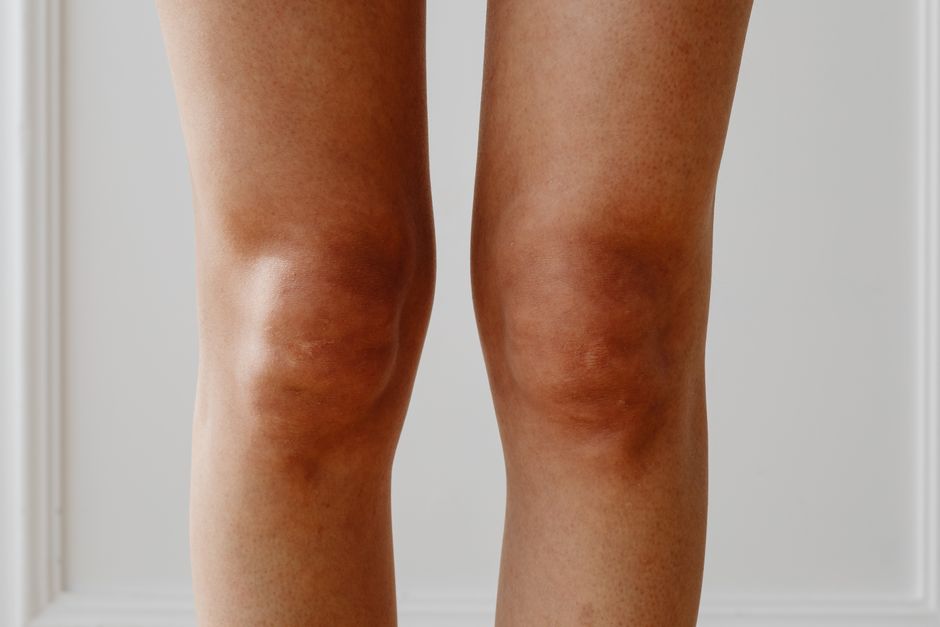
Knee cracking and popping, known medically as crepitus, is extremely common and usually harmless. The noise itself is not the problem — what matters is whether you have pain or swelling along with it. To prevent or reduce knee cracking and popping, focus on strengthening the muscles around your knee, improving your flexibility, and maintaining a healthy body weight. These steps address the root causes rather than trying to silence the noise directly.
What Actually Causes Knees to Crack and Pop?
Knee noises happen for several different reasons. The most common cause is gas bubbles forming and bursting in the joint fluid — the same thing that happens when you crack your knuckles. This type of popping is harmless and does not damage your joints.
Another cause is tendons or ligaments snapping over bony bumps as your knee bends and straightens. This often happens when certain muscles are tight. The iliotibial band, a thick band of tissue running down the outside of your thigh, is a frequent source of this snapping sensation.
More serious causes include roughened cartilage surfaces grinding against each other. This is what happens with osteoarthritis. If your knee cracks and also hurts, swells, or feels like it is catching or locking, the cause is likely cartilage damage or early arthritis rather than harmless gas bubbles.
Research published in the journal Arthroscopy found that knee popping without pain is not linked to future knee problems. The same study showed that popping with pain does predict future issues. This distinction matters more than the noise itself.
Does Strengthening Your Leg Muscles Help?
Yes — strengthening the muscles around your knee is the most effective thing you can do. The quadriceps at the front of your thigh and the hamstrings at the back act as shock absorbers for your knee joint. When these muscles are weak, more force goes through the joint surfaces themselves, which can increase wear and noise.
Strong muscles also help keep your kneecap tracking properly in its groove. If your kneecap pulls slightly to one side due to muscle imbalance, it can create popping sounds as it moves. The quadriceps, especially the inner part called the vastus medialis oblique, play a key role in keeping the kneecap centered.
Simple exercises like straight leg raises, wall sits, and step-ups build this strength without putting heavy load through the joint. The American Academy of Orthopaedic Surgeons recommends these exercises for knee health. Start with low repetitions and increase gradually. Consistency matters more than intensity.
One non-obvious point: strengthening your hips and glutes is just as important as strengthening your thighs. Weak hips cause your thigh bone to rotate inward, which changes how your kneecap tracks. Hip strengthening exercises like clamshells and side leg raises can reduce knee popping that comes from tracking problems.
How To Prevent Knees From Cracking And Popping With Stretching
Stretching helps when tight muscles are pulling on your knee joint. The most common tight muscles that affect the knee are the quadriceps, hamstrings, and the iliotibial band on the outer thigh. Tightness in any of these can alter how your knee moves and increase popping.
The evidence on stretching alone is mixed. Some studies suggest stretching reduces crepitus in people with tight muscles. Other studies show no effect. What is clearer is that stretching combined with strengthening works better than either one alone.
Focus on holding stretches for 30 to 60 seconds. Do them after exercise when your muscles are warm. Never bounce into a stretch — that can cause small muscle tears that make the problem worse. Gentle sustained stretching is what you want.
A 2019 study in the Journal of Orthopaedic & Sports Physical Therapy found that a combination of quadriceps strengthening and hamstring stretching reduced knee pain and popping in people with patellofemoral pain syndrome. The improvements took about six weeks to show up. This is not a quick fix.




What Role Does Body Weight Play?
Body weight directly affects how much force goes through your knee joints with every step. For each pound of body weight you carry, your knee feels about four pounds of force when walking. That number goes up to eight pounds per pound when climbing stairs.
The CDC reports that overweight and obesity are strongly linked to knee osteoarthritis. The extra weight accelerates cartilage breakdown, which can turn harmless popping into painful grinding over time. Losing weight reduces the mechanical stress on your knee joints.
Even modest weight loss makes a difference. Research from the Arthritis & Rheumatology journal found that losing 10% of your body weight significantly reduced knee pain and improved function in people with knee osteoarthritis. For a 200-pound person, that is 20 pounds.
Weight loss alone will not stop harmless gas bubble popping. But it can prevent the progression from harmless noise to painful arthritis. If your knees crack without pain and you are at a healthy weight, weight loss is unlikely to change the noise.
| Factor | Effect on Knee Cracking | Evidence Strength |
|---|---|---|
| Muscle strengthening | Reduces popping from tracking issues | Strong |
| Stretching tight muscles | Helps when tightness is the cause | Moderate |
| Weight loss | Reduces progression to painful arthritis | Strong |
| Glucosamine supplements | No consistent effect on popping | Weak |
| Avoiding activity | Weakens muscles, may worsen noise | Moderate |
What Exercises Should You Avoid?
Deep squats below 90 degrees put high compressive force on your knee joint. If your knees pop during deep squats, limit your range of motion to what feels comfortable. Full-depth squats are not necessary for knee health and can aggravate existing cartilage issues.
Leg extension machines at the gym can also be problematic. They isolate the quadriceps but place significant shear force across the knee. If you use this machine, keep the weight light and avoid the last 20 degrees of extension — that is where the force is highest.
Running on hard surfaces like concrete increases impact forces through your knees. This does not mean you should stop running. But if your knees pop and hurt during or after running, consider softer surfaces like grass or a track. Proper running shoes that are not worn out also help absorb shock.
One activity many people do not think about: prolonged kneeling. Kneeling puts direct pressure on the kneecap and can irritate the joint. If you garden or do home repairs, use a kneeling pad or a small stool to sit on instead.
When Should You See a Doctor About Knee Popping?
You should see a doctor if your knee popping is accompanied by pain, swelling, or a feeling that your knee is giving way. These symptoms suggest something more than harmless crepitus. Pain that lasts more than a few days after activity also warrants a checkup.
If your knee locks or catches so you cannot fully straighten it, that points to a possible torn meniscus or loose piece of cartilage. This requires medical evaluation. Similarly, if your knee feels unstable or like it might buckle, that suggests ligament damage.
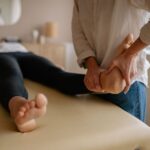
A physical therapist is often the right first person to see. They can assess your muscle strength, flexibility, and movement patterns. They will identify specific imbalances that may be causing your knee to pop. Many cases of painful knee popping resolve with a targeted exercise program prescribed by a physical therapist.
Imaging like X-rays or MRIs is rarely needed for popping alone. Doctors typically only order these if you have pain, swelling, or a history of injury. The noise itself does not show up on imaging, and looking for it is not useful.
Common Misconceptions About Knee Cracking
Misconception: Cracking your knees causes arthritis. There is no evidence that habitual joint cracking leads to arthritis. The popping from gas bubbles does not damage cartilage. A 2011 study in Clinical Orthopaedics and Related Research found no difference in arthritis rates between people who cracked their knuckles and those who did not.
Misconception: Supplements like glucosamine stop knee popping. Glucosamine and chondroitin are widely marketed for joint health. However, large studies including the GAIT trial published in the New England Journal of Medicine found these supplements do not reduce knee pain or slow cartilage loss better than placebo. They almost certainly do not affect popping sounds.
Misconception: If your knee pops, you should stop moving it. Resting a noisy knee actually makes things worse. Disuse weakens the muscles that stabilize the joint, which can lead to more popping and eventually more pain. Movement is good. The goal is to move correctly, not to stop moving.
Practical Daily Habits for Quieter Knees
- Warm up before exercise with five minutes of walking or cycling at low intensity
- Wear supportive shoes with good arch support — flat worn-out shoes change your leg alignment
- Change positions frequently if you sit for long periods — knees stiffen when held in one position
- Use proper form when lifting — bend at your hips and knees, not your back
- Ice your knees after intense activity if they feel irritated, even without visible swelling
- Consider a knee sleeve for comfort during activity — it does not fix the cause but can reduce the sensation of popping
These habits do not require special equipment or gym memberships. They are small adjustments to how you move through your day. Consistency with these basics often makes more difference than any single exercise or treatment.
One thing worth understanding: some people will always have noisy knees. If you have tried strengthening, stretching, and weight management and your knees still pop without pain, that is likely just how your joints are built. There is no evidence that harmless popping needs to be fixed.
Frequently Asked Questions
Can knee popping cause permanent damage?
No, not by itself. Popping without pain is not linked to long-term joint damage. Painful popping should be evaluated by a healthcare provider.
How long does it take for exercises to stop knee popping?
Most people need four to eight weeks of consistent strengthening and stretching before noticing a difference. Results are gradual.
Is it safe to run if my knees pop?
Yes, if there is no pain. Running on noisy knees is safe as long as you do not have swelling, catching, or pain during or after your run.
Does wrapping or bracing help with knee popping?
Knee sleeves can improve proprioception — your sense of joint position — which may reduce popping sensation. They do not fix the underlying cause.
