

Knee pain is not an unavoidable part of aging. The single most effective thing you can do to prevent it is keep the muscles around your knees strong and your body weight in a healthy range. Regular movement, done consistently, protects the joint far better than rest does. Most age-related knee pain comes from gradual wear on the joint combined with weak supporting muscles — and both of those can be influenced by what you do now.
Why Do Knees Hurt More As We Age?
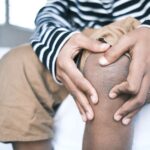
The knee is a hinge joint where the thigh bone meets the shin bone, cushioned by cartilage and stabilized by ligaments, tendons, and muscle. Over decades of use, that cartilage can thin. This is a normal part of aging, and it does not always cause pain.
What usually turns quiet wear into real pain is a change in the forces acting on the joint. The quadriceps muscles at the front of the thigh act like shock absorbers. When they weaken, more load transfers directly to the cartilage and bone. Weight gain compounds this, because every extra pound puts additional stress through the knee with each step.
Osteoarthritis is the most common cause of knee pain in older adults. It is a disease of the whole joint, not just worn-down cartilage. The joint lining can become inflamed, and the bone beneath the cartilage can change. Pain from osteoarthritis tends to build gradually and is often worse after activity or at the end of the day.
Other causes exist and matter. A torn meniscus, bursitis, tendinitis, and referred pain from the hip or back can all show up as knee pain. This is why a sudden, severe, or swollen knee deserves a medical evaluation rather than a guess.
How Does Strength Training Protect Your Knees?
Strong muscles reduce the load your knee joint has to absorb. This is one of the better-supported ideas in musculoskeletal medicine. When your quadriceps and hip muscles are strong, they control the motion of your leg and take pressure off the joint surfaces.
Research consistently shows that exercise therapy reduces pain and improves function in people with knee osteoarthritis. The effect is real but modest — it is not a cure, and it does not regrow cartilage. What it does is improve how the joint tolerates daily demands.
You do not need a gym. The movements that help most are simple and can be done at home:
- Sit-to-stand from a chair, repeated slowly
- Straight-leg raises while lying down
- Step-ups onto a low, stable platform
- Wall sits held for a short, comfortable time
Start with what you can do without sharp pain. Mild discomfort during effort is common; sharp or lasting pain is a signal to stop and get it checked. Building strength takes weeks, not days. Consistency matters more than intensity.
Does Losing Weight Really Help Knee Pain?
Yes, and the effect is one of the more reliable findings in this area. Body weight is directly tied to the load the knee carries. Walking puts a force through the knee that is several times your body weight, so even modest weight loss meaningfully reduces that load.
Studies have found that people with knee osteoarthritis who lose weight report less pain and better function. The relationship is dose-dependent: more weight loss tends to bring more relief, up to a point. Combining weight loss with exercise appears to work better than either alone.
Where the evidence gets thinner is in precise numbers. Weight-loss targets are best set with a clinician who knows your health history, rather than from a general article. The direction is clear even when the exact amount is individual.



What Role Does Low-Impact Activity Play?
Movement keeps the joint lubricated and the surrounding muscles active. Avoiding all activity because of knee pain tends to make things worse over time, because muscles weaken and the joint stiffens.
Low-impact activities are generally well tolerated:
- Walking on flat, even ground
- Swimming and water exercise
- Cycling, including stationary bikes
- Elliptical training
High-impact activities like running and jumping are not automatically harmful, but they place more load on the knee. Whether they are appropriate depends on your joint health, your strength, and how your knee responds. Some people tolerate them well for years; others do not.
One clarification worth making: the old advice to “rest the joint” has largely given way to “keep moving within reason.” Prolonged rest is now understood to work against recovery for most chronic knee pain.
Can You Prevent Knee Pain Before It Starts?
Prevention is mostly about habits, and the habits that protect knees are the same ones that protect the heart and brain. There is no single trick. The evidence points to a combination.
Keep your weight in a healthy range. Stay physically active across your life, not just when pain appears. Strengthen your legs and hips, not only your knees. And pay attention to how you move — good body mechanics during lifting and carrying reduce strain.
Injuries matter too. A past knee injury raises the risk of osteoarthritis later in life. Preventing injuries in younger years, through proper training and avoiding sudden increases in activity, is a genuine long-term investment.
What you cannot control is genetics and the basic passage of time. Some people develop knee osteoarthritis despite doing everything right. That is not a personal failure, and it does not mean prevention was pointless — it usually means the pain arrives later and milder.
When Should You See a Doctor About Knee Pain?
Some knee symptoms need prompt medical attention. Do not wait them out.
- A knee that locks, gives way, or cannot bear weight
- Rapid swelling after an injury
- Redness, warmth, or fever along with the pain
- Pain that wakes you from sleep or is severe and constant
Persistent pain lasting more than a few weeks also deserves an evaluation, even without those red flags. A clinician can distinguish osteoarthritis from other causes and discuss options.
Treatment options range from physical therapy and weight management to pain medication, injections, and in some cases surgery. Which is appropriate depends on the cause and severity. This is a decision to make with a clinician, not from a general article.
Does Diet Affect Knee Health?
Diet plays a supporting role rather than a starring one. There is no food that prevents or reverses knee osteoarthritis. The main dietary lever is weight, since excess calories drive the weight that loads the joint.
Some research suggests that diets rich in vegetables, fruits, and healthy fats are associated with less inflammation and better joint health. The evidence here is mixed and mostly observational, which means it shows associations rather than proven cause and effect. It is reasonable to eat well, but no supplement has been shown to reliably prevent or cure knee osteoarthritis.
Claims that a specific supplement “rebuilds cartilage” should be treated with skepticism. No study has confirmed that any oral supplement regrows cartilage in human knees.
What About Supplements and Injections?
This is where marketing often outruns evidence. Glucosamine and chondroitin are widely sold for knee pain. Large, well-designed trials have produced mixed or negative results, and major clinical guidance does not strongly recommend them. Some people report benefit, but that benefit has not been reliably separated from placebo in rigorous studies.
Corticosteroid injections can reduce pain in the short term. Their long-term benefit is less clear, and repeated use is generally approached with caution. Hyaluronic acid injections are used in some settings, but evidence for their effectiveness is mixed and they are not universally recommended.
None of this means these options are never appropriate. It means the evidence is limited, and decisions should be made with a clinician who can weigh your specific situation rather than a general promise.
Frequently Asked Questions
Can knee pain in old age be prevented?
Much of it can be reduced or delayed, though not eliminated, by keeping leg muscles strong, maintaining a healthy weight, and staying active. Genetics and past injuries still play a role that no habit can fully erase.
Is walking bad for arthritic knees?
Walking is generally safe and helpful for most people with knee osteoarthritis and does not speed up joint damage. Start with a distance that feels comfortable and build up gradually.
Do glucosamine supplements actually work for knee pain?
Large trials have produced mixed or negative results, and major clinical guidance does not strongly recommend them. Any benefit reported by users has not been reliably distinguished from placebo in rigorous studies.
What exercises are best for preventing knee pain?
Strengthening the quadriceps and hip muscles, along with low-impact aerobic activity like walking, swimming, or cycling, is the best-supported approach. Consistency over months matters more than intensity.
