
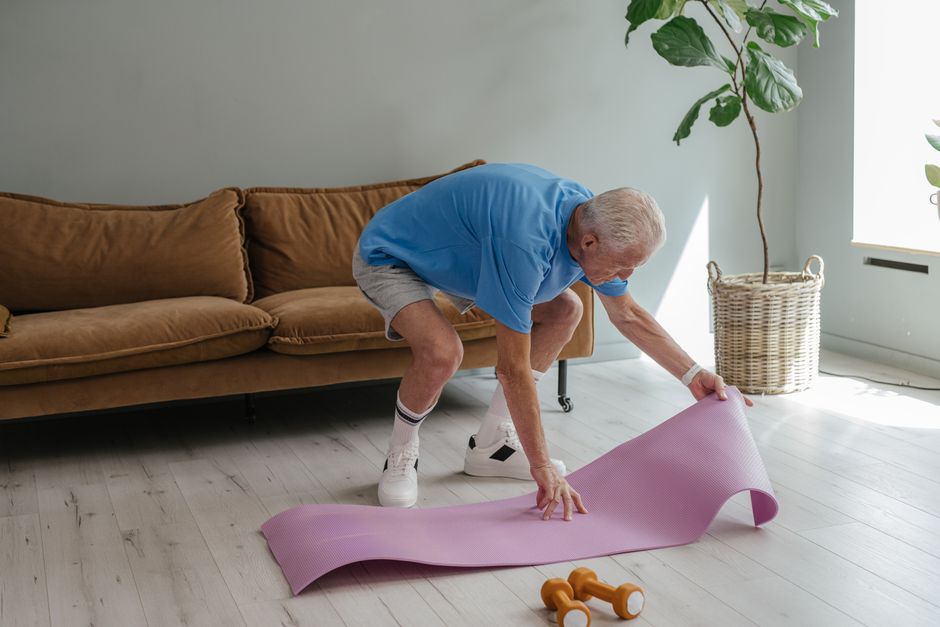
Falls are the leading cause of injury-related death among adults 65 and older in the United States, and most of them are preventable. Preventing falls in older adults comes down to nine practical steps: build leg strength and balance with targeted exercise, review medications with a doctor, get vision and hearing checked, remove home hazards, improve lighting, install grab bars and handrails, wear supportive footwear, use assistive devices correctly, and address fear of falling instead of letting it limit activity. Each step targets a different part of the same problem, and they work best together.
Why Do Older Adults Fall More Often?
Aging changes how the body manages balance. Muscles that stabilize the ankles, knees, and hips lose mass and strength over time, a process called sarcopenia. Nerve signals travel more slowly. Blood pressure can drop when standing up. Vision and inner-ear function often decline. None of these changes cause a fall on their own, but each one narrows the margin for error.
Falls almost never have a single cause. A typical fall involves several factors stacking up at once: a person who is slightly dehydrated, taking a medication that causes drowsiness, walking on a loose rug, and turning quickly to answer a phone. Remove any one of those factors and the fall may not happen. That is why prevention works best as a set of steps rather than one fix.
It helps to understand what happens during a fall. Balance depends on three systems working together: the inner ear, vision, and sensors in the feet and joints called proprioception. The brain combines these signals and triggers rapid adjustments in posture. When one system weakens, the others can usually compensate. When two or three weaken at once, compensation fails and a fall becomes far more likely.
How Does Strength and Balance Training Reduce Fall Risk?
Exercise is the single most studied approach to fall prevention, and the evidence behind it is strong. Research consistently shows that programs combining strength training with balance practice reduce falls in older adults. Programs that focus only on walking, without balance or strength work, do not show the same benefit.
The balance component matters most. Standing on one foot, heel-to-toe walking, tai chi, and similar activities challenge the body’s postural control systems directly. Tai chi has been studied more than most approaches, and trials have generally found it reduces fall rates in older adults. It is not the only option, but it is one of the better supported.
Strength work should target the legs and hips. Sit-to-stand from a chair, step-ups, and resistance band exercises all load the muscles used to catch yourself when you stumble. The ability to recover from a stumble is often what separates a near-miss from a fracture.
Two practical points are often missed. First, consistency matters more than intensity. A few sessions every week over months does more than an intense burst that ends in a few weeks. Second, if a person has already fallen or has significant balance problems, supervised programs with a physical therapist tend to work better than home exercise alone, because the therapist can target specific deficits.
Which Medications Increase Fall Risk?
Certain medication classes are strongly linked to falls. Sedatives and sleeping pills, benzodiazepines, antidepressants, antipsychotics, and medications that lower blood pressure can all increase risk. So can opioids and some over-the-counter sleep aids. The link is well established enough that medication review is a standard part of fall risk assessment in clinical practice.
Polypharmacy — taking five or more medications — is itself a risk factor, partly because of the number of drugs and partly because of how they interact. A doctor or pharmacist can review the full list, including supplements, and identify drugs that could be reduced, swapped, or timed differently.
Do not stop any prescribed medication on your own. Some drugs cause serious problems when stopped abruptly. The right move is to bring a complete list to a clinician and ask specifically whether any of them could be contributing to dizziness, drowsiness, or unsteadiness.
One non-obvious point: a medication that has been taken for years can still become a fall risk later. Age changes how the body processes drugs, so a dose that was fine at 60 may be too strong at 75. This is why medication review should be repeated periodically, not done once.



How Do Vision and Hearing Affect Balance?
Vision provides a constant stream of information about where the body is in space. Cataracts, glaucoma, and age-related macular degeneration all reduce that input. So does outdated eyeglass prescriptions. An annual eye exam catches these problems early.
Bifocal and progressive lenses deserve special mention. They are useful for reading but can distort depth perception when looking down at stairs or uneven ground. Some people benefit from a separate pair of single-vision glasses for walking outdoors. This is a reasonable conversation to have with an eye doctor.
Hearing loss is less obvious as a fall risk, but the connection is real. The inner ear controls balance, and hearing and balance share neural pathways. Some studies have found that hearing loss is associated with higher fall risk, though the exact reason is still being studied. Correcting hearing loss is worthwhile for many reasons, and fall prevention may be one of them.
What Home Changes Actually Reduce Falls?
Most falls happen at home, and most home hazards are fixable. The goal is to remove anything that requires a person to catch their balance unexpectedly.
- Remove or secure loose rugs, or use double-sided tape on the corners
- Clear clutter from walkways, stairs, and doorways
- Coil or tape down electrical and charging cords
- Install grab bars inside and outside the shower and next to the toilet
- Add handrails on both sides of every staircase
- Increase lighting in hallways, stairwells, bathrooms, and entryways
- Use night lights along the path from bed to bathroom
- Keep frequently used items between waist and shoulder height to reduce reaching and climbing
- Repair uneven flooring and loose stair treads
- Place a non-slip mat in the tub or shower
Lighting deserves emphasis. Many falls happen at night when a person gets up to use the bathroom in the dark. Motion-sensor night lights along that route are inexpensive and effective. A bedside lamp within easy reach also helps.
Bathrooms are the highest-risk room in the house. Wet, hard surfaces plus standing on one leg to step into a tub is a difficult combination. A shower chair and a handheld showerhead remove much of that risk.
Does Footwear and Assistive Device Choice Matter?
Footwear affects balance more than most people realize. Shoes with thin, worn soles, loose backs, or high heels make balance harder. So do socks on smooth floors. Supportive shoes with non-slip soles and a firm heel counter are a better choice, both indoors and outdoors.
Walking barefoot at home is a common habit that increases risk, particularly on tile or hardwood. Well-fitting slippers with rubber soles are a reasonable compromise for people who prefer not to wear shoes indoors.
Assistive devices help only when they are the right device, fitted correctly, and used consistently. A cane that is too short or too tall changes posture and can make balance worse. A walker that is the wrong height does the same. A physical therapist or occupational therapist can fit a device and teach proper use.
One common mistake: using a cane or walker only sometimes. Intermittent use means the body never fully adapts to the device, and the person is unprotected during the times they go without it. If a device is needed, it is generally needed consistently.
What About Fear of Falling?
Fear of falling is not just an emotional issue. It changes behavior in ways that increase risk. People who are afraid of falling often reduce their activity, which leads to weaker muscles and worse balance, which makes falls more likely. This cycle is well documented in geriatric research.
The way out is gradual, supported activity rather than avoidance. A physical therapist can design a program that rebuilds confidence alongside strength. Some communities offer evidence-based fall prevention programs specifically designed for people who have already fallen or who are afraid to move.
It is also worth naming the emotional side honestly. A fall can be frightening, and the fear that follows is normal. But letting it shrink a person’s world tends to make the underlying problem worse, not better.
How To Prevent Falls In Older Adults: 9 Steps
Pulling the evidence together, these nine steps cover the factors that research and clinical practice consistently identify as modifiable.
- Exercise for strength and balance. Prioritize balance training and leg strength, not walking alone.
- Review medications. Bring a full list to a doctor or pharmacist and ask about fall risk.
- Get vision checked. Update prescriptions and discuss bifocals for walking.
- Address hearing loss. Have hearing tested and treated if needed.
- Remove home hazards. Secure rugs, clear clutter, and manage cords.
- Improve lighting. Add night lights and brighten stairwells, hallways, and bathrooms.
- Install grab bars and handrails. Bathrooms and stairs first.
- Wear supportive footwear. Non-slip soles, firm heel, proper fit — indoors and out.
- Use assistive devices correctly. Get properly fitted and use consistently.
One step that often gets skipped: talk to a doctor about fall risk directly. Clinical guidelines recommend that adults 65 and older be asked about falls at least once a year and assessed further if they have fallen or have trouble with balance or walking. A brief screening can catch problems before a fracture does.
Vitamin D and calcium are sometimes mentioned in fall prevention discussions. The evidence here is mixed. Some studies suggest vitamin D supplementation may reduce falls in people who are deficient, but results have varied, and high doses have not consistently helped. This is a conversation to have with a clinician rather than a step to take on your own.
When Should You Talk to a Doctor About Falls?
Any fall that causes injury, any fall without a clear cause, and any near-fall that felt like it could have been serious are all reasons to see a clinician. So is new unsteadiness, dizziness when standing, or a change in how a person walks.
Do not wait for a second fall. The first one is information. It often points to a fixable issue — a medication, a vision problem, a strength deficit — that can be addressed before something worse happens.
Frequently Asked Questions
What is the most effective way to prevent falls in older adults?
Exercise that combines balance training with leg strength work has the strongest evidence behind it. Pairing it with medication review and home hazard removal addresses the other major risk factors.
Can medications cause falls in older adults?
Yes. Sedatives, sleeping pills, antidepressants, antipsychotics, opioids, and blood pressure medications are all linked to higher fall risk. A doctor or pharmacist can review the full list and adjust where appropriate.
Do grab bars really reduce fall risk?
Grab bars in bathrooms and handrails on stairs are widely recommended and address the highest-risk areas in the home. They are most effective when installed securely and used consistently.
Should older adults avoid walking if they are afraid of falling?
No. Avoiding activity weakens muscles and worsens balance, which increases fall risk over time. A supervised program can rebuild strength and confidence safely.
