
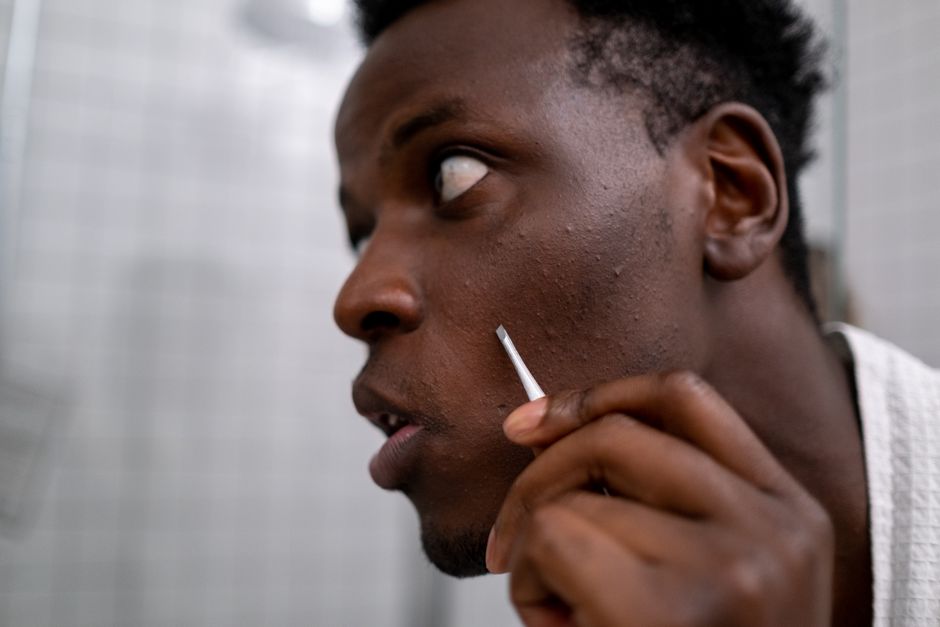
Shaving can irritate your skin and trigger two different problems that often get lumped together: razor bumps and acne-like breakouts. Razor bumps, also called pseudofolliculitis barbae, happen when cut hair curls back and grows into the skin. Acne happens when pores clog with oil and dead skin cells. The two have different causes, so prevention looks slightly different for each.
To prevent both, start with a sharp blade, shave in the direction your hair grows, and prep your skin with warm water and a lubricating shave gel. Rinse the blade after every stroke, use light pressure, and moisturize afterward. If you are prone to razor bumps, shaving less often or switching to a trimmer can help more than any single product.
How To Prevent Acne From Shaving And Razor Bumps?
Prevention comes down to reducing two things: physical irritation to the skin and the chance that hair gets trapped as it regrows. Most of the steps below address both at once.
Shaving is a form of controlled abrasion. A blade drags across the skin, removes the top layer of dead cells, and slices hair at or slightly below the surface. Done gently, most skin recovers without issue. Done aggressively, with a dull blade or no lubrication, the skin responds with inflammation. That inflammation is what you see as redness, small bumps, or irritation.
The single most effective habit is shaving with the grain, not against it. Shaving against the grain cuts hair shorter, which feels smoother at first. But it also increases the odds that the sharp tip of a regrowing hair pokes back into the skin instead of growing outward. That is the mechanical trigger for razor bumps.
Here are the core steps that reduce both razor bumps and shaving-related breakouts:
- Soften hair first with warm water and a few minutes of shower steam.
- Apply a lubricating shave gel or cream. Do not shave dry or on bare soap alone.
- Use a sharp, clean blade. Replace it when it starts to drag or pull.
- Shave in the direction of hair growth on the first pass.
- Use short, light strokes. Let the blade do the work, not pressure.
- Rinse the blade between strokes to clear trapped hair and gel.
- Rinse with cool water and apply a gentle, fragrance-free moisturizer.
None of these steps is complicated, but skipping any one of them raises the chance of irritation. The order matters less than consistency.
What Causes Razor Bumps After Shaving?
Razor bumps are an inflammatory reaction to hair that has curled back into the skin. This is a mechanical problem, not an infection and not acne.
When you shave, you cut hair to a sharp, angled tip. As that hair regrows, the tip can curve and re-enter the skin nearby. The body treats the embedded hair as a foreign object and responds with inflammation. The result is a firm, sometimes itchy bump around the hair follicle. In some people the hair never breaks the surface at all and grows sideways under the skin, which is called a transfollicular penetration.
This condition is more common in people with tightly curled or coarse hair, because the curl of the hair makes re-entry more likely. It is also more common in areas with curved skin and dense hair, such as the neck and jawline. Shaving close against the grain makes it worse.
Razor bumps are not the same as a bacterial infection. However, an inflamed follicle can sometimes become secondarily infected, which may look like a red, tender, pus-filled bump. If bumps become painful, spread, or do not improve, that is a reason to see a clinician rather than keep self-treating.
Why Does Shaving Cause Acne Breakouts?
Shaving does not create acne on its own, but it can make existing acne worse and can trigger acne-like irritation in people who are prone to it.
Acne forms when a pore becomes blocked by oil and dead skin cells. Bacteria that normally live on the skin can then multiply inside the blocked pore, and the skin responds with inflammation. This process is driven mainly by hormones, oil production, and skin cell turnover, not by shaving itself.
What shaving can do is add friction and irritation on top of that. Rubbing a blade across already-inflamed skin can rupture existing pimples and spread irritation to nearby follicles. Shaving cream, aftershave, and moisturizers that contain heavy oils, fragrances, or comedogenic ingredients can also clog pores in people who are susceptible.
There is a useful distinction here. A breakout that appears within a day or two of shaving, in a pattern that follows the direction of your strokes, is more likely irritation or razor bumps than true acne. True acne tends to be more persistent and follows its own pattern, often on the face, chest, and back regardless of shaving.
Which Shaving Method Is Best for Sensitive or Acne-Prone Skin?
There is no single method that works for everyone, but some approaches tend to cause less irritation than others. The best choice depends on your hair type, skin sensitivity, and how often you shave.
| Method | Irritation risk | Notes |
|---|---|---|
| Multi-blade razor, against the grain | Higher | Close cut but cuts hair below skin, raising razor bump risk |
| Single or double-blade razor, with the grain | Lower | Less close, but less likely to trap regrowing hair |
| Electric shaver or trimmer | Lower | Leaves a small amount of hair, which reduces ingrowth |
| Depilatory cream | Varies | Dissolves hair; can irritate sensitive skin and should not be used on broken skin |
For people who get frequent razor bumps, an electric trimmer that leaves a short stubble is often the most reliable option. It avoids cutting hair below the skin surface, which is the main trigger for ingrown hairs. Some clinicians recommend simply not shaving the affected area for a period of time to let the skin settle, though how long this takes varies from person to person.
If you prefer a blade, a single or double-blade razor used with the grain tends to cause less trouble than a multi-blade razor used against the grain. More blades can mean a closer cut, but closer is not always better for skin that reacts easily.
What Ingredients Should You Look For or Avoid?
The products you use before and after shaving matter, especially if your skin is prone to clogged pores or irritation.
For shaving, a lubricating gel or cream helps the blade glide and reduces friction. Fragrance-free and dye-free options are generally a safer choice for sensitive skin, since added fragrance is a common cause of irritation. For moisturizing afterward, look for lightweight, non-comedogenic products. Non-comedogenic means the product is formulated to be less likely to clog pores, though it is not a guarantee for every person.
Ingredients that tend to be well tolerated include glycerin, hyaluronic acid, and simple emollients. Ingredients worth being cautious with if you are acne-prone include heavy oils like coconut oil on the face, and anything with a strong fragrance or alcohol that can sting freshly shaved skin.
Be skeptical of products marketed specifically for razor bumps. Some contain salicylic acid or glycolic acid, which can help with mild cases by encouraging skin cell turnover. Others make claims that no study has confirmed. There is no product that reliably prevents razor bumps in everyone, and none is a substitute for changing how you shave.
When Should You See a Doctor?
Most razor bumps and shaving irritation improve with better technique. Some situations call for medical attention.
See a clinician if bumps are painful, filled with pus, spreading, or not improving after several weeks of gentler shaving. A doctor can tell the difference between razor bumps, a bacterial infection, and true acne, since these need different treatments. In some cases, prescription treatments or a recommendation to stop shaving the area are appropriate.
If you have darker skin, be aware that ongoing inflammation from razor bumps can sometimes leave dark marks or raised scars after the bumps clear. This is called post-inflammatory hyperpigmentation, and it is more common in people with darker skin tones. Treating the bumps early may reduce the chance of these marks.
It is also worth checking whether what you think is razor bumps is actually acne, or the other way around. The treatments differ, and using the wrong one can waste time or make things worse.
Frequently Asked Questions
Does shaving cause acne?
Shaving does not cause acne, but it can irritate existing acne and trigger acne-like bumps in people who are prone to them. True acne is driven mainly by hormones and pore blockage, not by shaving itself.
How do I stop getting razor bumps on my neck?
Shave with the grain, use a sharp blade with a lubricating gel, and apply light pressure. If bumps continue, switching to an electric trimmer that leaves short stubble often helps more than any shaving product.
Is it better to shave with or against the grain?
Shaving with the grain causes less irritation and lowers the risk of razor bumps. Shaving against the grain gives a closer shave but raises the chance that regrowing hair curls back into the skin.
Can razor bumps turn into acne?
Razor bumps do not turn into acne because they have a different cause. However, an inflamed follicle can sometimes become infected, which may look similar to a pimple and may need medical treatment.
