
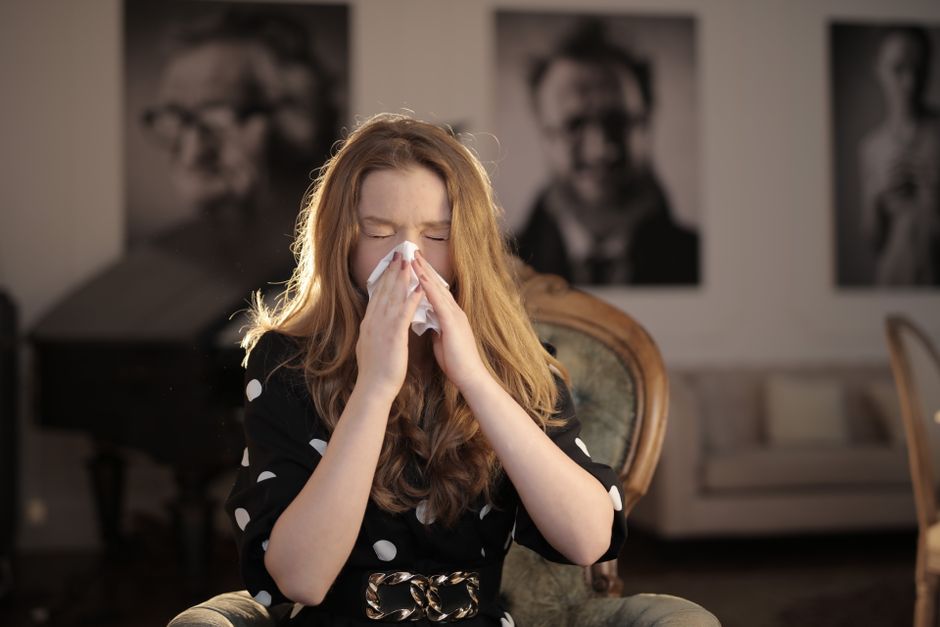
A sneeze is a reflex you cannot fully control, but you can often stop one from building into a full burst. Press your tongue firmly against the roof of your mouth, pinch your nose closed for a few seconds, or press a finger just under your nose to interrupt the tickle. For allergy-driven sneezing, the more reliable fix is reducing your exposure to the trigger and using treatments your doctor or pharmacist recommends.
What Actually Happens When You Sneeze?
A sneeze is a coordinated reflex, not a random event. It starts when something irritates the lining of your nose — pollen, dust, a virus, cold air, or strong perfume. Nerve endings in the nasal lining send a signal to a control center in your brainstem.
The brainstem then triggers a sequence. Your eyes close involuntarily. Your chest muscles tighten, your throat briefly closes, and air is forced out through your nose and mouth at high speed. The purpose is to clear the irritant from your airway.
This is why you cannot simply decide not to sneeze once the reflex is fully underway. By the time you feel the urge, the signal is already traveling. But in the early “tickle” phase — the second or two before the reflex locks in — you sometimes have a small window to interrupt it.
That window is the entire basis for most physical sneeze-stopping tricks. They work on the buildup, not the release.
How To Prevent A Sneeze Physical Tips That May Work
These techniques aim to interrupt the nerve signal during the tickle phase. They are widely used and generally harmless. None of them are proven in large clinical trials, so treat them as personal tricks rather than guaranteed methods.
- Press your tongue hard against the roof of your mouth. The pressure and slight distraction can sometimes override the tickle.
- Pinch your nose shut briefly. Gentle pressure for a few seconds may calm the nerve trigger. Do not pinch hard or hold it long.
- Press a finger under your nose, above your upper lip. This area is rich in nerve endings, and firm pressure sometimes settles the urge.
- Breathe slowly through your mouth. Slow, steady breathing can reduce the intensity of the tickle.
- Look toward a bright light — or away from it. Some people sneeze from bright light. Others find that staring at a light stops a sneeze already in progress. It varies by person.
- Press your tongue against your front teeth. A firm, steady pressure here helps some people hold off the reflex.
One important caution: never try to stop a sneeze by pinching your nose shut and closing your mouth tightly at the same time. This traps pressure in your airway and has, in rare reported cases, caused injury to the eardrum or throat. Let the sneeze out if it is going to happen.
Why Do Some People Sneeze More Than Others?
Sneezing frequency is partly genetic and partly environmental. Some people have nasal linings that react to very small amounts of irritant. Others barely notice the same trigger.
Allergic rhinitis — the medical term for allergy-related nasal inflammation — is a common reason for frequent sneezing. It affects a large share of adults in the United States. When your immune system mistakenly flags a harmless substance like pollen as a threat, it releases histamine. Histamine causes swelling, itching, and sneezing.
Non-allergic triggers are just as real. Cold air, strong smells, smoke, changes in temperature, and even spicy food can set off sneezing in people with no allergy at all. This is called non-allergic rhinitis, and it does not respond to allergy medication the same way.
Knowing which type you have matters, because the treatment is different.



How Allergy Relief Reduces Sneezing
If your sneezing is driven by allergies, physical tricks only help in the moment. Reducing the underlying allergic response is what cuts down how often you sneeze in the first place.
Reduce exposure first. This is the most direct step and it has no side effects.
- Check local pollen counts and stay indoors on high-count days, especially in the morning when counts often peak.
- Keep windows closed during allergy season and use air conditioning with a clean filter.
- Shower and change clothes after being outdoors, so you do not carry pollen to your bed.
- Wash bedding in hot water regularly.
- If pets trigger your symptoms, keep them out of the bedroom.
Medications. Several classes of drugs are used for allergy sneezing. Antihistamines block histamine and are commonly used for mild to moderate symptoms. Intranasal corticosteroid sprays reduce inflammation in the nasal lining and are often recommended for persistent symptoms. Decongestant sprays can help short-term but should not be used for more than a few days in a row, because longer use can cause rebound congestion.
Which option fits you depends on your symptoms, your health history, and other medications you take. A pharmacist or doctor can help you choose. This is not a decision to make from a search result alone.
Allergy testing and immunotherapy. For people with clear, persistent allergies, a doctor may recommend testing to identify specific triggers. Allergy shots or under-the-tongue tablets can, over time, reduce sensitivity to a trigger. These are medical treatments that require a clinician’s involvement.
When Sneezing Is a Sign of Something Else
Occasional sneezing is normal and rarely a concern. But some patterns deserve a medical look.
Sneezing that comes with a runny nose, facial pressure, and symptoms lasting more than a couple of weeks may point to chronic rhinitis or sinus problems. Sneezing with fever, body aches, and a sore throat is more likely an infection. Sneezing that starts suddenly with no clear trigger, or that changes in character, is worth mentioning to a doctor.
One sneeze is not a diagnosis. Many conditions produce similar symptoms, and only a clinician can sort out which one applies to you.
How To Prevent A Sneeze Physical Tips And Allergy Relief Together
The most practical approach combines both. Use physical tricks to handle a sneeze that is already building. Use allergy control to reduce how often those moments happen.
Cover your sneezes with your elbow or a tissue, not your hands. This reduces the spread of germs, which matters if your sneezing is from a cold or flu rather than allergies. Wash your hands often during allergy season and cold season alike.
Keep a small kit handy if you sneeze often: tissues, any medication your clinician has approved, and a note of your known triggers. Small habits add up more than any single trick.
Does Holding In a Sneeze Cause Harm?
Usually not, if you do it gently and briefly. The concern is forceful suppression — pinching the nose and clamping the mouth shut hard. That builds pressure that has nowhere to go.
Reported injuries from forceful sneeze suppression are rare but real. They include ruptured eardrum, throat injury, and in very rare cases, damage to small blood vessels. The safer move is to let the sneeze out, or to interrupt it gently during the tickle phase before it fully builds.
If you find yourself needing to stop sneezes constantly, that is a signal to look at the cause rather than the symptom.
Frequently Asked Questions
Can you actually stop a sneeze once it starts?
Sometimes, if you catch it during the early tickle phase before the reflex locks in. Once the sneeze is fully underway, it usually cannot be stopped.
Is it bad to hold in a sneeze?
Gentle, brief suppression is usually harmless, but forceful suppression by pinching your nose and closing your mouth hard can cause rare injuries. Let the sneeze out if it is going to happen.
What is the fastest way to stop allergy sneezing?
Reducing your exposure to the trigger is the most direct step, and allergy medication recommended by a clinician can cut down how often you sneeze. There is no single trick that works for everyone.
Why do I sneeze so much in the morning?
Morning sneezing is common with allergies because pollen counts often peak early and because you have been lying down, which lets mucus pool. It can also happen with non-allergic triggers like cold air.
