
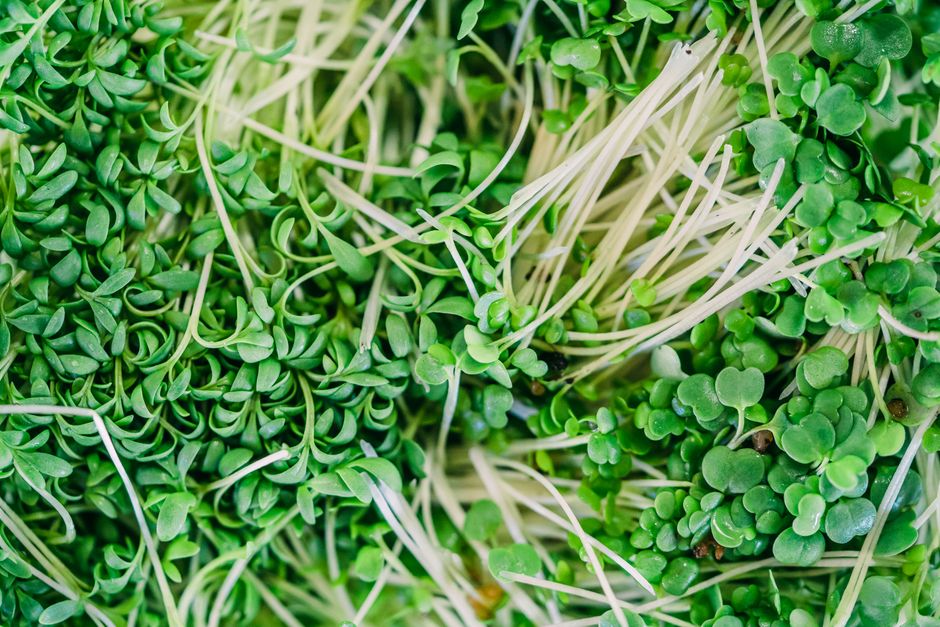
Microgreens are young seedlings harvested just after their first true leaves appear. They spoil faster than most produce because they are harvested at a tender stage and often sold with stems still attached and leaves intact. To preserve them, keep them dry, cold, and loosely packed in a breathable or ventilated container in the refrigerator, and wash them only right before eating. Handled this way, most microgreens hold for about five to ten days, though delicate varieties decline sooner.
That short window surprises people who treat microgreens like baby spinach. They are not the same thing. A microgreen is a seedling. Baby spinach is a small mature plant. The seedling has thinner cell walls, more surface area relative to its mass, and no protective waxy skin. All of that makes it more vulnerable to moisture, temperature swings, and physical damage.
Why Do Microgreens Spoil So Fast?
Spoilage in microgreens is mostly a water and tissue-damage problem, not a ripeness problem. Once cut, the seedling keeps respiring — taking in oxygen and releasing carbon dioxide and water vapor. Because the plant is tiny, that respiration happens across a large fraction of its total tissue.
The cut stem is the other weak point. A wound is an entry site for spoilage organisms and a place where the plant loses moisture. Leaves bruise easily, and bruised tissue releases cell contents that feed bacteria and fungi already present on the surface.
Moisture is the single biggest accelerant. Condensation trapped against leaves creates the humid microclimate that molds and soft spoilage bacteria favor. This is why the same tray of microgreens can last a week in one kitchen and three days in another — the difference is usually how much water stayed in contact with the leaves.
Temperature matters just as much. Most home refrigerators run somewhere in the range of 35°F to 40°F (about 2°C to 4°C), and that cold slows respiration and microbial growth. Every stretch of time spent on the counter at room temperature moves the greens toward spoilage faster than most people expect.
How To Preserve Microgreens And Extend Their Shelf Life
The core principle is simple: keep them cold, keep them dry, and keep them from being crushed. Everything below is a way of doing one of those three things.
Do not wash them until you are ready to eat them
This is the most common mistake. Washing introduces water into the spaces between leaves, and that water is hard to remove completely. Surface moisture drives mold growth and softens tissue. If your microgreens arrive already damp, spread them on a clean towel and let them air-dry before storing.
Remove any damaged or slimy pieces
One yellowing or slimy leaf can spread spoilage to the rest. Sort through the container when you first bring the greens home and pull out anything that looks wet, dark, or broken. This takes a minute and meaningfully changes how long the rest will last.
Store them cold and loosely packed
Loosely packed is the key word. A tightly sealed bag traps moisture and can crush the leaves. A container that allows a little air exchange — or a sealed container lined with a dry paper towel — gives you a middle ground. The towel absorbs excess moisture while the container limits drying out.
Place them in the coldest part of your refrigerator, which is usually toward the back rather than the door. The door is the warmest area and the temperature fluctuates every time it opens.
Keep them away from ethylene-producing fruit
Some fruits and vegetables release ethylene gas as they ripen, and ethylene speeds aging in sensitive plants. Apples, bananas, and ripe tomatoes are common culprits. Storing microgreens in the same drawer as these is not ideal. The effect is more pronounced in some varieties than others, but separating them is easy and costs nothing.
Should You Store Microgreens In A Container, Bag, Or Jar?
There is no single correct container, and no head-to-head trials tell us one method clearly beats another. What the physiology supports is a container that limits moisture buildup without completely sealing in humid air against the leaves. Here is how the common options compare.
| Storage Method | How It Works | Practical Notes |
|---|---|---|
| Sealed container with dry paper towel | Limits airflow while the towel absorbs condensation | Works well for most varieties; replace the towel if it becomes damp |
| Ventilated container or perforated bag | Allows some air exchange to reduce humidity | Good for delicate greens; watch for drying at the edges |
| Sealed bag with all air pushed out | Limits oxygen and moisture contact | Can crush leaves; best only if greens are sturdy and fully dry |
| Open bowl in the refrigerator | Maximum airflow | Greens dry out and wilt quickly; not recommended for more than a day or two |
| Glass jar with a loose lid | Moderate airflow, rigid protection | Reasonable option if the greens are dry and not packed tightly |
Whichever you choose, check the container after the first day. If you see condensation on the inside, the greens were too wet going in, or the container is too sealed. Adjust from there.
How Long Do Microgreens Last In The Fridge?
Most fresh microgreens keep for roughly five to ten days in a refrigerator when stored dry and cold. That is a general range, not a guarantee, and it varies by variety, by how fresh they were when you bought them, and by how they were handled before they reached you.
Delicate varieties tend to sit at the short end. Sturdy ones like sunflower or pea shoots often last closer to the longer end, partly because their stems are thicker and hold up better to handling. If you grew them yourself, the clock starts at harvest — the sooner they are cooled after cutting, the longer they will keep.
Treat the range as a guide, not a rule. The condition of the greens in front of you tells you more than any number does.
How Can You Tell If Microgreens Have Gone Bad?
Use your senses, and trust them. Spoiled microgreens show clear signs that are hard to miss once you know what to look for.
- Slime or wetness on the leaves or stems, especially where they touch each other
- Off odors — a sour, musty, or fermented smell
- Discoloration — yellowing, browning, or dark translucent patches
- Visible mold — fuzzy patches in white, gray, or green
- Soft, limp texture that does not recover when chilled
A little wilting from dryness is different from spoilage. Greens that are limp but smell fresh and show no slime or mold may simply have lost moisture. Spoilage, by contrast, is usually accompanied by smell or visible growth. When in doubt, throw them out. There is no reliable way to salvage microgreens that have started to grow mold, and the risk is not worth it.
Can You Freeze Or Dry Microgreens To Make Them Last Longer?
Freezing and drying both extend storage time, but they change the product. Neither gives you back fresh microgreens.
Freezing ruptures cell walls as ice crystals form, so thawed microgreens turn soft and release water. They work in cooked dishes, soups, or smoothies but not as a fresh garnish. Some people freeze them in ice cube trays or blended into sauces to work around the texture change.
Drying removes the water that spoilage organisms need, which is why dried herbs keep for months. Dried microgreens lose their fresh texture entirely and are best used as a seasoning or powder. The nutrient content also changes with drying and storage, and the fresh-versus-dried comparison depends heavily on the specific nutrient and how the greens are processed.
If your goal is fresh greens for salads and garnishes, refrigeration remains the practical answer. Freezing and drying are useful for using up a surplus, not for preserving the fresh eating experience.
What About Storing Microgreens You Grew Yourself?
Homegrown microgreens follow the same rules, with one addition: harvest at the right moment and cool them fast. Cut them when the first true leaves have opened but before the stems get long and leggy. Harvest with clean scissors into a shallow container rather than a deep pile, which crushes the lower layers.
Do not water immediately before harvest. Wet leaves going into storage is the fastest route to mold. If you rinse after cutting, dry them thoroughly — a salad spinner followed by a towel works well — before they go into the refrigerator.
One point worth clarifying: microgreens are not the same as sprouts. Sprouts are grown in water and eaten whole, including the seed and root, and they carry a well-documented food safety risk because the warm, moist growing conditions also favor bacterial growth. Microgreens are grown in soil or a growing medium and only the stem and leaves are eaten. That difference matters for food safety, though it does not make microgreens immune to spoilage — the storage rules above still apply.
Frequently Asked Questions
Should you wash microgreens before storing them?
No. Wash them only right before you eat them, because moisture left on the leaves speeds spoilage. If they arrive damp, dry them gently on a clean towel first.
How long do microgreens last in the fridge?
Most keep for about five to ten days when stored dry, cold, and loosely packed. Delicate varieties may decline sooner, so check them every couple of days.
Can you store microgreens in a plastic bag?
Yes, but keep the bag loose and line it with a dry paper towel to absorb moisture. A tightly sealed bag can trap condensation and crush the leaves.
What is the best way to keep microgreens crisp?
Keep them dry, cold, and away from ethylene-producing fruit, and store them in the coldest part of the refrigerator. A dry paper towel in the container helps absorb excess moisture.
