
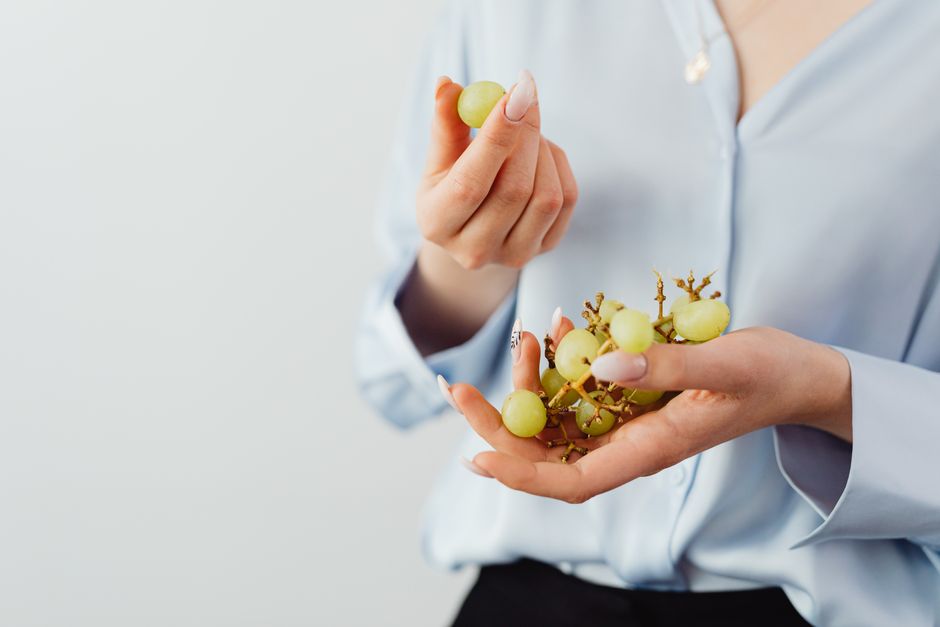
Grapes stay fresh in the fridge for about one to two weeks, and sometimes a bit longer, if you store them the right way. The key steps are simple: keep them unwashed until you plan to eat them, keep them dry, leave them on the stem, and hold them in a loosely open bag in the coldest part of your fridge. Most spoilage comes from moisture and from grapes being crushed by their own weight, so those two problems are the ones to solve first.
Grapes are surprisingly fragile for something that looks so sturdy. Each berry is mostly water held inside a thin skin, and once that skin breaks, spoilage organisms have an easy way in. Everything below follows from that one fact.
How To Preserve Grapes In The Fridge For Weeks?
The single most effective thing you can do is keep the grapes dry and unwashed until the moment you eat them. Water on the surface of a grape is the main driver of mold and soft rot in home storage. Many people rinse a whole bunch when they get home from the store, then put the wet grapes back in the fridge. That one habit can cut storage life noticeably.
Here is a storage method that works well:
- Sort through the bunch and remove any grapes that are split, mushy, or already showing mold. One rotting berry can spread spoilage to the ones touching it.
- Leave the grapes attached to the stem. A grape that has been pulled off has a torn opening where the stem was, and that opening is a doorway for moisture loss and microbes.
- Do not wash them yet. Put washing off until you are ready to eat.
- Line a container or a zip-top bag with a dry paper towel. The towel absorbs condensation that forms as the fridge cycles between cooling and warming.
- Leave the bag or container partly open, or poke a few small holes in it. Grapes need a little airflow. A completely sealed bag traps moisture and speeds up mold.
- Place them in the crisper drawer or on a shelf toward the back, where the temperature stays coldest and most steady. Avoid the door, which warms every time it opens.
Stored this way, most table grapes hold up for roughly one to two weeks. Some varieties and some very fresh bunches last longer. Grapes that were already a few days old when you bought them will not last as long, and no storage trick changes that.
Why Do Grapes Spoil So Fast In The Fridge?
Grapes spoil quickly because they are living tissue that keeps respiring after harvest, and because their thin skins offer little protection. Respiration is the process where the fruit continues to use oxygen and release moisture and heat. In a closed, humid environment, that released moisture condenses on the fruit and creates exactly the damp surface that mold needs.
There is a second factor people rarely think about. Grapes give off a natural ripening gas called ethylene. In a sealed bag, that gas builds up around the fruit and speeds up softening and decline. Good airflow lets it disperse. This is one reason a loosely closed bag outperforms a tightly sealed one.
Physical damage matters just as much. Grapes at the bottom of a heavy bunch get compressed, and the pressure weakens the skin. Once a berry cracks, the inside is exposed to air and microbes. That is why removing damaged grapes early helps the rest of the bunch.
Should You Wash Grapes Before Storing Them?
No. Wash grapes right before you eat them, not before you store them. This is one of the clearest and most consistent pieces of home food-storage advice, and the reasoning is straightforward: surface moisture promotes mold growth and softens the skin.
When you do wash them, rinse under cool running water and pat dry. For a more thorough clean, a short soak in plain water with a little agitation removes surface dirt and residue. There is no reliable evidence that vinegar soaks or special produce washes meaningfully extend how long grapes keep in the fridge, though some people use them for general cleaning. If you wash a batch and do not finish it, dry the grapes thoroughly before returning any to the fridge.
A useful clarification: the white powdery coating on grapes, called bloom, is not dirt or pesticide. It is a natural waxy layer the fruit produces, and it actually helps protect the grape. You do not need to scrub it off.
What Temperature And Where In The Fridge Works Best?
Grapes keep best at a steady, cold refrigerator temperature. Home fridges typically run around 37°F to 40°F (about 3°C to 4°C), and that range suits grapes well. The important word is steady. Temperature swings cause condensation, and condensation is the enemy.
Place grapes toward the back of a shelf or in a crisper drawer set to a moderate humidity. The back of the fridge stays coldest and changes temperature least. The door is the worst spot because it warms every time someone opens it.
Keep grapes away from strong-smelling foods and from ethylene-producing fruits like apples and bananas if you can. Grapes absorb odors through their skins, and nearby ethylene can speed ripening and decline. A sealed or partly sealed bag helps with odor, and separation helps with ethylene.
How Can You Tell If Grapes Have Gone Bad?
Discard grapes that are moldy, mushy, leaking, or smell fermented. Mold appears as fuzzy white, gray, or green patches, often first where the grape meets the stem. A grape that has turned soft and wrinkled, or that leaks juice, is past its prime. A sour or wine-like smell means the fruit is fermenting.
One wrinkled or slightly soft grape does not ruin the bunch. Remove it and check the ones touching it. But if mold is visible, throw away the affected grapes and any grapes in direct contact, and wash the rest before eating. Do not try to salvage a moldy grape by cutting around the mold, because mold filaments can extend beyond what you can see.
Firmness is the best everyday test. Fresh grapes feel plump and the skin is tight. As they age, they lose water, the stem dries and turns brown, and the berries soften. A brown, dry stem is a sign of age but not necessarily spoilage on its own.
Can You Freeze Grapes To Make Them Last Longer?
Yes, and freezing is the one method that reliably extends storage far beyond a couple of weeks. Frozen grapes keep for several months. The texture changes, though. They become firm and icy, which makes them good for eating frozen as a snack or for blending into smoothies, but they will not return to a fresh table-grape texture after thawing.
To freeze, wash and dry the grapes thoroughly, remove them from the stem if you like, spread them on a tray so they freeze individually, then transfer to a freezer bag. Drying well before freezing matters, because ice crystals form on wet surfaces and the grapes clump together.
Do Any Common Storage Tricks Actually Work?
Some popular tips help and some do not. The paper towel trick works because it manages condensation. Keeping the stem on works because it protects the fruit. Leaving the bag slightly open works because it allows airflow. Those three are the ones with clear, sensible reasoning behind them.
Other methods are less reliable. Some people store grapes in an airtight container with no ventilation, which traps moisture and tends to backfire. Vinegar rinses are widely recommended online, but the evidence that they meaningfully extend grape storage at home is thin. Do not rely on them as a substitute for keeping the fruit dry and cold.
The honest summary is that grape storage is not complicated. Cold, dry, ventilated, and undisturbed covers almost everything that matters. The rest is small refinements.
Frequently Asked Questions
How long do grapes last in the fridge?
Most grapes stay fresh for about one to two weeks when stored unwashed, dry, and loosely covered in a cold part of the fridge. Very fresh bunches may last a little longer, while older ones last less.
Should I wash grapes before putting them in the fridge?
No, wash them just before eating. Surface moisture encourages mold and softens the skin, so wet grapes spoil faster in storage.
Why do my grapes get moldy so fast?
Moisture and trapped air are the usual causes. Condensation inside a sealed bag, plus any damaged or split berries, gives mold an easy foothold.
Can you freeze grapes to keep them longer?
Yes, frozen grapes keep for several months and work well as a frozen snack or in smoothies. They lose their fresh texture after thawing, so freeze them for eating frozen rather than for returning to the table.
