
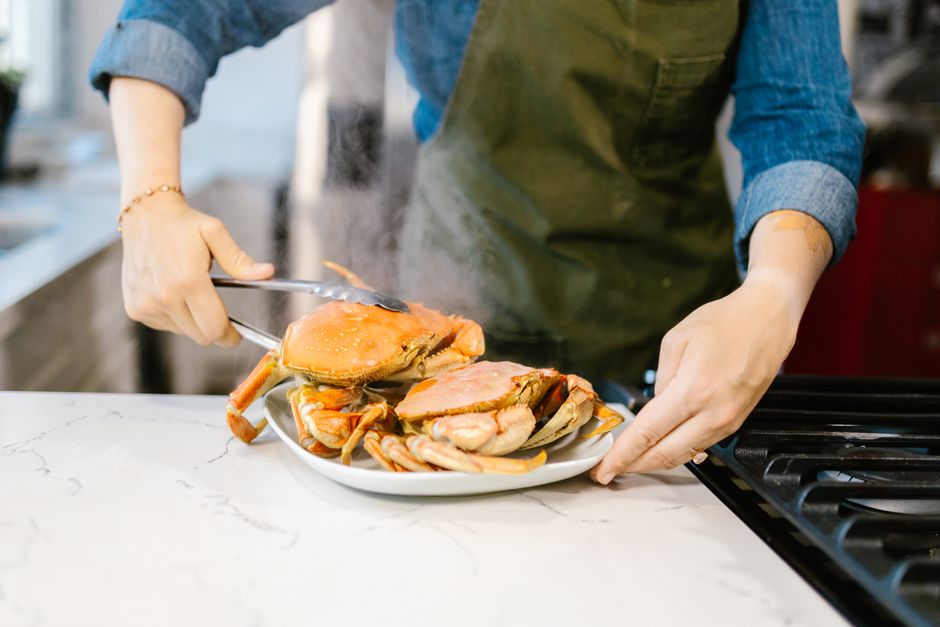
Freezing is the most reliable way to preserve crab at home. Cooked crab meat keeps about three to four months in a freezer held at 0°F (-18°C) or colder, and live crab should be cooked before freezing rather than frozen alive. Canning crab is possible only with a pressure canner, and the safety margins are narrow enough that many food safety authorities advise against home canning of crab altogether.
Storage depends on whether the crab is live, cooked, or picked meat. Each form has different risks and different timelines. Getting those details right is what separates crab that tastes fresh months later from crab that turns rubbery, dry, or unsafe.
How Should You Store Live Crab Before Cooking?
Live crab should be cooked within 24 hours of coming home. They do not survive long out of water, and dead crab deteriorates quickly.
Keep live crab cold and damp, not submerged in tap water. A cooler with wet newspaper or damp burlap over the crab, plus ice packs, works well. Freshwater kills marine crab, so do not store them in a bucket of tap water hoping to keep them alive longer.
Cook them as soon as you reasonably can. A crab that dies before cooking should be discarded — not cooked and not frozen. The reason is that crab tissue breaks down fast after death, and bacteria that were held in check in a living animal multiply quickly. This is a food safety rule with strong consensus, not a matter of preference.
If you buy cooked crab from a market, refrigerate it promptly and use it within a few days. The clock on cooked crab starts at the moment it was cooked, not the moment you bought it.
How Do You Freeze Crab So It Keeps Its Texture?
Freeze cooked crab, never raw. Cooking first kills spoilage organisms and firms the meat, and it is the standard approach for home freezing.
For whole cooked crab, cool it quickly, then wrap it tightly and freeze. For picked meat, pack it into freezer-safe containers or heavy freezer bags, press out as much air as possible, and seal. Air is the enemy here — it causes freezer burn and dries the meat out. A vacuum sealer helps but is not required.
Leave a little headspace in rigid containers because the meat expands slightly as it freezes. Label with the date. Keep the freezer at 0°F (-18°C) or below; a freezer thermometer is worth the small cost because many home freezers run warmer than the dial suggests.
- Cook crab thoroughly before freezing.
- Cool it fast — within about two hours of cooking, get it into the refrigerator.
- Remove as much air as possible from packaging.
- Freeze in portions you will use at once, since refreezing thawed crab is not recommended.
- Keep the freezer at 0°F (-18°C) or colder.
One subtle point: freezing does not sterilize crab. It pauses bacterial growth and kills some parasites, but it does not destroy the toxins that cause certain shellfish poisonings. That is why the quality of the crab you start with matters more than anything you do in the freezer.
How Long Does Frozen Crab Last?
Cooked crab meat holds good quality for about three to four months at 0°F (-18°C). Beyond that it is still safe to eat if it was handled properly, but texture and flavor decline.
Whole cooked crab in the shell takes up more space and is more prone to freezer burn, so it is often better picked and packed before freezing. If you keep it whole, wrap it in several layers.
These timelines are general guidance, not a hard safety line. The real variables are how cold your freezer runs, how well the crab was sealed, and how fresh it was going in. A freezer that cycles above 0°F will shorten usable storage.
Can You Home Can Crab Safely?
Home canning of crab is a high-risk practice, and many food safety authorities recommend against it. Crab is a low-acid, moist seafood, and it is difficult to process safely in a home kitchen.
If crab is canned at all, it must be done in a pressure canner, never a boiling water bath. A boiling water bath cannot reach the temperatures needed to destroy the spores of Clostridium botulinum, the bacterium behind botulism. Only a pressure canner reaches the temperatures required for low-acid foods.
Follow a tested, current recipe from a recognized source exactly — no changes to processing time, jar size, or packing method. Do not invent your own process. The margin for error with low-acid canned seafood is small, and botulism is a serious, sometimes fatal illness that you cannot see, smell, or taste in the food.
Given the risk, freezing is the safer choice for most home cooks. If you want shelf-stable crab, commercially canned crab is made under controlled conditions that are hard to replicate at home.
How Do You Thaw and Reheat Frozen Crab?
Thaw crab in the refrigerator overnight. This is the safest method and the one that best protects texture.
For a faster thaw, place sealed crab in a bowl of cold water. Do not thaw on the counter at room temperature — the outside warms into the danger zone while the center is still frozen.
Once thawed, use it within a day or two and do not refreeze it. Reheat gently. Crab meat is delicate and turns rubbery with high heat or long cooking, so warm it through rather than boiling it. Thawed crab works well in crab cakes, dips, soups, and pasta where it is folded in near the end of cooking.
What Are the Signs Crab Has Gone Bad?
Trust your senses, and when in doubt, throw it out. Spoiled crab often smells strongly of ammonia or sour fish, feels slimy, and looks dull or discolored.
Fresh cooked crab smells mild and sweet. Any ammonia odor is a warning sign — it usually means the tissue has broken down. Slimy texture on the surface is another clear signal.
Never taste crab to check whether it is safe. If it smells or looks wrong, discard it. The same applies to canned crab: a bulging, leaking, or damaged jar or can should be thrown away without opening, and any canned product with an off odor after opening should be discarded.
How To Preserve A Crab: Freezing, Canning And Storage at a Glance
Here is how the main methods compare for home use.
| Method | Best for | Storage life | Key caution |
|---|---|---|---|
| Refrigerate cooked crab | Short-term use | A few days | Use promptly |
| Freeze cooked crab | Most home cooks | About 3–4 months at 0°F (-18°C) | Cook before freezing; seal well |
| Pressure can | Experienced canners only | Long shelf life | High botulism risk; many authorities advise against it |
| Boiling water bath can | Not suitable | — | Cannot make low-acid crab safe |
The table makes the trade-off clear. Freezing is forgiving and low-risk. Canning offers shelf stability but demands precision and carries real danger if done wrong.
Frequently Asked Questions
Can you freeze crab without cooking it first?
No, cook crab before freezing. Raw crab does not freeze well and cooking first is the standard home method for safety and quality.
How long can you keep frozen crab?
Cooked crab meat keeps good quality for about three to four months at 0°F (-18°C). It may stay safe longer but texture and flavor decline.
Can you can crab in a boiling water bath?
No. Crab is a low-acid food and a boiling water bath cannot reach the temperatures needed to destroy botulism spores.
How can you tell if frozen crab has gone bad?
Look for a strong ammonia or sour smell, slimy texture, or dull discoloration. If anything seems off, discard it rather than tasting it.
