
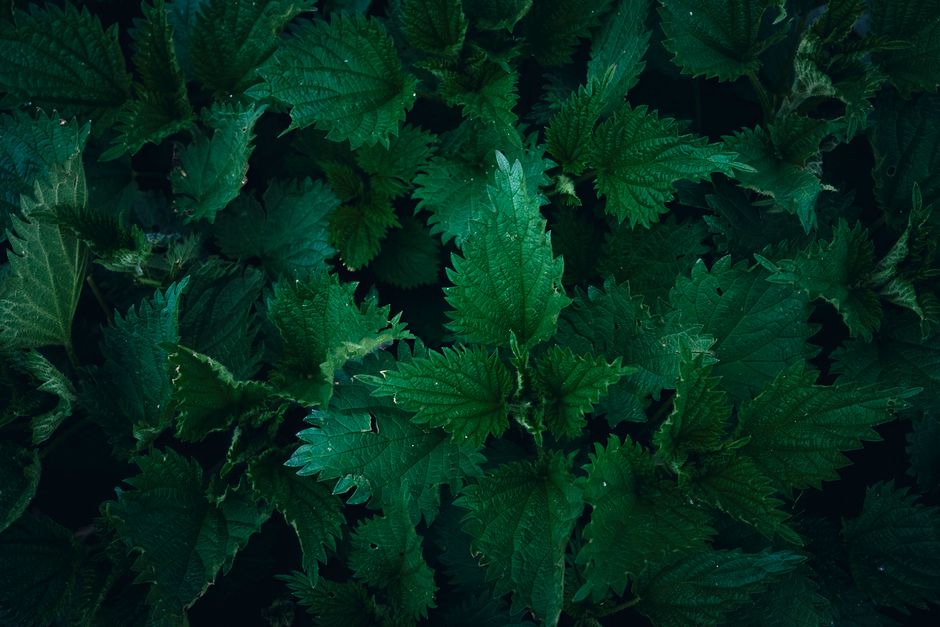
Stinging nettles lose their sting the moment they meet heat or thorough crushing. Boiling, steaming, blanching, or drying all break down the tiny hollow hairs on the leaves that inject histamine and other irritants into skin. For tea, pouring boiling water over the leaves and steeping for several minutes neutralizes them too. Once cooked or dried, nettles are a safe, mild green vegetable that has been eaten in soups, stews, and teas for centuries.
Why Do Stinging Nettles Sting In The First Place?
The sting comes from physical structure, not a chemical that soaks in. Nettle leaves and stems are covered in fine hairs called trichomes. Each one is a hollow silica needle with a fragile tip. When skin brushes against it, the tip snaps off and the sharp shaft pierces the skin like a tiny syringe.
What it injects is a mix of compounds. Histamine, acetylcholine, and serotonin are the main ones identified. Histamine and acetylcholine both trigger the burning, itching, and welts that appear within minutes. The reaction is usually short-lived and fades on its own, though it can be intensely uncomfortable for the first hour.
Here is the part many people miss: the hairs only sting while they are intact and rigid. Heat softens and collapses them. Drying makes them brittle so they crumble to dust. Crushing or chopping breaks the needles so they can no longer pierce skin. That is the entire basis for every preparation method below.
How To Prepare Stinging Nettles For Cooking And Tea?
Always wear gloves when harvesting and handling raw nettles. Thick garden gloves or dish gloves work well. Pick the top few inches of young plants in spring, before they flower. Use scissors and drop the leaves straight into a bag or basket so you never touch them bare-handed.
Once you are ready to cook, choose one of these methods:
- Blanching: Bring a pot of water to a rolling boil. Drop the nettles in and cook for about one minute. The sting is gone almost instantly. Lift them out with tongs or a slotted spoon.
- Steaming: Steam the leaves for several minutes until fully wilted. Wilted leaves have lost their rigid hairs and are safe to handle.
- Sautéing: Add washed nettles to a hot pan with a little oil or butter. Stir until they collapse and darken, which takes a few minutes. Treat them like spinach.
- Drying: Hang bundles upside down in a dry, dark, well-ventilated space, or use a food dehydrator on a low setting. Once fully dry and crumbly, the leaves are safe for tea and no longer sting.
For tea specifically, the simplest safe method is to use dried nettle leaves. Pour boiling water over a small handful of dried leaves, cover the cup, and steep for five to ten minutes. The boiling water neutralizes any remaining hairs, and dried leaves are already safe to touch. Strain before drinking.
You can also make tea from fresh leaves. Drop them into boiling water and let them steep. Do not handle fresh leaves with bare hands before they go in the water.
Do You Have To Cook Nettles Before Eating Them?
Yes for fresh nettles. Raw nettle leaves sting on contact, and eating them raw would expose your mouth and throat to the same irritating hairs. Cooking, blanching, or drying first removes that risk.
Some traditional practices involve crushing or rolling raw leaves to break the hairs, then eating them. This is a common folk method, but it relies on thoroughly destroying every hair, which is hard to guarantee. For most people, cooking is the reliable approach.
One important safety point: once nettles are cooked, they behave like any other leafy green. They wilt down dramatically, so a large pile of raw leaves shrinks to a small portion. A big bag of raw nettles might cook down to a single serving.
How Do You Remove The Sting From Nettles?
Heat and drying are the two dependable ways. Both work by destroying the physical structure of the hairs rather than by neutralizing a poison.
Heat is fastest. Any method that brings the leaves to a boil, steams them until limp, or wilts them in a hot pan collapses the hairs. You do not need to cook them for long. A brief blanch is enough to make them safe to touch and eat.
Drying takes longer but works just as well. Fully dried nettles crumble easily and cannot sting. This is why dried nettle tea is the most forgiving option for beginners.
What does not reliably work: rinsing with cold water, briefly dipping in cool water, or handling them with thin gloves. The hairs can poke through thin fabric. Use thick gloves until the leaves are cooked or dry.
What Do Stinging Nettles Taste Like And How Are They Used?
Cooked nettles taste like a mild, slightly earthy spinach. The flavor is green and grassy with a faint mineral note. Cooking removes the sting entirely, so the eating experience is unremarkable in the best way.
They work well anywhere you would use spinach or other tender greens:
- Stirred into soups and stews near the end of cooking
- Sautéed with garlic and olive oil
- Baked into savory pies and frittatas
- Blended into pesto in place of some or all of the basil
- Dried and steeped as a hot tea
Nettle tea has a mild, vegetal flavor that some describe as similar to green tea without the bitterness. It is often blended with mint or lemon for taste.
Are Stinging Nettles Nutritious, And Does The Evidence Support The Claims?
Nettles are a genuine source of several nutrients, but the health claims around them run well ahead of the evidence. It helps to separate the two.
As a food, nettles contain vitamin K, vitamin C, calcium, iron, and some protein. The exact amounts vary widely depending on the plant, the soil, and when it was harvested, so no single reliable figure applies across the board. Treat them as a nutritious leafy green, similar in spirit to spinach, rather than a concentrated supplement.
The medicinal claims are where caution matters. Nettle leaf and nettle root extracts are marketed for joint pain, allergies, urinary symptoms, and more. Some small studies suggest nettle may ease hay fever symptoms and that nettle root may help with certain urinary complaints. The evidence is limited and mixed, and results vary between studies. No large, high-quality human trials have firmly established nettle as an effective treatment for these conditions.
Cooking nettles into food is a reasonable way to add a green vegetable to your diet. Using nettle products to treat a medical condition is a different matter, and the science does not yet support strong claims. If you are considering nettle supplements for a health problem, talk to a clinician first. Nettle can interact with some medications, including blood thinners and drugs for blood pressure and diabetes, so it is not a neutral add-on for everyone.
What Are The Safety Considerations With Stinging Nettles?
For most people, cooked nettles as a food are low risk. The main concerns are handling, sourcing, and who should avoid them.
Wear gloves when harvesting and preparing raw nettles. The sting is rarely dangerous, but it is painful and can cause welts and itching that last for a while. People with sensitive skin may react more strongly.
Harvest from clean ground. Avoid roadsides, sprayed areas, and spots where pets or livestock frequent, since nettles can carry contamination. Pick young plants in spring before they flower. Older flowering nettles can develop gritty particles in the leaves that may irritate the digestive tract, which is why traditional practice favors young plants.
Some people should be cautious with nettle products. Nettle may affect blood pressure, blood sugar, and blood clotting. Pregnant and breastfeeding women should avoid nettle supplements because safety data are lacking. Anyone on medication or managing a chronic condition should check with a clinician before using nettle beyond occasional food amounts.
A final note on expectations: nettles are a food and a traditional tea, not a proven remedy. Enjoying them as part of a varied diet is reasonable. Relying on them to treat a health condition is not supported by strong evidence.
Frequently Asked Questions
How long do you boil stinging nettles to remove the sting?
About one minute in rolling boiling water is enough to destroy the stinging hairs. After that they are safe to touch and eat.
Can you make nettle tea from fresh leaves?
Yes, drop fresh leaves into boiling water and steep for five to ten minutes. The boiling water neutralizes the hairs, but handle the raw leaves with gloves first.
Do dried nettles still sting?
No, fully dried nettles crumble easily and cannot sting. This makes dried leaves the safest option for tea.
Can you eat stinging nettles raw?
No, raw fresh nettles sting the mouth and throat. Cook, blanch, or dry them first before eating.
