
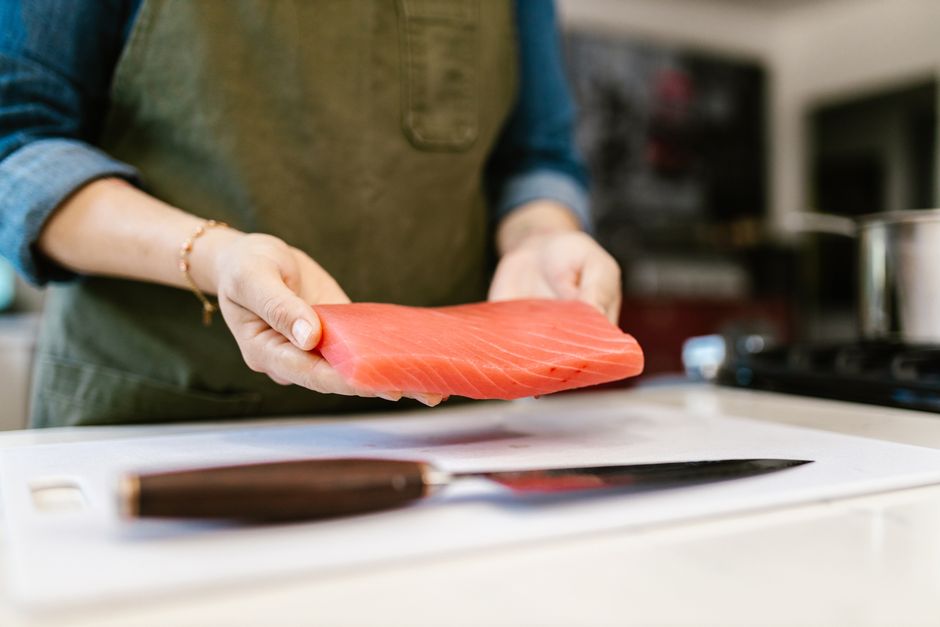
Preparing a salmon fillet is a straightforward kitchen skill that takes about 10 minutes of active work and delivers a reliable, healthy meal. The core steps are simple: pat the fillet dry, season it, and cook it using a method that matches your time and equipment, such as pan-searing, baking, or broiling. The most important rule is to cook the fish until it flakes easily with a fork and reaches an internal temperature of 145°F (63°C) as recommended by food safety authorities.
What Do You Need Before You Start?
Gather your tools before you touch the fish. You will need a sharp knife, a cutting board, paper towels, and a cooking pan or baking sheet. A fish spatula helps, but any thin, flexible spatula works.
For the fillet itself, look for salmon with bright, moist flesh and no strong fishy odor. Fresh salmon should smell like the ocean, not like fish. If you bought frozen fillets, thaw them in the refrigerator overnight. Never thaw salmon on the counter at room temperature, as this allows bacteria to multiply quickly.
Your seasoning options are broad, but salt and pepper are the baseline. Lemon, garlic, dill, and olive oil are common additions. Keep the seasoning simple if you are new to cooking fish — salmon has enough flavor on its own.
Should You Remove the Skin Before Cooking?
You do not have to remove the skin. In fact, leaving the skin on makes cooking easier and keeps the fillet moist. The skin acts as a protective barrier between the delicate flesh and the hot pan.
If you prefer skinless fillets, place the fish skin-side down on a cutting board. Hold the tail end with one hand and slide a sharp knife between the flesh and the skin, angling the blade slightly downward. Use a gentle sawing motion while pulling the skin taut. This takes practice, so do not worry if your first attempt is imperfect.
When cooking with the skin on, score the skin lightly with a knife in a few places. This prevents the fillet from curling as it cooks and helps the heat penetrate evenly.
How To Prepare Salmon Fillet for Pan-Searing
Pan-searing gives you the crispiest skin and the most flavor in a short time. Start by patting the fillet completely dry with paper towels. Moisture is the enemy of crisp skin — any water on the surface will steam the fish instead of searing it.
Season both sides with salt and pepper. Heat a heavy pan over medium-high heat and add a thin layer of oil with a high smoke point, such as avocado or canola oil. When the oil shimmers, place the fillet skin-side down. Press gently with a spatula for 10 seconds to keep it flat.
Cook the fish undisturbed for 4 to 6 minutes. The skin should turn golden and crisp. Flip the fillet and cook for another 2 to 4 minutes, depending on thickness. The fish is done when it flakes easily and reaches 145°F at the thickest part. Remove it from the pan immediately — salmon continues cooking from residual heat after you take it off the burner.





How To Prepare Salmon Fillet in the Oven
Baking is the most forgiving method, especially for thicker fillets. Preheat your oven to 400°F (200°C). Line a baking sheet with parchment paper or foil for easy cleanup.
Pat the fillet dry and season as desired. Place it skin-side down on the prepared sheet. Bake for 12 to 15 minutes for a standard fillet that is about 1 inch thick. Thicker fillets need more time; thinner ones need less.
Check for doneness at the 12-minute mark. Insert an instant-read thermometer into the thickest part of the fish. The USDA recommends 145°F for fish, though some chefs prefer to pull salmon at 125°F to 130°F for a more tender, medium-rare texture. If you cook to a lower temperature, be aware that you are making a personal choice that falls outside official food safety guidance.
For a golden top, switch the oven to broil for the final 2 minutes. Watch it closely — broilers vary in intensity, and the fish can go from browned to burnt quickly.
What About Broiling, Poaching, or Grilling?
Broiling is similar to baking but uses intense heat from above. Place the fillet on a pan about 6 inches from the broiler element. Cook for 6 to 10 minutes, flipping once. This method works well for thinner fillets and creates a nicely browned top.
Poaching involves cooking the salmon gently in simmering liquid such as water, broth, or wine. This method produces very moist, mild-flavored fish. Bring the liquid to a gentle simmer, add the fillet, and cook for 10 to 12 minutes. Poached salmon lacks the crispy texture that searing provides, but it is a good option if you want a lighter preparation.
Grilling works best with fillets that still have the skin on. Oil the grill grates well to prevent sticking. Place the fish skin-side down and cook for 6 to 8 minutes before flipping. The high heat can dry out thin fillets, so choose thicker cuts for grilling.
How Do You Know When Salmon Is Fully Cooked?
The most reliable method is an instant-read thermometer. Insert it into the thickest part of the fillet without touching the pan or bone. The FDA and USDA both state that fish is safe to eat at an internal temperature of 145°F.
Visual cues help if you do not have a thermometer. Cooked salmon turns from translucent pink to opaque. When you press gently on the fillet with a fork, the flesh should separate into clean flakes. If the fish still looks shiny and translucent in the center, it needs more time.
Undercooked salmon is a food safety risk because it may contain parasites or bacteria. Farmed salmon is generally considered safe to eat raw when properly frozen, but this is a separate topic. For cooked salmon, reaching the recommended temperature removes the concern.
Common Mistakes and How To Avoid Them
The most common mistake is overcooking. Salmon dries out quickly once it passes the done stage. Remove the fish from heat when the thermometer reads 145°F, and understand that carryover cooking will raise the temperature slightly after removal.
The second most common mistake is cooking a cold fillet straight from the refrigerator. Let the salmon sit at room temperature for 10 to 15 minutes before cooking. This helps it cook more evenly. Do not leave it out longer than 30 minutes for food safety reasons.
Another frequent error is overcrowding the pan. If you cook multiple fillets, give each one space. Crowded pans trap steam and prevent browning. Cook in batches if necessary.
How To Store and Reheat Leftover Salmon
Refrigerate cooked salmon within 2 hours of cooking. Store it in an airtight container and use it within 3 to 4 days. The FDA and USDA both advise that cooked fish keeps for this duration.
Reheat gently to avoid drying it out. The microwave works but can make the fish rubbery. A better option is to reheat in a 275°F oven for 10 to 15 minutes, or flake the cold salmon into salads or pasta dishes.
Cooked salmon also works well cold. Flake it over a green salad, mix it into scrambled eggs, or use it as a sandwich filling. Cold leftover salmon is a practical way to get a second meal from one fillet.
Frequently Asked Questions
How long does it take to cook a salmon fillet?
Most fillets cook in 10 to 15 minutes total, depending on thickness and method. Pan-searing takes about 6 to 10 minutes, while baking at 400°F takes 12 to 15 minutes.
Do I need to rinse salmon before cooking?
No, do not rinse raw salmon. Rinsing can spread bacteria around your sink, and cooking at the proper temperature kills any harmful organisms.
Can I eat salmon skin?
Yes, salmon skin is safe to eat and becomes crispy when cooked properly. It is a good source of healthy fats, though some people prefer to remove it for texture reasons.
What is the best way to defrost frozen salmon?
The safest method is to thaw it in the refrigerator overnight. If you need it faster, place the sealed fillet in a bowl of cold water for about 30 minutes to 1 hour, changing the water halfway through.
