
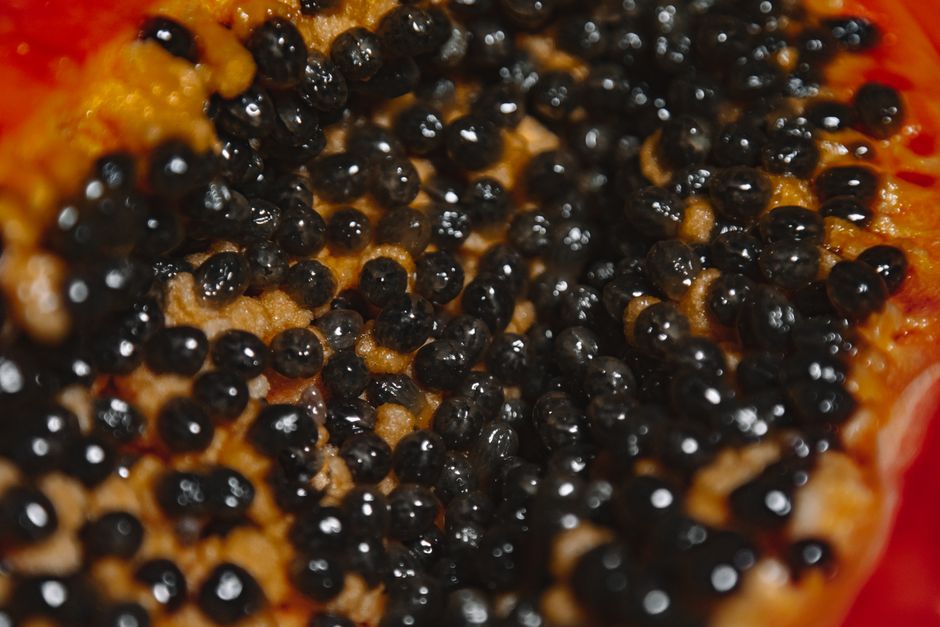
Papaya seeds are edible, and drying them is the first step toward turning them into a shelf-stable powder you can grind and store. To prepare them, scoop the seeds from a ripe papaya, rinse off the gelatinous coating, spread them in a single layer, and dry them completely until they snap rather than bend. Once fully dry, grind them in small batches and store the powder in an airtight container away from heat, light, and moisture. The whole process is simple, but the details decide whether your powder stays good for months or spoils in weeks.
Why Dry Papaya Seeds Before Grinding?
Fresh papaya seeds are about half water. Grinding them wet produces a paste that clumps, sticks to the grinder, and spoils quickly. Drying removes that moisture so the seeds can be milled into a free-flowing powder.
There is a second reason. Papaya seeds contain compounds that give them their sharp, peppery bite. Some of these are volatile, meaning they evaporate or break down over time. Drying locks in a more stable product and concentrates the flavor. A dry seed also grinds evenly, so you get a consistent texture instead of a mix of fine dust and hard chunks.
One clarification worth making: drying does not make papaya seeds “safe” in any absolute sense. It makes them storable and easier to use. The seeds remain biologically active whether fresh or dried. More on that below.
How To Prepare Papaya Seeds Dry Grind And Store: Step by Step
The process has four stages — clean, dry, grind, store. Each one matters, and rushing any of them is the most common reason people end up with moldy or bitter powder.
Step 1: Scoop and Separate
Cut a ripe papaya in half and scoop the seeds into a bowl with a spoon. They will come out coated in a slippery, gel-like sac. That coating is what you need to remove, because it holds moisture and can harbor mold during drying.
Step 2: Rinse the Gel Coating Off
Put the seeds in a strainer and rinse under cool running water. Rub them gently between your fingers to loosen the gel. It takes a minute or two. Some people soak the seeds in water for a short time first, which makes the coating easier to slip off. Either way works. The goal is seeds that feel like small, slick peppercorns rather than slimy clumps.
Step 3: Dry Them Completely
Spread the rinsed seeds in a single layer on a clean towel, a baking sheet, or a dehydrator tray. Do not pile them up — trapped moisture is what causes spoilage. You have three main options:
- Air drying: Leave them in a warm, dry, well-ventilated spot for several days, stirring once or twice a day.
- Oven drying: Use the lowest setting your oven allows, with the door slightly ajar, and check frequently. High heat can scorch the seeds and turn them bitter.
- Dehydrator: Follow the manufacturer’s setting for seeds or nuts. This is the most even method.
Whichever method you choose, the test for “done” is the same. Pick up a seed and bite it. A fully dry papaya seed snaps and crumbles. If it bends, squishes, or feels cool and damp, it needs more time. Do not move to grinding until every seed passes the snap test.
Step 4: Grind in Small Batches
Grind only what you will use in a reasonable window, or grind the whole batch and store it properly. A spice grinder, clean coffee grinder, or high-powered blender all work. Pulse rather than running it continuously. Papaya seeds are hard and can heat up a grinder, and heat damages flavor. Grind to a coarse powder or a fine one depending on how you plan to use it. Fine powder mixes into food more invisibly; coarse powder has more texture.
Step 5: Store It Right
Transfer the powder to a small airtight jar, ideally dark glass. Keep it in a cool, dark cabinet, not above the stove and not in a sunny window. Moisture and light are the two things that degrade it fastest. If you live in a humid climate, a desiccant packet in the jar can help.
How Long Does Papaya Seed Powder Last?
Stored in an airtight container in a cool, dark place, papaya seed powder generally holds its quality for several months. The exact window depends on how thoroughly the seeds were dried and how well the container seals. There is no official shelf-life standard for home-dried papaya seed powder, so treat any specific number as a rough guide rather than a rule.
Signs it has gone off include a musty or moldy smell, visible clumping that will not break apart, or a change in color toward gray or dull brown. If you see mold, throw the whole batch out. Do not try to salvage it by re-drying, because mold can produce compounds that survive drying and are not destroyed by heat.
Ground powder loses potency faster than whole dried seeds. If you want maximum shelf life, store the seeds whole and grind them as you need them. That is the single most effective way to keep flavor and quality intact.
Do Papaya Seeds Have Health Benefits or Risks?
This is where honesty matters more than enthusiasm. Papaya seeds have a long history of traditional use, and some small studies have looked at their effects. But the evidence base is thin, and much of what circulates online outruns what the research actually shows.
Papaya seeds contain compounds including benzyl isothiocyanate and carpaine. In laboratory and animal studies, some of these have shown activity against parasites and microbes. That is not the same as proof they work in people. Human trials are limited in number and size, and results are mixed. No large, well-controlled human trial has established papaya seeds as a reliable treatment for any condition.
The seeds also contain a compound called carpaine, which has documented effects on the heart in some contexts. Papaya leaves and seeds are sometimes discussed in relation to platelet counts, but the evidence is not strong enough to support using them as a treatment, and self-treating any blood-related condition with papaya products is not advisable.
Practical cautions worth knowing:
- Pregnancy: Papaya seeds are traditionally used as a contraceptive and are not considered safe during pregnancy. Pregnant women should avoid them. There are no clinical guidelines establishing a safe amount for pregnant women, so the honest position is to avoid them entirely.
- Children and infants: No clinical guidelines exist for papaya seed use in children or infants. Do not give them.
- Thyroid: Some compounds in papaya seeds may affect thyroid function. If you have a thyroid condition or take thyroid medication, talk to a clinician before regular use.
- Digestive upset: Papaya seeds are pungent and can cause stomach upset in some people, especially in larger amounts.
- Medication interactions: Because the seeds are biologically active, they could interact with medications. This has not been well studied.
None of this means papaya seeds are dangerous for everyone. It means the evidence is limited, and the responsible approach is moderation and, if you take medications or have a health condition, a conversation with a clinician first.
How Do You Use Papaya Seed Powder?
Papaya seed powder has a sharp, peppery, slightly mustard-like flavor. It is used as a spice more than a supplement in most kitchens. A small pinch added to salad dressings, marinades, or savory dishes gives a peppery kick. Some people sprinkle it over fruit or mix it into smoothies.
Because the flavor is strong and the seeds are biologically active, small amounts are the sensible starting point. There is no established recommended dose for papaya seed powder in general use. Any specific gram amount you see online is not backed by clinical guidelines, so treat those numbers with skepticism.
Common Mistakes To Avoid
Most problems with papaya seed powder trace back to a few avoidable errors.
- Grinding before the seeds are fully dry. This is the biggest one. Damp seeds produce a clumpy paste that spoils fast.
- Storing in a clear container on the counter. Light and warmth speed up degradation.
- Making a huge batch you cannot use. Whole dried seeds keep far longer than powder.
- Assuming “natural” means “safe at any amount.” Papaya seeds are active, and more is not better.
- Ignoring mold. If it smells or looks off, discard it.
Is It Worth Doing?
If you enjoy the flavor and want to use a part of the fruit that usually gets thrown away, drying and grinding papaya seeds is a straightforward project. The process itself is reliable, and the results are predictable if you dry thoroughly and store well.
What you should not expect is a cure or a proven supplement. The health claims attached to papaya seeds are mostly based on laboratory and animal research, not on strong human evidence. Use them as a spice, keep amounts modest, and check with a clinician if you have any health condition or take medication. That is the honest, evidence-based position.
Frequently Asked Questions
How do I know when papaya seeds are fully dry?
A fully dry papaya seed snaps and crumbles when you bite it, rather than bending or feeling soft. If it bends or feels cool and damp, it needs more drying time.
Can I grind papaya seeds in a regular blender?
Yes, a high-powered blender or a clean coffee grinder both work for grinding dried papaya seeds. Pulse in short bursts rather than running continuously, because the friction heat can damage the flavor.
How long does papaya seed powder stay good?
Stored in an airtight container in a cool, dark place, it generally holds quality for several months. Whole dried seeds keep longer than ground powder, so grinding as needed is the better option for shelf life.
Is it safe to eat papaya seeds every day?
Papaya seeds are biologically active and the human evidence on regular use is limited. Pregnant women should avoid them, and anyone with a thyroid condition or on medication should check with a clinician first.
