
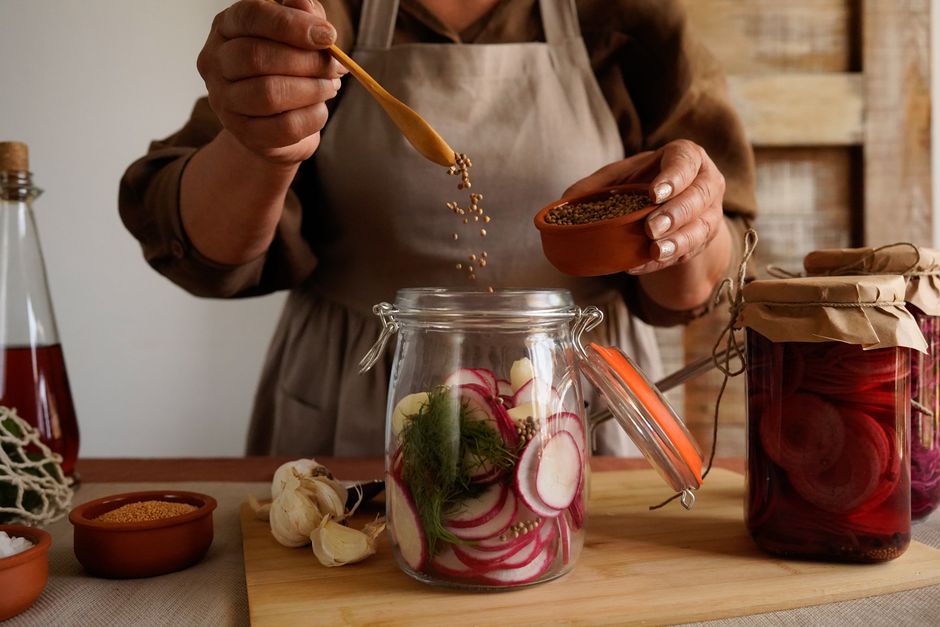
Coriander seeds are toasted in a dry pan over medium heat for a few minutes until they smell warm and citrusy, then cooled and ground in a spice grinder or mortar and pestle. Store the ground spice in an airtight container away from heat and light, where it keeps its flavor for about three to six months. Whole seeds last much longer, often two to three years when kept cool and dry.
Coriander (Coriandrum sativum) is one of the oldest cultivated spices. The dried seeds taste nothing like the fresh leaves many people either love or hate. Toasting and grinding them is simple, but a few small details make a real difference in how the final spice tastes and how long it lasts.
What Are Coriander Seeds And Why Toast Them?
Coriander seeds are the dried fruit of the coriander plant. They are small, round, and pale tan, with a flavor that is warm, slightly citrusy, and a little nutty. The fresh green leaves from the same plant have a completely different, soapy aroma that people tend to either enjoy or strongly dislike.
Toasting does two things. First, it drives off moisture, which makes the seeds easier to grind and helps the ground spice keep longer. Second, heat triggers chemical reactions in the seeds’ volatile oils and sugars that deepen the flavor. The citrus notes become rounder and a toasted, nutty quality appears.
Skip the toasting and ground coriander tastes flatter and more raw. It is not unsafe to use untoasted seeds, but the flavor is noticeably less developed. This is one of the few kitchen steps where the effort is small and the payoff is clear.
How To Prepare Coriander Seeds Toast Grind Store?
The full process takes about ten minutes from pan to jar. Here is the sequence that works reliably.
Step 1: Measure and sort
Measure the whole seeds you plan to use. Pick out any small stones or shriveled seeds. Rinse only if the seeds look dusty, and if you do, spread them on a towel and let them dry completely before toasting. Wet seeds will steam instead of toast.
Step 2: Heat a dry pan
Use a heavy skillet, cast iron if you have it, over medium heat. Do not add oil. Dry toasting is what you want here. Let the pan heat for a minute or two before adding seeds.
Step 3: Toast and keep them moving
Add the seeds in a single layer and shake the pan or stir constantly. They will start to smell fragrant and may darken slightly and begin to pop. This usually takes a few minutes. Stay at the stove the whole time, because seeds can go from toasted to burnt quickly, and burnt coriander tastes bitter and harsh.
Step 4: Cool completely
Pour the seeds onto a plate or into a bowl right away so they stop cooking from the pan’s leftover heat. Let them cool fully before grinding. Warm seeds can gum up a grinder and release moisture into the ground spice.
Step 5: Grind
Use a spice grinder, clean coffee grinder, or mortar and pestle. Pulse in short bursts rather than running the motor continuously, which can heat the spice and cost you aroma. Stop when you reach the texture you want. Some dishes want a fine powder, others a coarse crack.
Step 6: Store
Let the ground coriander cool one more time if the grinder warmed it, then transfer it to a small airtight jar. Label it with the date. Keep it in a cool, dark cabinet, not above the stove and not in a sunny window.
How Should You Grind Coriander Seeds Without A Spice Grinder?
A mortar and pestle works well and gives you more control over texture. Add the cooled seeds in small batches and press down with a grinding motion rather than pounding, which sends seeds flying. Coarse cracked coriander is easy this way. A fine powder takes more patience.
A blender can work for larger amounts, but small quantities tend to scatter and the blades may not catch them. A sealed plastic bag and a heavy pan or rolling pin is a low-tech option that produces a coarse crush, good for rubs and marinades.
One practical note: if you use a coffee grinder, dedicate it to spices or clean it thoroughly between uses. Coriander’s oils linger, and your next cup of coffee will taste like it.




How Long Do Ground And Whole Coriander Seeds Last?
Whole seeds keep far longer than ground. Stored in an airtight container in a cool, dark place, whole coriander seeds generally hold good flavor for two to three years. Ground coriander is much more exposed to air and light, and its aroma fades within a few months. Many cooks replace ground spices roughly every three to six months for the best flavor.
These are general kitchen guidelines, not food-safety limits. Old coriander will not make you sick. It simply loses the volatile oils that give it its smell and taste, and it may taste dusty or flat.
| Form | Typical storage life | Best container |
|---|---|---|
| Whole seeds | About 2–3 years | Airtight jar, cool and dark |
| Toasted whole seeds | Several months to about a year | Airtight jar, cool and dark |
| Ground coriander | About 3–6 months for best flavor | Small airtight jar, cool and dark |
Toasting shortens shelf life slightly because the seeds’ oils are already altered by heat. That is one reason to toast only what you plan to use within a reasonable window, or toast in small batches.
How Do You Store Coriander Seeds So They Keep Their Flavor?
Four things break down a spice’s aroma: heat, light, air, and moisture. Storage that controls all four is what preserves flavor.
- Use a small, airtight glass jar with a tight lid. Glass does not absorb odors the way plastic can.
- Keep the jar in a cool, dark cabinet, away from the stove, oven, and dishwasher.
- Store only as much ground spice as you will use in a few months. Grinding small batches keeps the rest of your seeds fresh.
- Keep moisture out. Do not store spices over a steaming pot or leave the lid off near the sink.
A simple test tells you if your ground coriander is still good: smell it. Freshly ground coriander has a clear, warm, citrusy scent. If you have to put your nose right in the jar to detect anything, the flavor is mostly gone and it is time to grind a new batch.
Does Coriander Have Health Benefits?
Coriander seeds contain small amounts of minerals and plant compounds, and some laboratory and animal studies have looked at their antioxidant and antimicrobial properties. That research is early. It does not show that eating coriander treats or prevents any disease in people.
Coriander is used as a culinary spice, and its main role is flavor. It is not a medicine, and no clinical evidence currently confirms that it lowers blood sugar, aids digestion, or detoxifies the body in the way some wellness content claims. Used in normal cooking amounts, it is a flavorful way to season food.
For anyone with a known allergy to coriander or related plants, avoiding it is sensible. If you take prescription medications and are considering concentrated coriander supplements, that is a different question from cooking with the spice, and worth raising with a pharmacist or clinician. No clinical guidelines exist for coriander supplement dosing.
Common Mistakes To Avoid When Toasting Coriander
The most common error is walking away from the pan. Coriander seeds are small and toast fast, so constant attention matters. A second frequent mistake is grinding while the seeds are still warm, which traps steam and dulls the aroma.
Another is toasting with oil. Oil adds moisture and can make the seeds clump and burn unevenly. Dry toasting is the standard method and gives cleaner flavor. Finally, many people grind a large batch at once, then watch it fade over months. Grinding smaller amounts more often keeps the spice at its best.
Frequently Asked Questions
How long do you toast coriander seeds?
Toast them in a dry pan over medium heat for a few minutes, until they smell fragrant and may darken slightly. Keep them moving the whole time and remove them as soon as they are aromatic, since they can burn quickly.
Do you need to wash coriander seeds before toasting?
Only if they look dusty. If you rinse them, spread them out and let them dry completely first, because wet seeds steam instead of toasting.
Can you grind coriander seeds in a blender?
Yes, but blenders work best with larger amounts and can leave small seeds unground. A spice grinder or mortar and pestle gives more even results for small batches.
How can you tell if ground coriander has gone bad?
Smell it. Fresh ground coriander has a clear, warm, citrusy scent, and if you can barely detect an aroma, the flavor has faded and it is time to replace it.
