
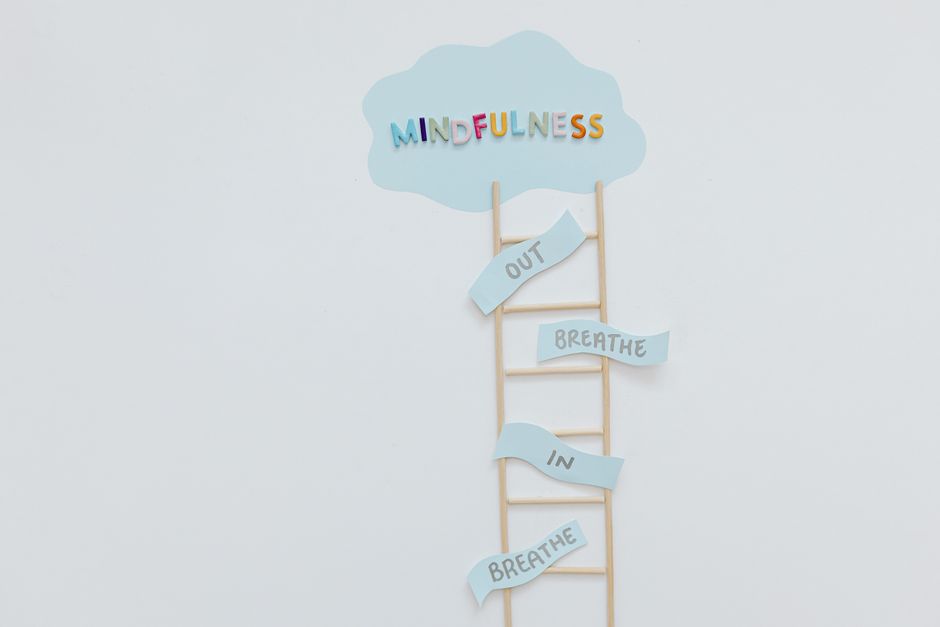
Mindfulness at work means paying attention to what is happening in the present moment — your breath, your body, your thoughts, the task in front of you — without judging it as good or bad. You can practice it in seconds between meetings, during a commute, or at your desk. Research consistently shows that brief, regular practice can reduce stress and improve focus, and it does not require special equipment, an app, or a quiet room.
The core skill is simple: notice when your attention has wandered, then bring it back. That’s it. Everything else is variation on that theme.
What Does Mindfulness at Work Actually Mean?
Mindfulness is attention training. You deliberately place your attention on one thing — usually the breath or physical sensations — and when your mind drifts, you notice and return it. The “returning” is the exercise. The drift is not failure.
At work, this looks less like meditation and more like catching yourself. You notice you’ve read the same email three times. You notice your jaw is tight before a meeting. You notice you’re rehearsing an argument with a coworker while they’re still talking. That noticing is the practice.
Jon Kabat-Zinn, who developed Mindfulness-Based Stress Reduction at the University of Massachusetts Medical School in the late 1970s, defined mindfulness as awareness that arises from paying attention on purpose, in the present moment, and without judgment. That definition has held up across decades of clinical research.
What mindfulness is not: it is not relaxation, though relaxation often follows. It is not positive thinking. It is not emptying your mind. And it is not a productivity hack that guarantees you’ll get more done — the evidence on workplace performance specifically is much thinner than the evidence on stress and attention.
How To Practice Mindfulness At Work (Step by Step)
Start with a single minute. Not five. Not twenty. One minute, once a day, is enough to build the habit, and the research on brief practices supports starting small rather than ambitious.
Here is a sequence you can do at your desk without anyone noticing:
- Sit normally. No special posture required. Feet on the floor, hands wherever they rest.
- Notice one physical sensation. The weight of your body in the chair. The temperature of the air on your hands. Pick one and stay with it.
- Follow your breath for three cycles. Don’t change how you breathe. Just notice the inhale and the exhale.
- When your mind drifts — and it will — notice where it went. A thought about the deadline. A memory. A worry. Label it quietly: “planning,” “worrying,” “remembering.”
- Return to the breath. No commentary. No judgment about having drifted.
That’s the entire exercise. The drift-and-return cycle is the repetition, the way a bicep curl is the repetition at the gym. You are not trying to stop thoughts. You are practicing the return.
Do this once a day for a week. Then twice. The goal is not longer sessions — it is more frequent noticing throughout the day.
How Do You Fit Mindfulness Into a Busy Workday?
You attach it to things that already happen. This is called habit stacking, and it’s a well-established approach in behavioral psychology: link a new behavior to an existing cue so you don’t have to remember it.
Some reliable anchors:
- Before you open your email. Three breaths before the first click.
- In the elevator or stairwell. One minute of noticing your feet.
- Before a meeting starts. Notice your body in the chair while others are joining.
- At the transition between tasks. One breath before switching.
- During a walk to the bathroom or kitchen. Feel your feet on the floor for ten steps.
The key is specificity. “I’ll be more mindful today” doesn’t work. “I’ll take three breaths before I open my inbox” does.
One clarification worth knowing: you don’t need a quiet space. Open-plan offices, loud colleagues, and ringing phones are all fine. The practice is noticing what’s happening, including the noise. Silence is helpful but not required.





What Does the Research Actually Show?
The strongest evidence for mindfulness is in stress reduction and attention. The weakest is in workplace productivity and performance.
Research published in JAMA Internal Medicine found that mindfulness meditation programs produced moderate improvements in anxiety, depression, and pain — with the strongest effects in anxiety. That was a systematic review and meta-analysis of randomized clinical trials, the highest standard of evidence.
On attention, studies using computerized attention tasks have found that brief mindfulness training can improve sustained attention and reduce mind-wandering. The effects are real but generally modest.
On workplace outcomes specifically — productivity, leadership effectiveness, creativity — the evidence is much thinner. Many workplace mindfulness programs are sold on claims that haven’t been tested in large randomized trials. A common pattern in the research is that employees report feeling less stressed after a program, but objective measures of performance don’t always change.
That’s worth knowing before you spend money on a corporate mindfulness app. The stress benefits are well supported. The performance benefits are not.
What Are the Common Myths About Workplace Mindfulness?
A few claims circulate widely that don’t hold up.
“Mindfulness means clearing your mind.” No. Thoughts will keep coming. The practice is noticing them, not eliminating them. Trying to force a blank mind usually produces more frustration, not less.
“It takes 20 minutes a day to work.” Longer sessions have more research behind them, but brief practices of a few minutes have also shown measurable effects on stress and attention. Consistency matters more than duration.
“Mindfulness makes you passive.” Some critics have argued that workplace mindfulness programs can discourage employees from addressing legitimate problems. The evidence is mixed. Mindfulness itself is not about accepting bad situations — it’s about seeing them clearly. Whether a workplace program encourages passivity depends on how it’s taught, not on the practice itself.
“Apps are as good as in-person training.” This is genuinely uncertain. Some studies suggest app-based programs help, but the effects tend to be smaller than instructor-led programs, and dropout rates are high. No large trial has settled the question.
“It’s a cure for burnout.” Mindfulness can reduce stress and improve coping, but burnout is driven largely by workplace conditions — workload, autonomy, fairness. No individual practice fixes a systemic problem. If your job is the source of the stress, mindfulness helps you cope with it, but it doesn’t change it.
How Long Does It Take to See Results?
Some effects appear quickly. Studies of brief mindfulness training have found improvements in mood and attention after a single session or a few days of practice. These are small and short-lived.
More durable changes — reductions in anxiety, changes in how you respond to stress — typically show up after several weeks of regular practice. Most clinical programs run for eight weeks, and that’s the timeframe most of the research is based on.
What “regular” means varies. Daily practice of a few minutes is more effective than a long session once a week. The research doesn’t establish a clear minimum, but consistency appears to matter more than duration.
And it’s worth saying plainly: not everyone responds the same way. Some people find mindfulness practice helpful from the first session. Others find it frustrating, or feel nothing. That’s not failure — it may just mean a different approach, like physical exercise, journaling, or talking to a therapist, fits better.
When Should You Be Cautious About Mindfulness?
Mindfulness is generally considered low-risk, but it’s not risk-free for everyone.
Some people experience increased anxiety, intrusive thoughts, or distressing memories during meditation, particularly during longer or silent retreats. A review published in Acta Psychiatrica Scandinavica documented adverse effects in some meditators, though the frequency is not well established and most cases involve intensive practice rather than brief workplace exercises.
If you have a history of trauma, post-traumatic stress disorder, or severe anxiety, talk to a mental health professional before starting a regular meditation practice. Brief workplace mindfulness — a few breaths, noticing your feet — is generally considered safe, but longer sessions may bring up difficult material.
Mindfulness is also not a substitute for treatment. If you’re experiencing persistent low mood, anxiety that interferes with daily life, or thoughts of self-harm, contact a healthcare provider or a crisis line. In the US, you can call or text 988 to reach the Suicide and Crisis Lifeline.
Frequently Asked Questions
How do you practice mindfulness at work in under a minute?
Take three slow breaths while noticing the physical sensation of breathing, then return to your task. The exercise is noticing when your attention drifts and bringing it back, not emptying your mind.
Do you need an app to practice mindfulness at work?
No. Apps can help with reminders and structure, but the practice itself requires nothing more than your attention. Some studies suggest app-based programs produce smaller effects than instructor-led training, though the evidence is not settled.
Does mindfulness at work actually reduce stress?
Research consistently shows that mindfulness meditation reduces symptoms of anxiety and stress, with the strongest evidence from randomized clinical trials. Effects on workplace productivity specifically are much less established.
Can mindfulness be harmful?
It can be for some people. Brief workplace exercises are generally considered low-risk, but longer meditation sessions have been linked to increased anxiety or distressing memories in a minority of practitioners, particularly those with trauma histories.
