
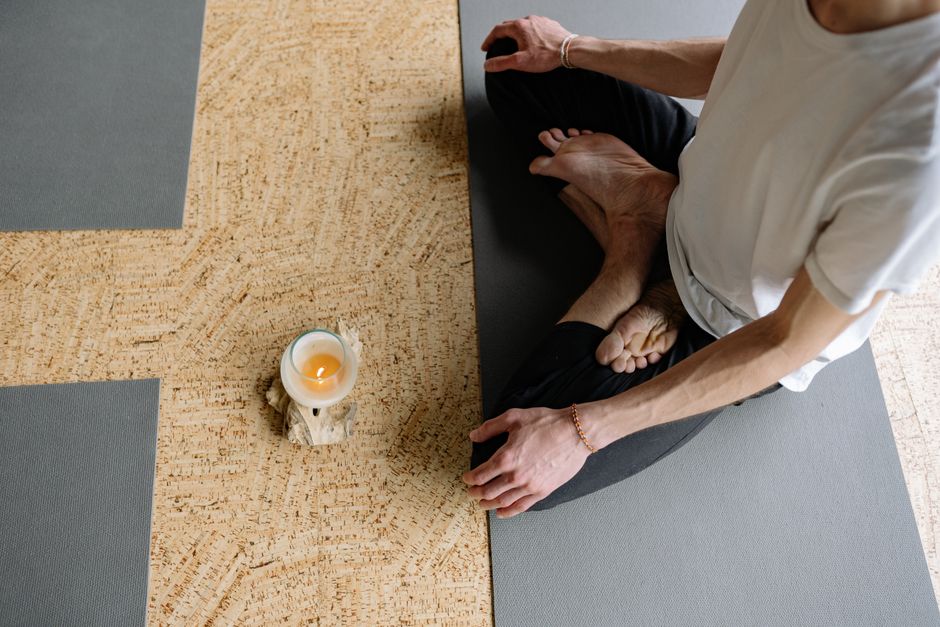
Grounding is a set of simple techniques that pull your attention away from anxious thoughts and back to the present moment. You do this by deliberately focusing on what you can see, hear, touch, smell, and taste, or by using physical sensations like your breath or the feel of a chair beneath you. It is a coping skill, not a cure — but it can help interrupt a spiral of anxiety and bring your body back toward calm.
The word “grounding” gets used two ways. In anxiety treatment, it means sensory and physical techniques that anchor you to the here and now. In trauma therapy, it also refers to a specific skill for managing dissociation — the feeling of being detached from your body or surroundings. Both uses share the same core idea: shift attention to the present, on purpose, when your mind has gone somewhere frightening.
How To Practice Grounding For Anxiety And Stress Relief?
You practice grounding by choosing one technique, doing it slowly, and engaging your senses fully rather than rushing through it. The goal is not to force anxiety away. It is to give your attention a concrete place to rest, which can lower the intensity of the moment.
Start with something you can do anywhere, without anyone noticing. The 5-4-3-2-1 method is the most widely taught version:
- 5 things you can see. Name them, ideally out loud or in your head with detail — the color of a door, the shape of a light.
- 4 things you can feel. The fabric of your sleeve, your feet on the floor, the temperature of the air.
- 3 things you can hear. A fan, traffic, your own breathing.
- 2 things you can smell. If you cannot smell anything, name two smells you like.
- 1 thing you can taste. Or simply notice the inside of your mouth.
Move through the list slowly. The point is not to finish the count. The point is to genuinely notice each thing. Rushing turns it into a task and defeats the purpose.
Grounding works best when you practice it before you need it. Doing the technique a few times on a calm day makes it easier to reach for when anxiety rises. A skill you have never tried is hard to use under stress.
Why Does Grounding Help With Anxiety?
Anxiety pulls attention into the future — into what might happen. Grounding pulls it back to what is actually happening right now. That shift is the mechanism.
When you are anxious, your body’s stress response can speed up your heart, tighten your muscles, and narrow your focus onto the threat. Directing attention to concrete sensory details gives your nervous system competing information to process. Many people find this interrupts the loop of racing thoughts long enough to think more clearly.
Grounding is a core part of several established therapy approaches, including cognitive behavioral therapy and dialectical behavior therapy, where it is taught as a distress tolerance skill. It is also a standard technique in trauma-informed care for managing dissociation. The technique itself is simple. The benefit comes from using it consistently and pairing it with broader treatment when anxiety is ongoing.
One thing worth being clear about: grounding does not “reset” your nervous system or cure anxiety. No technique does. It is a way to steady yourself in a difficult moment. For lasting change, grounding works alongside therapy, lifestyle changes, and — when appropriate — medication.
What Are The Best Grounding Techniques To Try?
Different techniques suit different people and situations. Try several and keep the two or three that feel natural to you.
Physical grounding
These use your body’s sense of touch and position. Press your feet firmly into the floor and notice the pressure. Hold something cold, like an ice cube or a cool glass. Run your hands under cool water. Describe the texture of an object in detail. Physical grounding is often helpful when thoughts are loud and hard to interrupt, because sensation is harder to ignore than a mental exercise.
Mental grounding
These use your mind’s focus. Count backward from 100 in sevens. Recite a poem or a song lyric you know well. Name all the items in a category — fruits, animals, cities you have visited. Describe a safe place in detail. Mental grounding can work well in public settings where you cannot move around.
Soothing grounding
These use comforting sensations. Wrap yourself in a blanket. Listen to a familiar calming song. Sip a warm drink slowly and notice the taste and temperature. Soothing grounding is often gentler and can help when anxiety is more like exhaustion or overwhelm than panic.
There is no single best technique. The right one is the one you will actually use. Some people respond best to physical sensation, others to mental focus. Notice which leaves you feeling more settled and build from there.
When Should You Use Grounding?
Use grounding when you notice anxiety rising, when your thoughts start to spiral, or when you feel detached from your surroundings. It is most useful in the early part of an anxious episode, before the feeling has fully taken hold.
Good moments to reach for it include:
- Before a stressful event, like a meeting, appointment, or difficult conversation
- During a panic attack, to give your attention somewhere to rest
- When you wake at night with racing thoughts
- After a triggering experience, to help reorient to the present
- During flashbacks or dissociation, as a way back to the here and now
Grounding is not a substitute for emergency care. If you or someone near you is in crisis or thinking about self-harm, contact a crisis line or emergency services right away. In the US, the 988 Suicide and Crisis Lifeline is available by call or text.
Does Grounding Actually Work?
Grounding is widely used and taught in clinical settings, but it is best understood as one tool among many rather than a standalone treatment. The evidence base is uneven across techniques.
Some grounding methods are components of well-studied therapies. Distress tolerance skills, including grounding, are part of dialectical behavior therapy, which has substantial research support for several conditions. Sensory and attentional techniques are also used in trauma treatment. But research on grounding as a single, isolated practice is more limited than the research on the full therapy programs that include it.
What this means in plain terms: grounding is a reasonable, low-risk skill to try. Many people report it helps them manage difficult moments. But no large body of trials confirms that grounding alone treats an anxiety disorder. If anxiety is frequent, intense, or affecting your daily life, grounding is a helpful addition to professional care — not a replacement for it.
What If Grounding Doesn’t Seem To Work?
If grounding does not help, the technique may not be the right fit, or the timing may be off. It is common to need several tries before finding what works.
A few things to check. Are you doing it slowly enough? Speed is the most common mistake. Are you engaging your senses fully, or just going through the motions? Is the technique matched to your situation — physical grounding in private, mental grounding in public? Some people find that a technique which feels forced makes anxiety worse, in which case a gentler, soothing approach may suit better.
It is also worth being honest about limits. Grounding helps manage moments. It does not resolve the underlying patterns that fuel anxiety. If you find yourself needing it constantly, that is a signal to talk with a doctor or mental health professional about what is driving the anxiety. Therapy, and in some cases medication, can address the root in ways a coping skill cannot.
Grounding is a small, practical skill. Used well and paired with real support, it can make hard moments more manageable. It is not a fix, and it does not need to be.
Frequently Asked Questions
How long does grounding take to work?
Many people notice some relief within a few minutes of focused practice, though this varies. Grounding is a moment-to-moment skill rather than something that builds up over time like a treatment.
Can grounding stop a panic attack?
Grounding can help you ride out a panic attack by giving your attention somewhere to rest, but it does not reliably stop one once it has started. Panic attacks typically peak and pass on their own, and grounding can make the experience more manageable.
Is grounding the same as meditation?
No. Meditation is a broader practice often aimed at observing thoughts over time, while grounding is a short, targeted technique for returning attention to the present during distress.
Should I use grounding every day?
Practicing grounding on calm days can make it easier to use when anxiety rises. Daily practice is not required, but familiarity helps.
