
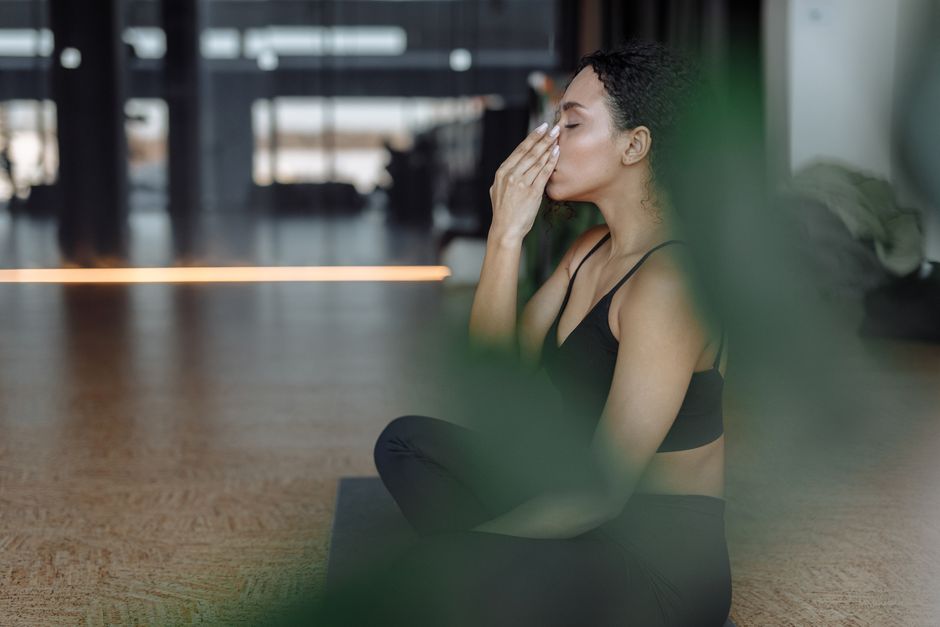
Deep breathing is the practice of deliberately slowing your breath and using your diaphragm — the dome-shaped muscle below your lungs — instead of your chest and neck muscles. To do it, sit or lie comfortably, place one hand on your belly, and breathe in through your nose so your belly rises while your chest stays relatively still. Then exhale slowly, usually for longer than you inhaled. That is the whole technique. What follows is how to do it well, and what the research actually supports.
How To Practice Deep Breathing, Step by Step
Lie on your back with your knees bent, or sit upright in a chair with your feet flat on the floor. Rest one hand on your lower belly and the other on your upper chest. This hand placement is not decoration — it gives you real-time feedback about which muscles you are using.
Breathe in slowly through your nose. Aim for the lower hand to rise while the upper hand moves very little. If your shoulders lift and your chest expands first, you are still breathing from the chest. That pattern is common in people who are stressed, and it takes practice to change.
Then exhale through your mouth, gently and completely. Many teachers recommend making the exhale longer than the inhale. A common starting rhythm is breathing in for about four seconds and out for about six. That ratio is a teaching convention, not a fixed medical rule. The important part is that the exhale is slow and unhurried.
Repeat for several minutes. Two or three minutes is a reasonable place to start. If you feel lightheaded, stop and breathe normally. Lightheadedness usually means you are breathing too fast or too deeply, which is the opposite of what you are trying to do.
Once you can do this lying down, practice sitting. Once sitting is easy, try it standing. The goal is to carry the pattern into daily life, not just to do it on a mat.
What Is Actually Happening in Your Body?
Your breathing pattern directly influences your autonomic nervous system, which controls things like heart rate, digestion, and blood pressure without your conscious input. Slow breathing shifts the balance toward the parasympathetic branch — the “rest and digest” side.
One measurable effect is something called respiratory sinus arrhythmia. Your heart rate naturally speeds up slightly when you inhale and slows when you exhale. When you make the exhale long and smooth, that slowing is more pronounced. This is not a metaphor. It is a measurable change in heart rhythm tied to the vagus nerve.
Breathing around six breaths per minute — about one full breath every ten seconds — tends to produce the largest swings in heart rate with each breath. This is sometimes called resonance breathing. It is one reason many slow-breathing protocols cluster around that pace. That said, you do not need to hit an exact number for the practice to be worthwhile.
The diaphragm itself matters too. When it contracts properly, it moves downward and creates more space in the lower lungs. Those lower regions have more blood flow than the upper lungs. Breathing shallowly from the chest leaves that well-perfused area underused. Slow, deep breathing makes better use of the whole lung.
Does Deep Breathing Actually Lower Stress?
Yes, in the short term. This is one of the better-supported findings in the field. Slow, controlled breathing reliably reduces self-reported anxiety and produces measurable changes in heart rate and blood pressure during and shortly after the practice.
What the evidence does not show is that breathing exercises alone treat clinical anxiety disorders, depression, or chronic disease. Some studies suggest benefits for stress and mood, but results vary, and many trials are small. The evidence is stronger for immediate calming effects than for long-term mental health outcomes.
It helps to be honest about the mechanism here. Part of the benefit is physiological — the nervous system shift described above. Part is behavioral. Taking a deliberate pause, focusing on a physical sensation, and interrupting a spiral of anxious thought has value regardless of what your vagus nerve is doing.
That does not make it fake. It means breathing is one useful tool among several, not a standalone treatment.




Common Mistakes That Undermine the Practice
Most problems come from trying too hard. Breathing is unusual among health behaviors in that effort can work against you.
- Breathing too fast. Rushing the count defeats the purpose. Slow down until it feels almost too easy.
- Forcing the inhale. A deep breath is not a huge breath. Filling your lungs to maximum creates tension and can trigger dizziness.
- Lifting the shoulders. If your shoulders rise toward your ears, the neck and upper chest muscles are doing the work the diaphragm should be doing.
- Chasing a perfect count. Rigid counting creates its own tension. The rhythm matters more than the number.
- Only doing it during a crisis. A skill practiced only under stress is a skill you have not yet learned.
If you consistently feel dizzy, tingly, or short of breath, you are likely hyperventilating. Stop, breathe normally, and try again later with a gentler approach.
How Often Should You Practice?
Short and frequent beats long and rare. A few minutes once or twice a day is a reasonable starting point for most healthy adults, and many people find it easier to attach the practice to an existing habit — after waking, before a meal, or at the end of the workday.
There is no established clinical guideline specifying an exact dose of breathing practice for general stress management. Recommendations from clinicians and instructors vary widely, from a couple of minutes daily to longer sessions. If you are using breathing as part of treatment for a specific condition, follow the guidance of the clinician managing that condition rather than a general recommendation.
Consistency matters more than duration. Three minutes every day will likely do more for you than twenty minutes once a week.
Who Should Be Careful With Breathing Exercises?
For most healthy people, slow breathing is low risk. There are situations where caution is warranted.
People with panic disorder sometimes find that focusing on bodily sensations — including breath — increases anxiety rather than reducing it. This is a recognized pattern, not a personal failure. If that happens, a clinician experienced in treating panic can suggest alternative approaches.
People with certain heart or lung conditions, including asthma and chronic obstructive pulmonary disease, should talk to their doctor before starting a structured breathing program. Breathing exercises are used in pulmonary rehabilitation, but the specifics matter and should be tailored.
Pregnant women, people with uncontrolled high blood pressure, and anyone who has recently had chest surgery or a collapsed lung should get medical guidance first. No clinical guidelines currently exist for adapting deep breathing practice specifically for these groups, which is exactly why individual medical advice is the right source.
If you experience chest pain, fainting, or severe shortness of breath during practice, stop and seek medical attention. Those symptoms are not normal responses to slow breathing.
Techniques Worth Knowing
Several structured methods build on the basic pattern. They differ mainly in pacing and where you place attention.
Box breathing uses four equal phases: inhale, hold, exhale, hold. It is popular in high-stress settings because the structure gives the mind something to track. The evidence for it specifically is thinner than for slow breathing generally.
4-7-8 breathing uses an inhale of four counts, a hold of seven, and an exhale of eight. The long exhale is the active ingredient. The specific numbers are a teaching device, not a researched protocol.
Alternate nostril breathing involves closing one nostril, inhaling, then switching. It comes from yoga traditions and has some research support for stress reduction, though study quality varies.
None of these is clearly superior to simply breathing slowly and diaphragmatically. Pick the one you will actually do.
The Bottom Line
Deep breathing works by engaging your diaphragm and slowing your breathing rate, which shifts your nervous system toward a calmer state. The short-term effects on heart rate, blood pressure, and felt stress are well documented. The long-term effects on clinical conditions are less certain.
Practice lying down first, then sitting, then standing. Keep sessions short and regular. Do not force anything. If you have a heart or lung condition, or you are pregnant, check with your doctor before making it a routine.
Frequently Asked Questions
How long should I practice deep breathing each day?
A few minutes once or twice daily is a reasonable starting point for most healthy adults. There is no established clinical guideline specifying an exact duration for general stress management.
Why do I feel dizzy when I breathe deeply?
Dizziness usually means you are breathing too fast or taking in more air than you need, which lowers carbon dioxide in your blood. Stop, breathe normally, and try again with a gentler pace.
Is belly breathing the same as deep breathing?
They overlap but are not identical. Belly breathing specifically means using the diaphragm so the lower abdomen rises, while deep breathing refers more broadly to slow, full breaths.
Can deep breathing lower blood pressure?
Slow breathing can lower blood pressure temporarily during and shortly after practice. Whether it produces lasting reductions is less certain, and it is not a substitute for prescribed treatment.
