
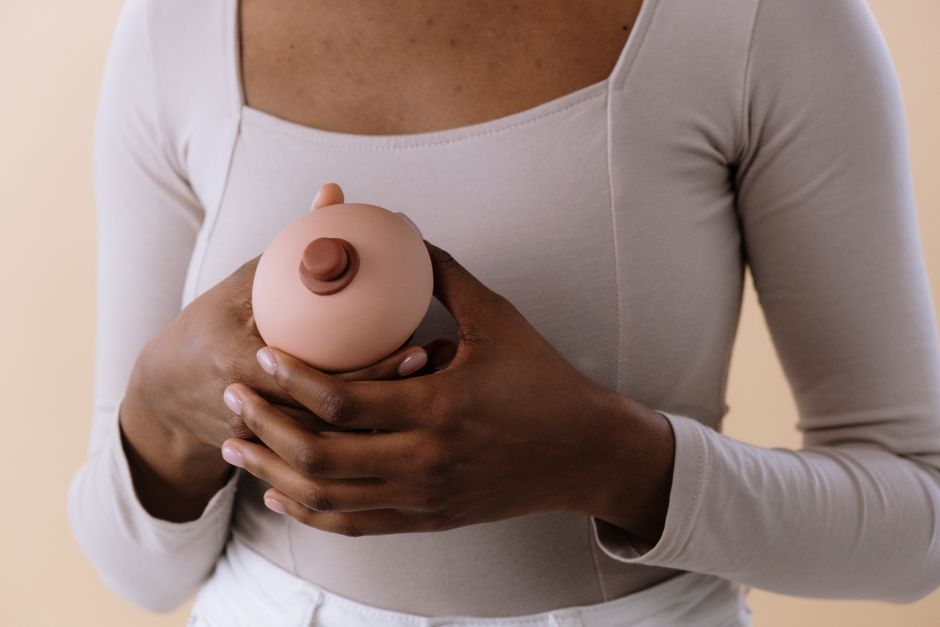
Centering the nipple in the flange tunnel is the single most important step in setting up a breast pump. The nipple should sit in the middle of the opening, not pressed against one side, and the flange should rest flat against the breast with no air gaps around the edge. If the nipple rubs the tunnel wall or the breast tissue gets pulled into the opening, milk removal is often less effective and pumping can become painful.
A poorly positioned flange is one of the most common reasons pumping hurts or produces less milk than expected. The fix is usually simple, but it helps to understand what correct positioning actually looks like and how to tell when something is off.
What Does Correct Flange Positioning Actually Look Like?
Correct positioning has three parts: the nipple centered in the tunnel, the flange sealed evenly against the breast, and the breast tissue sitting comfortably inside the funnel.
When the pump cycles, the nipple is gently drawn into the tunnel. It should move freely without scraping the sides. The areola, the darker skin around the nipple, may be pulled slightly into the funnel opening, but most of it should stay outside. If a large amount of areola disappears into the tunnel, the flange is likely too large.
The flange itself should make light, even contact with the breast all the way around. You should not see gaps where air can leak in. A poor seal means the pump cannot build proper suction, which reduces how much milk comes out.
One detail that surprises many people: the flange does not need to be pushed hard against the chest. Pressing it in firmly can compress milk ducts near the surface and slow milk flow. Light, even contact is what you want.
How Do You Center The Nipple In The Flange?
Start by holding the flange with one hand and the breast with the other. Line up the nipple with the center of the tunnel before you turn the pump on.
Many people find it easier to lean slightly forward and let the breast hang naturally into the flange rather than lifting the breast up to meet it. Gravity helps the nipple settle into the middle of the opening. Once the pump starts, watch the first few cycles. If the nipple drifts to one side, turn the pump off, recenter, and start again.
Support the breast from underneath with your free hand if needed. This keeps the tissue from being dragged sideways into the tunnel. A nursing bra with cutouts, or a hands-free pumping bra, can hold the flanges in place once they are centered so you do not have to hold them the entire session.
If you are pumping both breasts at once, position one side at a time. Rushing this step is where most positioning problems start.
How Do You Know If Your Flange Size Is Wrong?
Positioning and size are linked. A perfectly centered nipple in the wrong size flange will still cause problems.
Signs the flange may be too small include:
- The nipple rubs or scrapes against the tunnel wall during pumping
- Pain that continues after the session ends
- White, blanched nipple tissue after pumping
- Milk flow that starts strong but drops off quickly
Signs the flange may be too large include:
- A large portion of the areola gets pulled into the tunnel
- The flange loses suction or keeps breaking its seal
- Milk pools around the nipple instead of flowing into the bottle
- Less milk is removed even though pumping feels comfortable
Flange sizing is not one-size-fits-all, and it can change over the course of breastfeeding. Nipple size often shifts in the early weeks as swelling goes down and again later as supply regulates. A size that worked at week two may not fit at week eight.





How Should The Flange Sit On The Breast Tissue?
The flange should sit so the tunnel opening lines up with the base of the nipple, not the tip. The breast tissue around the nipple should rest against the inner curve of the funnel without being pinched or folded.
Watch for the nipple and areola being pulled into the tunnel as a single unit. This usually means the opening is too wide and breast tissue, not just the nipple, is being drawn in. Over time this can cause swelling and soreness.
You should also check that no part of the breast is creased against the flange edge. Creases can block milk flow from that section of the breast and lead to plugged ducts if they happen repeatedly in the same spot.
Angle matters too. The flange should point straight out from the chest, not tilt up or down. A tilted flange puts uneven pressure on the nipple and often causes one side of the tunnel to rub.
What Are Common Positioning Mistakes?
Most positioning problems come down to a handful of habits.
Pushing the flange too hard against the chest is common, especially when someone is trying to get a better seal. This compresses tissue and can reduce milk flow. Let the suction do the work.
Using a flange that is too large is another frequent issue. Many pump kits ship with a 24 mm or 25 mm flange as the default, but that size does not fit everyone. Some people need a smaller size, and a smaller option is often sold separately or available from the pump manufacturer.
Pumping at the highest suction setting is a mistake that gets mistaken for good positioning. Higher suction does not always mean more milk. Many people get better output at a comfortable mid-range setting because the breast responds to suction that does not cause pain. Pain can actually slow the milk ejection reflex.
Skipping the adjustment period is a quieter mistake. The first minute or two of pumping is when the let-down reflex kicks in. Watching the nipple position during those early cycles and correcting it before the pump ramps up makes the rest of the session easier.
When Should You Get Help With Flange Fit?
If pumping is consistently painful, if you see damage to the nipple, or if your milk output stays low despite trying different positions and sizes, talk to a lactation consultant or your healthcare provider. These professionals can measure your nipple and observe a pumping session to spot issues that are hard to see on your own.
Nipple pain during pumping is not something to push through. It is a signal that something needs adjusting. Persistent pain, cracking, bleeding, or signs of infection such as redness, warmth, or fever warrant medical attention. These can point to conditions that need treatment, not just a flange change.
It is also worth noting that breast pumps vary in how their flanges are shaped and sized, and a fit that works on one pump brand may not transfer to another. If you switch pumps, recheck the fit rather than assuming it will be the same.
Frequently Asked Questions
How do I know if my flange is positioned correctly?
Your nipple should be centered in the tunnel with no rubbing against the sides, and the flange should sit flat against your breast with an even seal. Most of your areola should stay outside the tunnel while the nipple moves freely during pumping.
Should the nipple touch the sides of the flange?
No. The nipple should move in the center of the tunnel without scraping the walls. If it rubs against the sides during pumping, the flange may be too small or not centered properly.
Can a wrong flange position reduce milk supply?
Yes. Poor positioning or a poorly fitting flange can lead to less complete milk removal, which over time may reduce supply. Correcting the fit often improves output, though other factors can also affect milk production.
How often should I recheck my flange size?
Recheck your fit if pumping becomes painful, if your output drops, or if you notice changes in your nipple size. Nipple size can change during the first weeks of breastfeeding and again as your supply regulates, so a size that fit early on may not fit later.
