
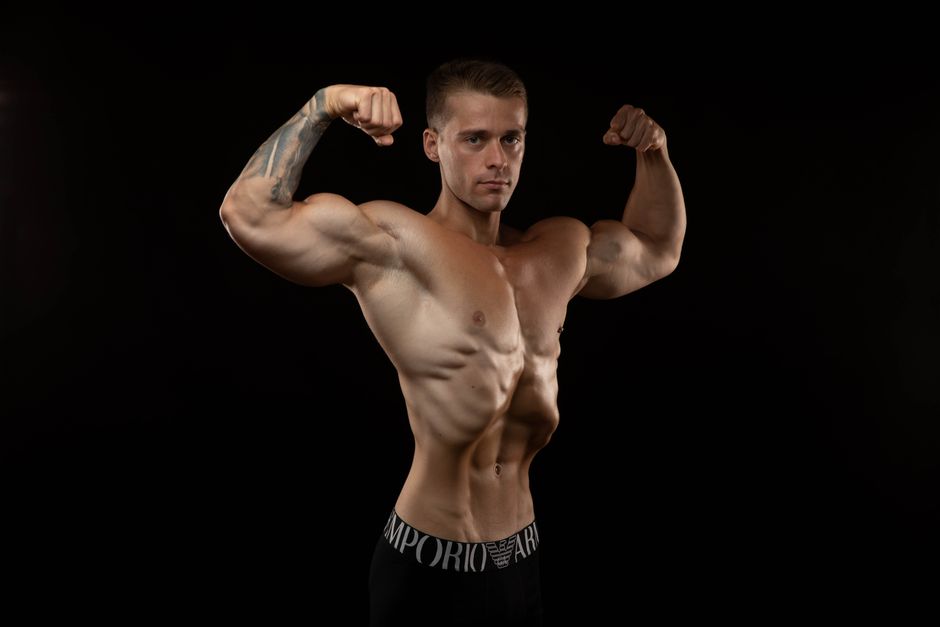
You hit your poses by controlling three things at once: body position, muscle tension, and breathing. The eight standard bodybuilding poses are front double biceps, front lat spread, side chest, side triceps, back double biceps, back lat spread, side abdominal and thigh, and the most muscular. Each pose has a setup you can learn and repeat. Judges are looking at balance, muscle size, conditioning, and how cleanly you hold the pose. Posing is a skill, and like any skill it improves with deliberate practice.
How To Pose Muscles The 8 Standard Bodybuilding Poses?
Start with the feet and work up. Your stance sets your base, your hips and torso decide your shape, and your arms finish the picture. The order matters because a strong base makes the upper body look bigger and more stable.
Here are the eight poses and the core mechanics of each.
1. Front Double Biceps
Stand with feet about shoulder width or slightly wider. Turn your toes out a little. Bring both arms up and out to roughly shoulder height, then bend your elbows to about a right angle with your fists near your head. Rotate your wrists so the pinky side faces the judges. Pull your elbows back slightly to spread your lats. Tighten your abs and quads.
The common mistake is shrugging the shoulders toward the ears. That shortens your neck and flattens your upper back. Keep the shoulders down and let the lats spread wide.
2. Front Lat Spread
Place your hands on your waist with your fingers pointing forward or slightly up. Push your elbows forward and out while pulling your shoulder blades apart. This spreads the lats. Keep your chest up and your waist tight. One leg can come forward slightly to create a longer line through the torso.
The lat spread is about width from the front. Many people push their elbows too far forward and lose the spread. Find the point where the lats feel widest and hold there.
3. Side Chest
Turn sideways to the judges. Bring the arm closest to them across your body and bend the elbow, resting that hand near the opposite bicep or wrist. Place the far hand on your hip or grip your wrist. Twist your torso slightly toward the judges so they see your chest thickness. Bend the front knee and press the back leg into the ground.
The side chest shows chest thickness and arm size from the side. The twist is what makes it work. Without the twist, the judges see a flat side profile.
4. Side Triceps
Turn sideways again. Bring the arm closest to the judges down and behind your back, then interlock your fingers with your other hand or grip your wrist. Push the triceps against your body and flex. Twist your torso slightly toward the judges and tighten your abs. Set one leg back and press through the ball of that foot.
This pose is often rushed. The triceps need to be pressed firmly against the torso to pop. If your arm hangs loose, the muscle disappears.
5. Back Double Biceps
Face away from the judges. Set your feet shoulder width apart. Raise both arms and bend the elbows to about a right angle, fists near your head, just like the front version. Now pull your shoulder blades together and spread your lats. One leg can step back and press into the ground with the heel raised to show the calf and hamstring.
The back double biceps rewards detail: the traps, rear delts, and lower back all show here. Keep your head neutral, not tucked or lifted.
6. Back Lat Spread
Still facing away, place your hands on your waist like the front lat spread. Pull your elbows back and out, and spread your shoulder blades wide. Push your chest forward slightly to open the back. Set one leg back for a longer line.
From behind, the lat spread is about width and the sweep of the lats down to the waist. Pulling the elbows back too far can round the lower back. Keep the spine neutral.
7. Side Abdominal and Thigh
Turn sideways to the judges. Place one hand behind your head and the other on your hip or across your waist. Crunch slightly to the side to tighten the obliques. Bring one leg forward and press the heel down, then tighten the quad. Exhale as you crunch to pull the abs tighter.
This pose is about the midsection and the leg. The crunch should feel like a controlled contraction, not a collapse. Keep your chest up so you do not round forward.
8. Most Muscular
Face the judges. This pose has two common versions. In the hand-on-hips version, place your hands on your waist and lean forward slightly while tightening everything. In the hands-clasped version, bring your hands together in front of your chest and press them together while flexing your chest, shoulders, and arms.
The most muscular is a full-body squeeze. Tighten your legs, abs, chest, and arms at the same time. The lean forward should be small. Too much lean hides your chest.
Why Does Breathing Matter More Than People Think?
Breathing controls how tight you can get and how long you can hold a pose. Exhaling as you contract helps you pull the abs and tighten the midsection. Holding your breath can make you dizzy and cause you to lose the pose.
On stage you hold each pose for a few seconds while the judges compare you. If you run out of air, your muscles relax and your shape flattens. Practice breathing in a rhythm: inhale as you set up, exhale as you tighten, then take small controlled breaths while holding.
One detail many people miss: your face and neck are part of the pose. A clenched jaw or strained neck reads as tension, not control. Keep your face relaxed while your body works.
How Long Does It Take To Learn The Poses?
Most people can learn the basic shape of all eight poses in a few sessions. Holding them cleanly and consistently takes longer. Posing is a motor skill, and motor skills improve with frequent short practice rather than one long session.
Practicing in a mirror helps at first so you can see your lines. Later, practice without a mirror or on video so you learn what the pose feels like, not just what it looks like. On stage there is no mirror.
If you plan to compete, many coaches recommend starting dedicated posing practice well before a show, often several months out. That is general practice in the sport, not a fixed rule backed by trials. The right timeline depends on your experience and how much feedback you get.
What Do Judges Actually Look For?
Judges compare competitors on muscle size, conditioning, symmetry, and stage presence. Posing affects how all of these read. A well-posed physique looks bigger and more balanced than the same physique posed badly.
Clean transitions between poses matter too. Fumbling from one pose to the next breaks the flow and can make you look less conditioned than you are. Practice the order you will use so the changes feel automatic.
Symmetry is judged left to right and upper to lower. If one arm sits higher or one lat spreads wider, the judges notice. Video from the front and back helps you catch these differences.
What Are The Most Common Posing Mistakes?
The most common mistakes are small and fixable.
- Shrugging the shoulders in the double biceps poses, which hides the lats and shortens the neck.
- Forgetting to tighten the legs, which makes the lower body look soft.
- Holding the breath and losing tightness after a few seconds.
- Over-twisting in the side poses until the torso looks narrow instead of thick.
- Letting the wrists turn the wrong way, which flattens the biceps peak.
- Rushing transitions and arriving at the next pose off balance.
Fix these one at a time. Trying to correct everything at once usually makes you stiff.
Can You Practice Posing Without A Coach?
Yes. Video is the most useful tool. Record yourself from the front, back, and both sides, then compare your lines to how the pose is meant to look. Watching your own footage catches things a mirror hides.
A coach or experienced competitor gives feedback you cannot give yourself, especially about symmetry and timing. If you cannot work with one, a posing class or a local group can serve the same purpose. The key is getting eyes on your poses other than your own.
Practice in the shoes you will wear on stage. Footwear changes your stance and balance more than most people expect.
Frequently Asked Questions
What are the 8 standard bodybuilding poses?
They are front double biceps, front lat spread, side chest, side triceps, back double biceps, back lat spread, side abdominal and thigh, and most muscular. These are the poses used in traditional bodybuilding competition.
How often should I practice posing?
Short frequent sessions work better than one long session because posing is a motor skill. Many competitors practice several times a week, and frequency matters more than length.
Do I need to flex hard in every pose?
You need controlled tension, not maximum force in every muscle. Over-flexing can cause cramping and make your shape look tight rather than full.
Why do my poses look flat on stage?
Flatness usually comes from lost tightness, poor breathing, or a weak stance. Check your legs, your breath, and your base before changing anything else.
