
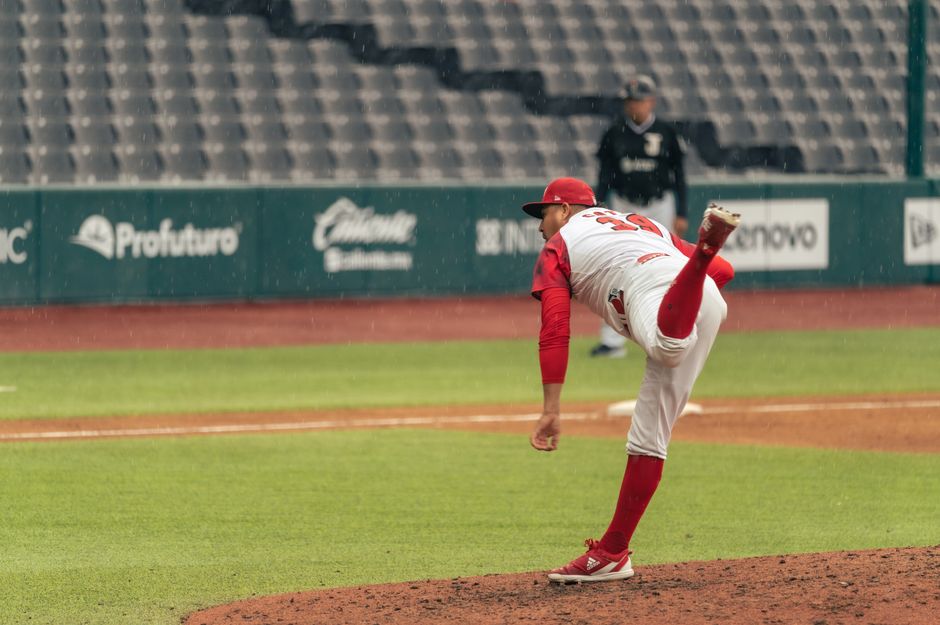
Throwing a baseball harder comes down to three things: how much force your body can produce, how efficiently that force travels from your legs through your trunk and into your arm, and how well your arm tolerates the stress of throwing at high speed. Pitching velocity is built through structured strength training, throwing mechanics work, and gradual increases in throwing volume over months and years, not weeks. Most gains in adult pitchers are modest, and the biggest limiting factor is usually injury risk rather than effort.
What Actually Determines Pitching Velocity?
Velocity is the end result of a kinetic chain. Force starts in the ground, travels up through the legs, hips, and trunk, and is transferred into the shoulder and elbow before the ball leaves the hand. Research on pitching biomechanics consistently shows that pitchers who throw harder tend to generate more force from the lower half and trunk, not just from the arm.
That matters because it changes where you should focus. A pitcher with a weak lower body or poor hip and trunk rotation will lose energy before it reaches the arm. The arm then has to make up the difference, which raises stress on the shoulder and elbow.
Three broad factors set your ceiling:
- Force production — leg, hip, and core strength
- Force transfer — timing and sequencing of the delivery
- Arm health and tolerance — how much throwing your shoulder and elbow can handle
Genetics, joint structure, and natural arm speed also play a role. Two pitchers doing identical training can end up with very different velocities. That is normal, and it is not a sign that one of them is training wrong.
Can You Actually Train to Throw Harder?
Yes, to a point. Strength and conditioning research in overhead athletes shows that targeted training can improve throwing velocity, though the size of the effect varies widely between individuals and studies.
The most consistent findings involve full-body strength work and structured throwing programs. A pitcher who adds leg strength, trunk power, and shoulder stability typically sees some improvement. A pitcher who only does arm exercises usually does not.
What does not have strong support is the idea that any single drill or gadget produces large, fast gains. Marketing around weighted balls, wrist weights, and long-toss programs often outpaces the evidence. Some of these tools appear in studies with positive results, but the research is mixed, sample sizes are often small, and injury data is limited.
Be cautious with claims of adding several miles per hour in a few weeks. Those numbers rarely hold up in controlled research, and rapid velocity jumps are associated with higher injury rates in throwing athletes.
How Much Does Pitching Mechanics Matter?
Mechanics matter a great deal, but not in the way most people assume. There is no single “perfect” delivery that guarantees more velocity. Elite pitchers throw with a wide range of arm slots, stride lengths, and timing patterns.
What does appear consistently in biomechanics research is that efficient sequencing — hips rotating before the trunk, trunk before the arm — is associated with higher velocity and, in some studies, lower stress on the elbow and shoulder. When the arm leads the body, velocity drops and injury risk rises.
Common mechanical issues that limit velocity and increase strain include:
- Opening the hips too early or too late relative to the trunk
- Short stride that reduces force from the lower half
- Poor trunk rotation, forcing the arm to do more work
- Inconsistent release point, which affects both command and perceived velocity
Video analysis with a qualified pitching coach is the standard way to identify these issues. A coach can spot sequencing problems that are almost impossible to feel from the inside.





What Strength Training Helps Pitchers Throw Harder?
Full-body strength training with an emphasis on lower body and trunk power has the strongest support for improving throwing velocity in overhead athletes. This is not controversial in sports science — it is the foundation most collegiate and professional programs are built on.
Training areas that matter most:
- Lower body — squats, deadlifts, lunges, and single-leg work for hip and leg drive
- Trunk and rotational power — medicine ball throws, cable rotations, anti-rotation core work
- Posterior shoulder and scapular strength — rows, face pulls, and rotator cuff work for stability
- Grip and forearm — supporting the wrist and hand through release
What does not have strong evidence is heavy overhead pressing for velocity. Some pitchers do it, some programs avoid it, and the research does not clearly favor one approach. This is a case where individual coaching and injury history matter more than a general rule.
Specific sets, reps, and loading schemes vary by program and by athlete. No universal prescription exists that fits every pitcher, and any program should be adjusted for age, training history, and current arm health.
Does Long Toss or Weighted Ball Training Work?
The evidence is mixed. Some studies on weighted ball programs show velocity gains, but many are small, short-term, and lack control groups. Injury data is limited, and several throwing specialists have raised concerns about added stress on the elbow and shoulder.
Long toss is widely used in baseball training and is often part of a throwing program. Whether it directly increases velocity compared to other throwing methods is not clearly established in the research. It does build arm strength and throwing endurance, which may support velocity indirectly.
If you try weighted ball or long toss programs, the consistent theme in the available evidence is gradual progression. Sudden increases in throwing volume or intensity are linked to higher injury rates in pitchers at all levels.
No clinical guidelines exist for weighted ball training in youth or adolescent pitchers. That absence is meaningful — it means the safety and effectiveness of these programs in growing athletes is not well established.
What Role Does Recovery Play in Velocity?
A tired arm throws slower. That is not a motivational slogan — it reflects measurable changes in muscle output and neuromuscular control after heavy throwing. Recovery is not separate from velocity training. It is part of it.
Key recovery factors that appear in sports medicine literature include:
- Sleep — most athletes need more than the general adult recommendation, and sleep debt affects power output
- Throwing rest — days off from throwing allow tissue to recover
- Nutrition and hydration — adequate protein and calories support muscle repair
- Managing total workload — pitch counts and innings limits reduce injury risk
Pitch count guidelines for youth and adolescent pitchers are well established and widely published by sports medicine organizations. Following them is one of the few interventions with clear evidence for reducing arm injuries in young pitchers.
Can You Throw Harder at Any Age?
Younger pitchers with developing bodies can often add velocity through training and physical maturation. Adult pitchers past their mid-20s generally see smaller gains from training alone, and those gains tend to plateau.
For adults, the realistic focus shifts from “how much can I add” to “how do I maintain what I have and stay healthy.” Strength maintenance, mechanics, and workload management matter more than chasing large velocity jumps.
For pitchers in their teens, the biggest controllable factors are avoiding overuse, following pitch count limits, and building general athleticism rather than specializing in pitching year-round. Early specialization is associated with higher injury rates in youth overhead athletes.
One point that often gets missed: throwing harder is not the same as pitching better. Command, pitch mix, and sequencing frequently have more impact on game outcomes than a couple of miles per hour on the fastball.
Frequently Asked Questions
How much velocity can you realistically gain from training?
Gains vary widely by individual, age, and training history, and most research shows modest improvements rather than large jumps. Claims of adding many miles per hour in a few weeks are not well supported by controlled studies.
Do weighted baseballs increase pitching velocity?
Some studies suggest possible velocity gains, but the research is mixed and injury data is limited. No clinical guidelines exist for weighted ball training in youth pitchers.
Is long toss good for throwing harder?
Long toss is widely used and builds arm strength and endurance, but whether it increases velocity more than other throwing methods is not clearly established. Progression should be gradual to reduce injury risk.
At what age do pitchers stop gaining velocity?
Most pitchers see their largest natural velocity gains during adolescence and early adulthood as the body matures. Gains from training alone tend to shrink after the mid-20s, though maintenance training still matters.
