
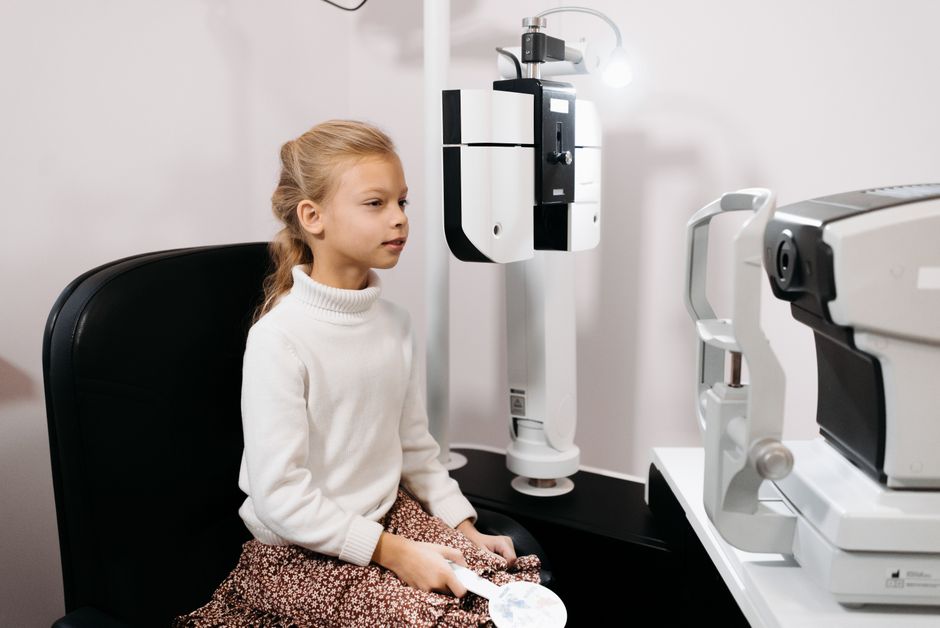
Vision screening tests at home can help you notice changes in your eyesight between professional checkups. To perform one, you need a printed eye chart, good lighting, and a measured distance of 20 feet for a standard Snellen chart. Cover one eye, read the smallest line you can see clearly, then repeat with the other eye. Record the line number next to each eye. This is not a substitute for a doctor’s exam, but it is a useful way to track your vision over time.
What Exactly Is a Vision Screening Test?
A vision screening test is a quick check of how well you see. It is not a full eye exam. It does not check for eye diseases like glaucoma or cataracts. It only measures visual acuity — how sharp your vision is at a distance.
The most common type uses a Snellen chart. This is the chart with rows of letters that get smaller as you go down. You have probably seen one in a school nurse’s office or a driver’s license center. The test gives you a number like 20/20 or 20/40. That number tells you how well you see compared to a person with standard vision.
Home screening tests work the same way. You can buy a printed chart online or download one from a reputable source. The American Academy of Ophthalmology provides a free printable chart on their website. You need to follow the instructions carefully for the results to mean anything.
How To Perform A Vision Screening Test Step By Step
Start by finding a wall with good lighting. Avoid glare from windows or lamps. Tape the eye chart to the wall at eye level. Measure exactly 20 feet back from the chart. Use a tape measure — guessing the distance will throw off your results.
Place a mark on the floor where you will stand. Make sure you are standing directly in line with the chart. If you wear glasses or contacts for distance, wear them during the test. If you only wear them for reading, do not wear them. The point is to test your vision as it normally is when you need to see far away.
Cover your left eye with your hand or a paper cup. Do not press on the eyelid. Keep both eyes open — the covered eye should not be squeezed shut. Read the smallest line of letters you can see clearly. Start from the top and work down. If you guess at letters, that line does not count. Record the line number or the visual acuity fraction next to that line.
Repeat the same steps with your right eye covered. Write down the result for each eye separately. If you have trouble reading the 20/40 line or worse, that is a sign you should see an eye doctor. The 20/40 line is usually the third line from the bottom on a standard chart.
What Do the Numbers on an Eye Chart Mean?
The fraction on an eye chart compares your vision to a standard. The top number is the distance you stand from the chart — always 20 feet in a standard test. The bottom number is the distance at which a person with standard vision could read that same line.
So 20/20 means you see at 20 feet what a standard person sees at 20 feet. That is normal vision. 20/40 means you see at 20 feet what a standard person sees at 40 feet. Your vision is half as sharp. 20/200 means you see at 20 feet what a standard person sees at 200 feet. That is the threshold for legal blindness in many places.
One clarification that often gets missed: 20/20 does not mean perfect vision. It means average vision for a healthy young adult. Many people see 20/15 or even 20/10, which is better than 20/20. If you see 20/15, you can read at 20 feet what a standard person needs to be 15 feet away to read.

What Can a Home Vision Screening Test Miss?
A home vision test checks only distance visual acuity. That is one small piece of your overall eye health. It does not check for nearsightedness up close, which is called presbyopia and is common after age 40. It does not check for astigmatism, which causes blurred vision at all distances. It does not check for depth perception, color vision, or peripheral vision.
Most importantly, a vision screening cannot detect eye diseases. Glaucoma often has no symptoms until significant vision loss has occurred. Macular degeneration affects central vision slowly. Diabetic retinopathy can damage the retina without changing your visual acuity at all. The CDC reports that about 93 million adults in the US are at high risk for serious vision loss, but only half have seen an eye doctor in the past year.
A home test can give you false reassurance. You might see 20/20 and assume your eyes are healthy, when in fact you have early signs of disease. That is why the American Optometric Association recommends a comprehensive eye exam every one to two years for adults over 60, and every two years for adults 18 to 60 with no risk factors.
| What Home Screening Tests For | What It Does Not Test For |
|---|---|
| Distance visual acuity | Eye diseases (glaucoma, macular degeneration) |
| Basic clarity of vision | Peripheral vision |
| Changes over time (if done regularly) | Color vision |
| Need for updated glasses or contacts | Depth perception |
| Referral threshold (20/40 or worse) | Eye muscle coordination |
How Often Should You Do a Home Vision Screening?
There is no official guideline for how often to do a home vision screening. Eye doctors do not recommend them as a replacement for professional exams. But if you want to track changes between visits, once every three to six months is reasonable.
Some people benefit from more frequent checks. If you have diabetes, high blood pressure, or a family history of eye disease, you should already be seeing an eye doctor regularly. A home test can help you notice sudden changes that warrant an earlier appointment. If your vision drops by one line on the chart between checks, that is worth mentioning to your doctor.
Children should have their vision screened by a pediatrician or school nurse, not at home. Home tests are not standardized for kids. Young children may not be able to cooperate with the test or read letters. Specialized charts with pictures or the letter E in different orientations are used for children who cannot read.
One practical tip: take a photo of your results each time. Write the date, the line number for each eye, and any notes about lighting or distance. This gives your eye doctor a record of changes over time, which is more useful than a single number.
Common Mistakes People Make During Home Vision Tests
The most common mistake is incorrect distance. People guess at 20 feet instead of measuring. Even a few feet off changes the results significantly. If you stand 15 feet away instead of 20, you will read smaller letters than you should, and your vision will look better than it actually is.
Another mistake is poor lighting. Dim light makes the letters harder to see, which makes your vision look worse than it is. Bright light from behind you can create glare on the chart. The best setup is even, indirect light on the chart with no light shining in your eyes.
People also squint during the test. Squinting changes the shape of your eye slightly and can improve your vision temporarily. That defeats the purpose of the test. Keep your eyes open normally. If you cannot read a line without squinting, that line is too small for you.
Using the wrong chart is another issue. Some online charts are not calibrated correctly. The letter sizes may not match the standard Snellen proportions. Use a chart from a reputable medical source. The American Academy of Ophthalmology and the National Eye Institute both offer free, accurate charts.
When Should You See an Eye Doctor Instead of Testing at Home?
If you notice sudden changes in your vision, do not wait for a home test. See a doctor right away. Sudden blurriness, flashes of light, floaters that appear out of nowhere, or a curtain-like shadow over your vision are emergencies. These can signal retinal detachment, stroke, or other serious conditions.
If your home test shows 20/40 or worse in either eye, schedule a professional exam. The American Academy of Ophthalmology uses 20/40 as the threshold for needing a referral. If you already wear glasses and your vision drops by two lines or more on the chart, your prescription may have changed.
If you have not had a comprehensive eye exam in two years, skip the home test and make an appointment. A professional exam includes dilation of your pupils, which allows the doctor to see the back of your eye. That is the only way to check for retinal damage, optic nerve damage, and other problems that a vision screening cannot detect.
Pain in or around the eye, double vision, or loss of peripheral vision are also reasons to see a doctor immediately. None of these symptoms show up on a vision screening test. Trust your symptoms more than your test results.
Frequently Asked Questions
How often should I do a home vision screening test?
Every three to six months is reasonable if you want to track changes. But do not skip professional eye exams, which are needed every one to two years.
What does 20/40 vision mean on a screening test?
It means you see at 20 feet what a person with standard vision sees at 40 feet. This is the threshold where most doctors recommend a professional eye exam.
Can a home vision test detect glaucoma?
No. Glaucoma affects peripheral vision first and often has no early symptoms. Only a comprehensive eye exam with pressure checks can detect it.
Do I need to wear my glasses during the test?
Wear them if you use them for distance vision. The test should measure your vision as it normally is when you need to see far away.
