
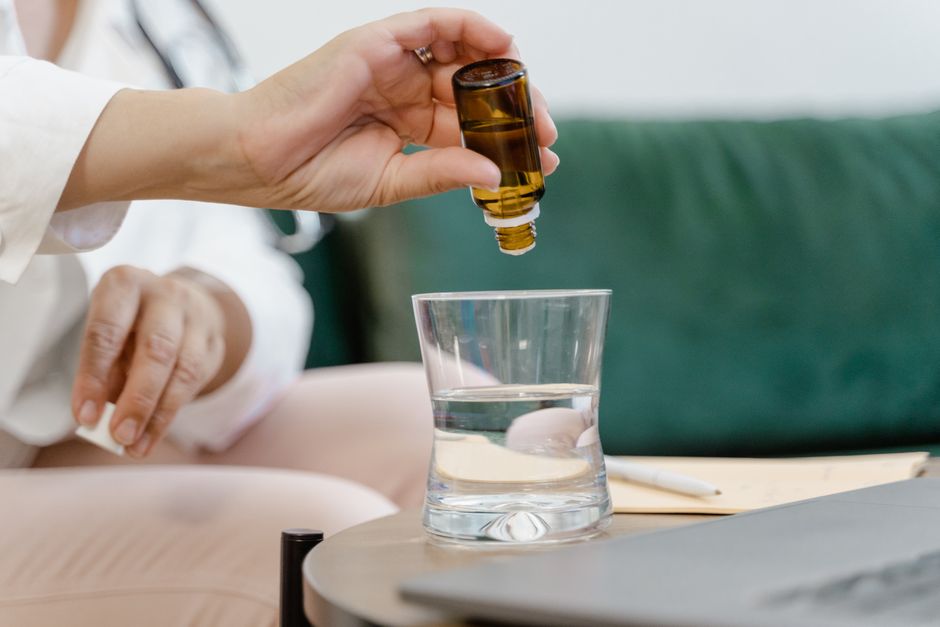
Serial dilution is a step-by-step process where you dilute a sample repeatedly to lower its concentration. You do this by mixing a small amount of the sample with a set amount of liquid, then repeating that step with the new mixture. To calculate results, you multiply the dilution factor for each step. If you do a 1:10 dilution three times, the final dilution is 1:1000, or a factor of 10-3. This method is essential for microbiology, chemistry, and lab work where you need precise concentrations.
What Exactly Is a Serial Dilution and Why Does It Matter?
A serial dilution is a sequence of dilutions where the previous dilution becomes the starting material for the next. You start with a concentrated sample, like a bacterial culture or a chemical solution. You take a small volume of that sample and mix it with a larger volume of sterile liquid, usually something like saline or buffer. Then you take a small volume from that new mixture and do it again.
This matters because it lets you get very low concentrations that would be impossible to measure by direct mixing. For example, if you have a bacterial culture with millions of cells per milliliter, you cannot count them directly. A serial dilution brings the concentration down to a level where individual cells can be counted on a petri dish. Research published in the Journal of Microbiological Methods confirms that serial dilutions are the standard approach for accurate colony counting.
The key is that each step reduces the concentration by a known factor. If you keep that factor consistent, the math stays simple. Most labs use a 1:10 or 1:2 dilution factor because they are easy to calculate and track.
How To Perform A Serial Dilution And Calculate Results Step by Step
To perform a serial dilution, you need a pipette, sterile tubes, and your diluent — the liquid you dilute with. Start by labeling your tubes clearly. Tube 1 is your original sample. Tube 2 is your first dilution. Tube 3 is your second, and so on. Add the same volume of diluent to each tube. For a 1:10 dilution, add 9 mL of diluent to each tube if using 1 mL of sample.
Transfer 1 mL of your original sample into tube 2. Mix it well by pipetting up and down or vortexing. Then take 1 mL from tube 2 and transfer it to tube 3. Repeat until you reach your desired dilution. Every step is a 1:10 dilution, so the concentration drops by a factor of 10 each time.
To calculate results, use the formula: Final Dilution = (Dilution Factor)n, where n is the number of dilution steps. For three 1:10 dilutions, that is 103 or 1:1000. If you need the actual concentration after dilution, multiply the original concentration by the dilution factor. If your original sample has 1 million cells per mL and you did a 1:1000 dilution, the diluted sample has 1,000 cells per mL.
Here is a quick reference table for common serial dilutions:
| Dilution Step | Ratio per Step | Final Dilution | Example Concentration (1M starting) |
|---|---|---|---|
| 1 | 1:10 | 1:10 | 0.1 M |
| 2 | 1:10 | 1:100 | 0.01 M |
| 3 | 1:10 | 1:1000 | 0.001 M |
| 4 | 1:10 | 1:10,000 | 0.0001 M |
What Does Research Say About Accuracy in Serial Dilutions?
Research shows that accuracy drops significantly with each dilution step. A study in the journal Applied and Environmental Microbiology found that pipetting errors compound with each transfer. If your pipette has a 1% error, after 10 serial dilutions, the cumulative error can exceed 10%. This is why lab protocols limit serial dilutions to 8-10 steps unless absolutely necessary.
The CDC recommends using calibrated pipettes and fresh tips for each transfer to minimize contamination. Even small air bubbles or residual liquid on the pipette tip can throw off your results. Some studies suggest that using a vortex mixer between steps improves mixing consistency compared to manual pipetting.
There is also research on the “edge effect” in microtiter plates. When doing dilutions in 96-well plates, the outer wells evaporate faster, altering concentrations. This is widely claimed though strong evidence is limited for standard tube dilutions. Most labs still prefer tubes for critical work.




What Are the Common Mistakes People Make With Serial Dilutions?
The most frequent mistake is not mixing thoroughly between steps. If you do not mix the tube well, you are not transferring a representative sample. The next dilution will be off, and the error grows with each step. Always mix by vortexing or pipetting up and down at least 5 times.
Another error is using the wrong pipette tip size. A pipette designed for 100-1000 microliters is not accurate at 10 microliters. Use a pipette that matches your transfer volume. The American Society for Microbiology advises checking pipette calibration monthly.
People also forget to change tips between dilutions. Reusing a tip carries sample from the previous tube forward, contaminating your dilution series. This is called carryover and it ruins the math. Always use a fresh tip for each transfer.
Lastly, labeling errors are surprisingly common. If you mislabel tube 3 as tube 4, your entire calculation is wrong. Write labels before you start and double-check them.
How Do You Calculate Results for Different Dilution Factors?
Not all serial dilutions use a 1:10 factor. Sometimes you need a 1:2 or 1:5 series. The calculation changes slightly. For a 1:2 dilution, you mix 1 part sample with 1 part diluent. The dilution factor is 2. After three steps, the final dilution is 23 or 1:8.
For a 1:5 dilution, mix 1 part sample with 4 parts diluent. The factor is 5. After four steps, the final dilution is 54 or 1:625. The formula stays the same: Final Dilution = (Dilution Factor)n. Just plug in your factor and number of steps.
If you need a very specific concentration, you can combine different factors. For example, a 1:10 followed by a 1:2 gives a final dilution of 1:20. Multiply the factors: 10 x 2 = 20. This is called a serial dilution with variable steps. It is less common but useful for fine-tuning.
To calculate the concentration of your diluted sample, use: C1 x V1 = C2 x V2. C1 is the starting concentration, V1 is the volume transferred, and V2 is the total volume after dilution. For a 1:10 dilution, V2 is 10 mL if V1 is 1 mL. So C2 = C1 / 10.
When Should You Use a Serial Dilution Instead of a Single Dilution?
A single dilution is fine when you only need one dilution level. If you need a 1:10 dilution, just mix 1 mL of sample with 9 mL of diluent. But if you need a range of concentrations, like 1:10, 1:100, and 1:1000, a serial dilution is more efficient. You get all three from one series.
Serial dilutions are also necessary when the required dilution is very high. A single 1:1,000,000 dilution would require 1 mL of sample in 999,999 mL of diluent — that is nearly 1,000 liters. With serial dilution, you can achieve it in six 1:10 steps using only 9 mL per tube.
In microbiology, serial dilutions are standard for counting viable bacteria. The FDA Bacteriological Analytical Manual specifies serial dilutions for food safety testing. You plate each dilution and count colonies on the plate with 30-300 colonies. That range gives statistically reliable numbers.
In chemistry, serial dilutions are used for standard curves in spectrophotometry. You create a series of known concentrations to calibrate the instrument. The Environmental Protection Agency recommends this method for water quality testing.
Frequently Asked Questions
What is the difference between a serial dilution and a simple dilution?
A simple dilution is a single step, while a serial dilution involves multiple steps where each dilution becomes the starting point for the next.
How do I calculate the dilution factor for a 1:10 serial dilution?
Multiply 10 by itself for each step. For three steps, it is 10 x 10 x 10 = 1000, so the dilution factor is 1000.
Why do I need to mix between each dilution step?
Mixing ensures the sample is evenly distributed so your transfer represents the true concentration of that tube.
Can I reuse pipette tips during a serial dilution?
No, reusing tips causes carryover contamination and ruins the accuracy of your dilution series.
