
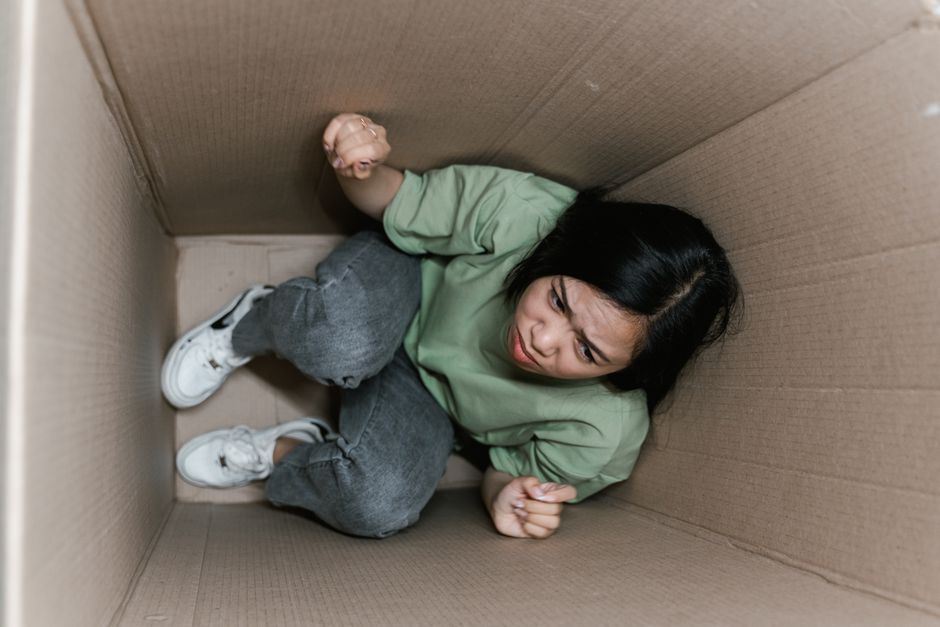
Social anxiety is not the same as being shy, and the two need different responses. Shyness is a personality trait — a preference for quieter social settings. Social anxiety disorder is a recognized mental health condition in which fear of judgment or embarrassment interferes with daily life. The most effective approaches combine gradual, repeated exposure to feared situations with cognitive work that challenges anxious predictions, and for many people, professional treatment such as cognitive behavioral therapy produces meaningful improvement.
How To Overcome Social Anxiety And Shyness Tips That Work
The strategies below are grounded in how anxiety actually works in the brain and body. They are not quick fixes. They are skills, and skills take repetition.
Anxiety responds to avoidance. When you skip the party, leave the meeting early, or rehearse a conversation for hours before making a phone call, you feel relief. That relief teaches your brain that the situation was genuinely dangerous. The next time, the fear is a little stronger.
Breaking that cycle means approaching rather than avoiding — but slowly, and in a way your nervous system can tolerate. This is the core principle behind exposure therapy, which is one of the most well-studied treatments for anxiety disorders.
Start smaller than you think you need to
If your goal is to speak up in meetings, do not start there. Start with something so small it barely registers as anxiety — making eye contact with a cashier, asking a stranger for the time, or sitting in a common area during a break. The point is not to conquer fear. The point is to collect evidence that nothing bad happened.
Gradually increase difficulty over days and weeks, not hours. Rushing exposure tends to backfire and reinforce the belief that social situations are overwhelming.
Stay in the situation long enough to learn something
If you leave the moment anxiety peaks, you learn that leaving is what kept you safe. If you stay — even for a few extra minutes — you learn that anxiety rises, plateaus, and eventually falls on its own. That experience is what rewires the fear response over time.
Drop the safety behaviors
Safety behaviors are the small things people do to feel less anxious: gripping a drink, staring at a phone, rehearsing every sentence, avoiding eye contact. They feel helpful. They are not. They prevent your brain from learning that you can handle the situation without them.
Try removing one safety behavior at a time. Not all at once.
What Is Happening in Your Body During Social Anxiety?
Social anxiety involves a real physiological response, not just nervous thoughts. When your brain perceives social threat, the amygdala — a small structure deep in the brain that helps process fear — signals the sympathetic nervous system to activate.
That triggers the release of adrenaline and cortisol. Your heart rate increases. Breathing becomes shallower. Blood flow shifts toward large muscles. You may blush, sweat, or feel your mind go blank.
These sensations are uncomfortable but not dangerous. They are the same response your body uses in genuinely threatening situations. The problem in social anxiety is that the threat detection system is firing when there is no real danger.
Understanding this helps because it separates the physical experience from the story your mind tells about it. A racing heart is not proof that you are failing. It is proof that your body is doing what bodies do under perceived threat.
Why Do Some People Develop Social Anxiety and Others Don’t?
Social anxiety disorder has no single cause. Research points to a combination of factors.
- Genetics. Anxiety disorders tend to run in families. Having a close relative with an anxiety disorder increases risk, though it does not determine outcome.
- Temperament. Children who show behavioral inhibition — a tendency to be cautious and withdrawn in unfamiliar situations — are more likely to develop social anxiety later.
- Early experiences. Bullying, harsh criticism, humiliation, or chronic social rejection during childhood and adolescence are associated with higher risk.
- Brain chemistry and structure. Differences in how the amygdala and prefrontal cortex communicate have been observed in people with social anxiety disorder, though researchers are still working out what these differences mean.
Shyness alone is not a disorder. Many shy people live full, satisfying social lives without treatment. Social anxiety disorder is diagnosed when the fear is persistent, intense, and causes significant distress or interferes with work, school, relationships, or daily functioning.





When Should You Seek Professional Help?
Self-help strategies work well for mild social anxiety and everyday shyness. They are not a substitute for treatment when anxiety is severe.
Consider talking to a doctor or mental health professional if:
- You avoid social situations in ways that limit your career, education, or relationships
- You experience panic attacks in social settings
- You rely on alcohol or other substances to get through social events
- Your anxiety lasts most days for six months or longer
- Self-help efforts have not made a meaningful difference
Cognitive behavioral therapy is the most extensively studied psychological treatment for social anxiety disorder, and research consistently supports its effectiveness. It typically involves identifying anxious thoughts, testing them against reality, and gradually facing feared situations.
Selective serotonin reuptake inhibitors (SSRIs) are commonly prescribed for social anxiety disorder and have evidence supporting their use. Benzodiazepines may be prescribed short-term in some cases, but they carry a risk of dependence and are generally not recommended for long-term use. Medication decisions should always be made with a qualified prescriber.
Some people benefit from a combination of therapy and medication. Others do well with therapy alone. There is no single right path.
What Are Practical Tips for Managing Social Anxiety Day to Day?
Beyond structured exposure work, several everyday habits can reduce the intensity of social anxiety over time.
Shift attention outward
Social anxiety pulls attention inward — toward your own heartbeat, your sweating, your internal monologue. This self-focus amplifies anxiety and makes it harder to connect with others. Practice directing attention to the person you are talking to, the environment around you, or the content of the conversation rather than your internal state.
Challenge the prediction, not the feeling
Before a social event, you may predict that you will embarrass yourself, that people will notice your anxiety, or that the conversation will go badly. These predictions feel like facts. They are guesses. Write them down. After the event, check what actually happened.
Over time, most people find their predictions are consistently worse than reality. That gap is useful information.
Prepare, don’t rehearse
Having a few general conversation topics in mind is reasonable. Scripting every sentence and replaying it in your head is not. Rehearsal feeds the belief that spontaneous conversation is dangerous and that you need a script to survive it.
Use slow breathing deliberately
Slow, diaphragmatic breathing activates the parasympathetic nervous system, which counteracts the stress response. This does not eliminate anxiety, but it can reduce physical intensity enough to help you stay in the situation. Practice when calm so the skill is available when you need it.
Limit alcohol as a social tool
Alcohol reduces anxiety in the short term, which is exactly why it becomes a crutch. Relying on it prevents you from learning that you can handle social situations without it. It also increases the risk of developing a substance problem, particularly in people with anxiety disorders.
Protect sleep and exercise
Sleep deprivation increases amygdala reactivity — meaning less sleep makes threat detection more sensitive. Regular aerobic exercise has been associated with reduced anxiety symptoms in multiple studies, though the effect sizes vary. These are not treatments for social anxiety disorder on their own, but they support the foundation that everything else builds on.
Can Shyness Be Overcome, or Is It Just Who You Are?
Shyness is a temperament trait, and it tends to be relatively stable across a person’s life. That does not mean it cannot be managed. It means the goal may not be to become outgoing.
The goal is to be able to do the things you want to do — attend the event, give the presentation, make the friend — even if you feel some discomfort while doing them. Many people with shy temperaments build rich social lives. They simply do it in their own way and at their own pace.
Social anxiety disorder is different. It is a treatable condition, and the evidence for treatment is strong. If anxiety is holding you back from the life you want, that is not a personality flaw. It is a signal to get support.
Frequently Asked Questions
What is the fastest way to reduce social anxiety?
There is no fast fix, but gradual exposure to feared situations is the most consistently supported approach. Facing a situation repeatedly, without escaping or relying on safety behaviors, reduces anxiety over time.
Can social anxiety go away on its own?
Mild social anxiety sometimes improves with age and life experience. Moderate to severe social anxiety disorder typically does not resolve without treatment and tends to persist or worsen when situations are avoided.
Is social anxiety the same as being an introvert?
No. Introversion is a preference for less stimulation and does not involve fear of judgment. Social anxiety involves distress and avoidance driven by fear of negative evaluation.
Does medication cure social anxiety?
No medication cures social anxiety, but some can reduce symptoms enough to make therapy and daily functioning easier. SSRIs are the most commonly prescribed class and have evidence supporting their use.
