
Feeling like your ear is plugged, muffled, or full of pressure is frustrating. That stuffed-up sensation usually means your eustachian tubes are blocked. These small passages connect your middle ear to the back of your throat, and they normally open and close to equalize pressure. When they stay shut, swallowing, yawning, and chewing may not be enough to pop them open. The most reliable ways to open them are to swallow with purpose, perform a gentle pressure-equalizing maneuver, or address the underlying inflammation and congestion causing the blockage in the first place. For persistent cases, decongestants, nasal steroid sprays, or a doctor’s procedure may be necessary.
What Are the Eustachian Tubes and Why Do They Get Stuck?
Your eustachian tubes are about 1.5 inches long. They connect the middle ear space behind your eardrum to the nasopharynx, which is the area at the back of your nasal cavity. Their main job is to equalize air pressure on both sides of your eardrum and drain fluid from the middle ear.
The tube is normally closed. It opens briefly when you swallow, yawn, or chew. Muscles in the palate pull the tube open for a fraction of a second. If the lining of the tube becomes swollen from a cold, allergy, or sinus infection, it cannot open properly. The trapped air in the middle ear gets absorbed into the bloodstream, creating negative pressure. That negative pressure pulls the eardrum inward, which is why your hearing feels muffled and your ear feels full.
Blockage can also happen from rapid altitude changes, like on an airplane or driving up a mountain. In children, the tubes are shorter, narrower, and more horizontal, which is why kids get ear pressure issues more often than adults.
How To Open Up Eustachian Tubes When Theyre Stuck
The safest first steps are simple physical maneuvers. These work best when the blockage is caused by pressure changes rather than active congestion. If your nose is completely blocked from a cold, these maneuvers are less effective until you reduce the swelling.
Swallowing deliberately. Take a sip of water and swallow with your nose pinched shut. Repeat several times. The act of swallowing activates the muscles that pull the tube open.
Yawning widely. Force a yawn if you cannot produce a natural one. Open your jaw as far as comfortable. This often creates enough movement to open the tube.
The Valsalva maneuver. Close your mouth, pinch your nose shut, and blow gently as if trying to exhale through your nostrils. You should feel a slight pressure change in your ears. Stop immediately if you feel pain. Blowing too hard can damage your eardrum.
The Toynbee maneuver. Pinch your nose shut and swallow. This is often gentler than the Valsalva maneuver and works well for mild pressure changes.
The Lowry technique. Pinch your nose, blow gently, and swallow at the same time. This combines the two approaches above.
No single maneuver works for everyone. Try them in order of gentleness. If your ear does not pop within a few attempts, stop and give it time. Forcing it repeatedly can irritate the tube lining and make the swelling worse.
Do Decongestants and Allergy Medications Help?
If your eustachian tube blockage is caused by a cold, flu, or allergies, reducing the swelling in the nasal passages can help the tube open on its own. The tube lining is continuous with the nasal lining, so when your nose is stuffy, the tube is often swollen too.
Oral decongestants like pseudoephedrine can shrink swollen blood vessels in the nasal and tube lining. Some studies suggest they are modestly effective for eustachian tube dysfunction, particularly when taken before air travel. They are not a quick fix. They can take 30 to 60 minutes to work, and they are not appropriate for everyone. People with high blood pressure, heart conditions, or glaucoma should talk to a doctor before using them.
Nasal steroid sprays like fluticasone or budesonide reduce inflammation over time. They are not immediate. They typically take several days to a week of daily use to show benefit. They are most useful for chronic blockage caused by allergies or persistent nasal inflammation.
Antihistamines help only if allergies are the cause. If your blockage is from a virus, antihistamines will not help and may thicken mucus, making things worse. Do not use antihistamines for a cold-related ear blockage.
Nasal saline rinses can help clear mucus and allergens from the nasal passages. They are safe and have no significant side effects for most people. They do not directly open the eustachian tube, but they can reduce nasal congestion that contributes to the blockage.




When Pressure Changes Are the Cause: Airplane Ear
Airplane ear is a specific form of eustachian tube blockage caused by rapid pressure changes. During ascent, the cabin pressure drops and the air inside your middle ear expands. The tube usually opens passively and releases the excess pressure. During descent, the cabin pressure rises and the middle ear pressure becomes relatively negative. The tube has a harder time opening against this pressure difference, which is why ears typically hurt more during landing than takeoff.
If you are flying with a cold, allergies, or sinus congestion, you are at higher risk for painful airplane ear. The swollen tube cannot open easily, and the pressure difference builds up.
To prevent or manage airplane ear during descent:
- Swallow frequently and deliberately.
- Chew gum or suck on hard candy.
- Take a sip of water with your nose pinched before swallowing.
- Use a decongestant about an hour before descent if you are congested and have no medical reason to avoid it.
Do not sleep through the descent. You need to be awake and actively swallowing to keep the tube opening. If you have a severe cold, some doctors recommend postponing air travel if possible. If you must fly, discuss options with your doctor beforehand.
Chronic Eustachian Tube Dysfunction: When Home Remedies Fail
For some people, the tube stays blocked for weeks or months with no clear cause. This is called chronic eustachian tube dysfunction. It can feel like a constant fullness in the ear, a popping or clicking sensation when swallowing, mild hearing loss, or tinnitus. It can also cause balance problems in some cases.
Chronic dysfunction is often related to persistent nasal inflammation from allergies, sinusitis, or acid reflux. In some cases, the tube is anatomically narrow. In rare cases, a growth or tumor in the nasopharynx can block the tube, which is why persistent one-sided ear fullness should always be evaluated by a doctor.
When conservative measures do not resolve the problem, an ear, nose, and throat specialist may recommend additional options. These include a procedure called balloon dilation, where a small balloon is inflated inside the tube to widen it. Another option is placing a small tube through the eardrum, called a tympanostomy tube or pressure equalization tube. This bypasses the eustachian tube entirely and keeps pressure equalized. It does not fix the underlying tube problem, but it relieves the symptoms.
Evidence for balloon dilation is growing, but it is not universally accepted as a first-line treatment. Some studies show benefit, while others show results similar to a sham procedure. Discuss the risks and expected outcomes with a specialist if this is being considered.
What Does Not Work and What Can Make It Worse
Some popular remedies are not supported by evidence. Ear candling is not effective and can cause burns or push wax deeper into the ear canal. It does nothing for the eustachian tube, which is located behind the eardrum and cannot be reached from the ear canal.
Sticking objects into your ear to “pop” it is dangerous. You cannot reach the eustachian tube from the ear canal. Inserting anything risks damaging the eardrum or the delicate bones of the middle ear.
Holding your nose and blowing extremely hard can cause barotrauma. This is a pressure injury to the middle ear. It can rupture the eardrum, cause bleeding, or damage the inner ear. Gentle pressure is all that is needed. If the ear does not open with gentle effort, stop.
Decongestant nasal sprays like oxymetazoline can provide fast relief from nasal congestion, but they should not be used for more than three consecutive days. Prolonged use causes rebound congestion, which can make the blockage worse than before.
When To See a Doctor
Most eustachian tube blockages resolve on their own within a few days to a few weeks. See a doctor if you have any of the following:
- Ear pain that is severe or worsening.
- Hearing loss that does not improve after the congestion clears.
- Blockage lasting longer than two weeks.
- Dizziness, vertigo, or balance problems.
- Fluid draining from the ear.
- Blockage in only one ear that persists.
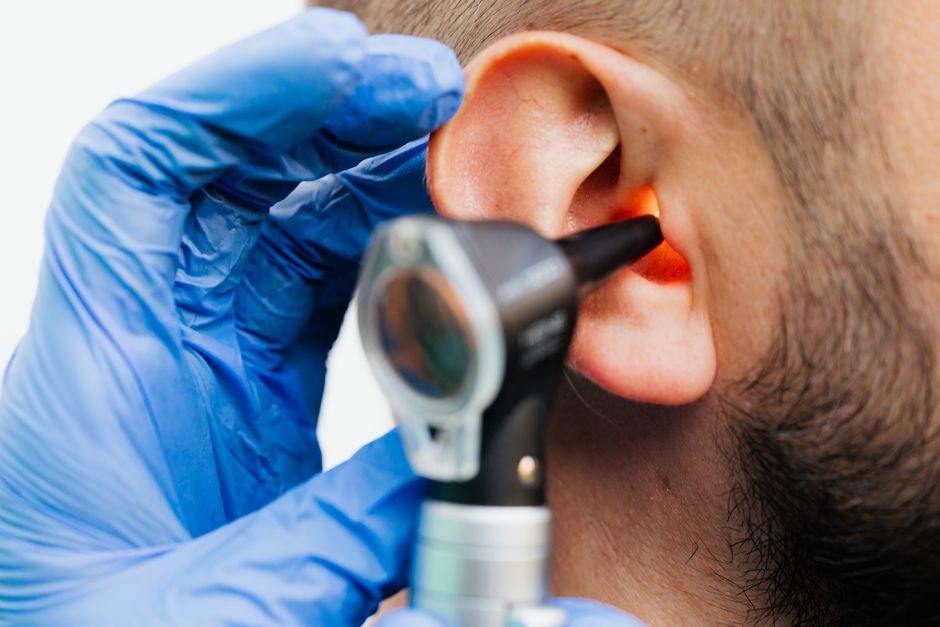
One-sided blockage that does not resolve deserves special attention. It can indicate a structural problem that needs imaging. A doctor can look at your eardrum with an otoscope to see if there is fluid behind it, retraction, or other signs of dysfunction. They can also perform a test called tympanometry, which measures how well your eardrum moves and can confirm whether pressure in the middle ear is abnormal.
If you have a cold and your ear feels full, that is expected and usually not urgent. The concern is when symptoms do not improve or when they are severe. Trust your judgment. If something feels wrong, get it checked.
Frequently Asked Questions
How long does a blocked eustachian tube last?
Most blockages from a cold or altitude change clear within a few days to two weeks. If it lasts longer than two weeks, see a doctor for evaluation.
Can you pop your eustachian tube safely?
Yes, using gentle maneuvers like swallowing with your nose pinched or a mild Valsalva maneuver can safely open the tube. Never blow hard, and stop if you feel pain.
Does yawning help unclog eustachian tubes?
Yawning can help because it activates the same muscles that open the tube. A wide, forced yawn is often more effective than a natural one.
Can allergies cause eustachian tube blockage?
Yes, allergies cause nasal lining swelling that can extend to the eustachian tube. Treating the allergy with nasal steroids or antihistamines can help if allergies are the cause.
