
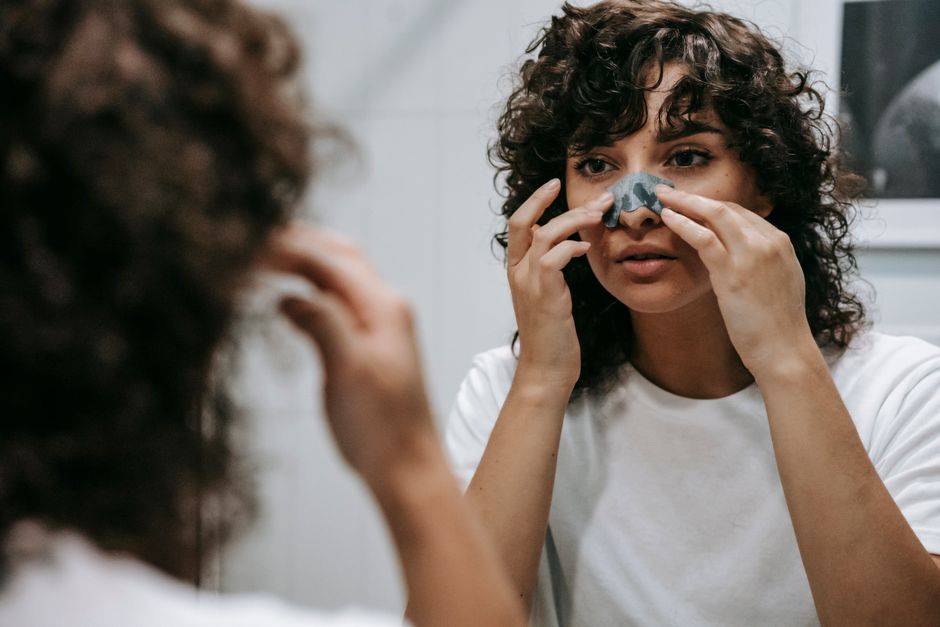
Your scalp doesn’t have pores in the way your face does. It has hair follicles — tiny openings where each hair grows out of the skin. When people talk about “clogged pores” on the scalp, they usually mean follicles blocked by oil, dead skin, or product buildup. The most effective way to “open” them is to remove what’s blocking them: wash regularly with a gentle shampoo, use a medicated shampoo if a scalp condition is involved, and avoid heavy products that sit on the scalp.
There is no product that literally opens pores. Pores don’t have muscles. They can’t open and close on command. What you can do is clear the blockage so the follicle functions normally again. That distinction matters because it changes what actually helps.
Do Scalp Pores Actually Open and Close?
No. Pores and hair follicles are fixed openings in the skin. They don’t have a mechanism to widen or narrow on their own.
What changes is what’s inside them. A follicle can become blocked by sebum (the oil your scalp produces), dead skin cells, or residue from hair products. When that happens, the opening may look larger or feel raised. Once the blockage clears, it returns to its normal appearance.
Temperature does affect blood flow to the skin, and some people notice their scalp feels different after a warm shower. But that’s circulation, not pore size. The follicle opening itself doesn’t change.
This is worth understanding because many scalp treatments are marketed around the idea of “opening” pores. If the pore can’t open, the product can’t do what the label implies. What it might do is help clear what’s blocking the follicle — which is a different and more realistic goal.
What Actually Blocks Hair Follicles?
Several things can block a hair follicle. The most common is a buildup of sebum mixed with dead skin cells.
Your scalp produces sebum from sebaceous glands attached to each follicle. Sebum is normal and necessary — it lubricates the skin and hair. Problems start when production is high, when dead skin doesn’t shed properly, or when something traps the mixture inside the follicle.
Common contributors include:
- Infrequent washing, which lets oil and dead skin accumulate
- Heavy hair products — pomades, oils, gels, dry shampoo used repeatedly without washing
- Seborrheic dermatitis, a condition that causes flaking and inflammation
- Scalp psoriasis, which speeds up skin cell turnover
- Fungal overgrowth, particularly Malassezia, a yeast that lives on most scalps
- Hormonal shifts that increase oil production
Product buildup is more common than most people realize. Dry shampoo, in particular, is designed to absorb oil — not to be left on the scalp indefinitely. Used several days in a row without a real wash, it can combine with sebum and dead skin to form a layer that sits in the follicle opening.
How To Open Hair Pores On Scalp What Actually Works?
Washing your scalp properly with a gentle shampoo is the single most effective step. Everything else supports that basic action.
Shampoo removes oil, dead skin, and product residue. When you massage it into the scalp — not just the hair — you help loosen what’s sitting in the follicle openings. Rinsing thoroughly matters as much as washing. Leftover shampoo residue can itself become a source of buildup.
For most people, washing every one to three days is enough. People with very oily scalps may need to wash daily. People with dry scalps may do fine washing less often. There is no single correct frequency — it depends on your scalp.
If a medicated shampoo is needed, the active ingredient matters more than the brand. Common options include:
- Zinc pyrithione — reduces Malassezia yeast, available over the counter
- Ketoconazole — a stronger antifungal, available over the counter at 1% and by prescription at 2%
- Salicylic acid — helps break down scale and dead skin
- Coal tar — slows skin cell turnover, used for psoriasis and seborrheic dermatitis
- Selenium sulfide — reduces yeast and slows cell turnover
Medicated shampoos need contact time to work. Most labels instruct leaving the lather on the scalp for several minutes before rinsing. Rinsing immediately defeats the purpose. Follow the specific instructions on the product you use.
Some clinicians recommend alternating between two different medicated shampoos to reduce the chance of the scalp adapting to one ingredient. This is common practice, though the evidence for rotation specifically is not strong. It’s a reasonable approach if one shampoo stops working.





Does Scalp Exfoliation Help?
Physical exfoliation can help remove dead skin and product buildup. It does not open pores, and it can cause irritation if done too aggressively.
Scalp scrubs, brushes, and massagers work by loosening debris. Used gently, they may help a shampoo do its job. Used roughly or too often, they can scratch the skin, cause inflammation, and make a scalp condition worse.
Chemical exfoliants — salicylic acid is the most common — dissolve the bonds holding dead skin cells together. This is the same mechanism used in facial acne treatments. Salicylic acid shampoos are widely available and are used for dandruff, seborrheic dermatitis, and psoriasis.
If you have an active scalp condition — redness, itching, scaling, or sores — exfoliation can aggravate it. Treat the underlying condition first. A dermatologist can tell you whether exfoliation is appropriate for your scalp.
What About Oils and Home Remedies?
Oils can soften scale and make it easier to remove. They do not open pores, and some oils can make buildup worse.
Coconut oil, olive oil, and mineral oil are sometimes used to soften scales before washing. This is a traditional approach and some clinicians still suggest it for thick scaling. The oil sits on the scalp for a period, then gets shampooed out. If it isn’t washed out thoroughly, it adds to the buildup rather than helping.
Essential oils are a different category. Tea tree oil has some evidence for mild dandruff, though it can cause irritation and allergic reactions in some people. Other essential oils marketed for scalp health have limited or no clinical evidence supporting their use. No large human trials have confirmed that most of these remedies clear blocked follicles.
Apple cider vinegar rinses are popular online. There is no strong clinical evidence that they improve scalp health, and the acidity can irritate skin that’s already inflamed.
Avoid applying heavy oils or butters directly to the scalp if your goal is to clear buildup. They add to the problem. If you use oil on your hair, keep it on the strands, not the scalp.
When Should You See a Doctor?
See a dermatologist if your scalp is persistently itchy, red, scaly, or painful, or if you notice hair loss along with scalp symptoms.
These signs can point to conditions that need specific treatment, not just better washing. Seborrheic dermatitis, psoriasis, fungal infections, and folliculitis all have distinct treatments. Using the wrong one can delay relief or make things worse.
Hair loss with scalp symptoms deserves attention. Some forms of hair loss are caused by inflammation around the follicle, and early treatment tends to work better than delayed treatment. This is not a situation to manage with shampoo alone.
If you’ve tried regular washing and an over-the-counter medicated shampoo for several weeks with no improvement, that’s also a reasonable point to get a professional opinion.
Frequently Asked Questions
Can you actually open pores on your scalp?
No. Pores and hair follicles are fixed openings that cannot widen or narrow. What you can do is clear the oil, dead skin, and product buildup blocking them, which restores normal function.
How often should I wash my hair to keep follicles clear?
Every one to three days works for most people, though oily scalps may need daily washing and dry scalps may need less. There is no single correct frequency — it depends on your scalp and how much product you use.
Does apple cider vinegar unclog scalp pores?
No clinical evidence supports this. The acidity can irritate inflamed skin, and it does not remove the oil and dead skin that block follicles — shampoo does that.
What is the fastest way to clear a blocked hair follicle?
Wash your scalp with a gentle shampoo, massaging it into the skin and rinsing thoroughly. If a scalp condition like dandruff or seborrheic dermatitis is involved, a medicated shampoo with zinc pyrithione, ketoconazole, or salicylic acid is the next step.
