
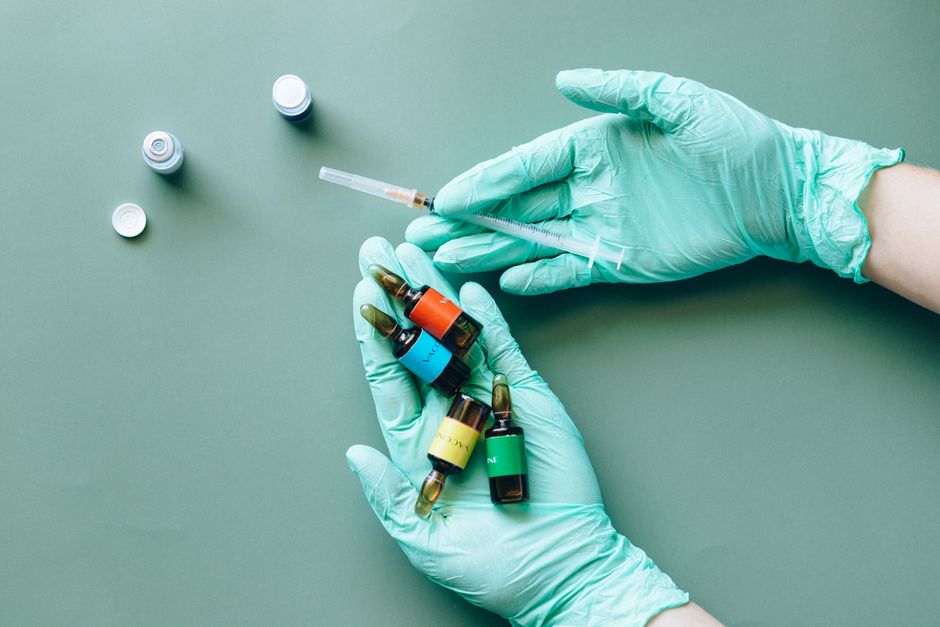
Opening a glass ampule without shattering it comes down to three things: scoring the neck in the right place, using the right tool, and snapping away from your body with steady pressure. Hold the ampule upright, let any liquid drain from the neck, wrap the top in gauze or a pad, and break at the scored line. Ampules are made to snap cleanly at that point, not to be crushed or twisted.
The glass is thin and under stress by design. That is both the safety feature and the hazard. Done right, the top comes off in one piece. Done wrong, you get sharp fragments and spilled medication. Understanding why the glass behaves the way it does makes the whole process less risky.
What Is a Glass Ampule and Why Does It Break the Way It Does?
An ampule is a small sealed glass container made to hold a single dose of liquid medication, often for injection. It has a narrow neck with a scored ring — a shallow line cut into the glass — that creates a weak point. When you bend the glass at that line, the stress concentrates there and the top separates cleanly.
Glass fails in two main ways. Under a clean bending force at a score, it snaps along the line. Under uneven force, twisting, or pressure applied away from the score, it cracks unpredictably and throws off fragments. That is the entire principle behind safe opening: direct your force at the score and nowhere else.
The liquid inside matters too. Many injectable medications are held under slight negative pressure, and some ampules contain a small amount of liquid in the neck after storage. If you break the top while the ampule is tipped, that liquid can spray or drip. Keeping the ampule upright and letting the neck drain first reduces this.
How To Open A Glass Ampule Without Shattering?
The safe method has a consistent order, and skipping steps is where most breaks go wrong.
- Stand the ampule upright and tap the top gently so any liquid in the neck falls back into the body.
- Wipe the neck with an alcohol swab if the medication or setting calls for it, and let it dry.
- Wrap the top of the ampule in a piece of gauze, a cotton pad, or a clean tissue. This protects your fingers from sharp edges and catches fragments.
- Hold the body of the ampule firmly in one hand, with the scored line facing you.
- Grip the wrapped top with your other hand and bend steadily away from your body and away from anyone nearby.
- Apply smooth pressure at the score until it snaps. Do not twist.
The break should be quick and clean. If the ampule resists, reposition so the score is directly under your bending force and try again. Never force it by squeezing harder or twisting.
One detail people miss: the direction of the break. Snap the top away from your face and body, not toward you. If the glass does fracture unexpectedly, the fragments travel away from you rather than toward your eyes or hands.
Should You Use a Filter Needle or Ampule Opener?
Yes, in most clinical settings both are used, and for good reason. A filter needle or filter straw attaches to the syringe and strains out tiny glass particles that can end up in the liquid after opening. Glass fragments too small to see can settle into the medication, and drawing them up and injecting them is a real concern.
Some clinicians and many hospitals use a filter needle as standard practice when drawing medication from an ampule. The evidence that this prevents harm is based on the clear physical risk of glass contamination rather than large outcome trials, but the practice is widely established in clinical guidance.
Ampule openers are small plastic devices that grip the top and snap it off, protecting the fingers. They are common in hospitals and clinics. For home use, gauze or a clean pad works well, but an ampule opener adds a layer of protection if you handle these regularly.
After drawing the dose through a filter needle, some guidance recommends swapping to a regular needle before injecting, since filter needles are for drawing up, not for injection. Follow the instructions that come with your supplies or from your clinician.
What Are the Most Common Mistakes That Cause Shattering?
Most shattered ampules come from a handful of avoidable errors. Recognizing them is easier than memorizing the correct technique.
- Twisting instead of bending. The score is designed for a bending force. Twisting spreads stress around the glass and causes irregular cracks.
- Breaking above or below the score. Force applied away from the scored line fractures the glass where it is not weakened, producing jagged breaks.
- Using bare fingers. Without a pad, your grip is uneven and your skin is directly exposed to sharp edges.
- Breaking toward the body or face. Fragments and spray travel in the direction of the force.
- Forcing a stubborn ampule. If it does not snap with steady pressure, the score may be incomplete or you are bending at the wrong spot. Reposition rather than squeeze harder.
There is also the matter of an ampule that was already damaged. A chip or crack near the neck before you start means the glass may fail unpredictably. If you see visible damage, do not use that ampule.
What Should You Do If an Ampule Breaks and Cuts You?
Stop and deal with the injury first, then the medication. A cut from ampule glass can be deep and the glass is contaminated, so this is not a minor scrape to ignore.
Rinse the wound under clean running water, let it bleed briefly to help clear debris, and wash gently with soap. Look for visible glass fragments and do not dig for ones you cannot see. Cover the wound with a clean bandage. If bleeding does not stop with firm pressure, the cut is deep, or you suspect glass remains in the wound, seek medical care.
Glass injuries near the fingers and hands are the most common. Any cut that involves a joint, tendon area, or does not stop bleeding after several minutes of pressure should be evaluated by a clinician.
If medication spilled, clean it up according to the product’s instructions. Some injectable medications require specific handling, and the packaging or a pharmacist can tell you what applies.
Is It Safe to Open Ampules at Home?
Some medications come in ampules for home use, and opening them safely is possible with the right technique and supplies. The main risks are cuts and glass contamination of the medication, both of which the method above addresses.
What you should not do is improvise. Do not use your teeth, do not break an ampule over a sink where it can shatter into the drain, and do not skip the filter needle if your clinician or the medication instructions call for one. If you are unsure how a specific medication should be drawn up or whether a filter is needed, ask a pharmacist. They handle these questions routinely.
For anyone who handles ampules often, an ampule opener and a supply of filter needles are worth keeping on hand. They cost little and remove most of the risk from the process.
Frequently Asked Questions
Do you need to score a glass ampule before opening it?
Most ampules come pre-scored at the neck, so you break at the existing line rather than cutting a new one. If an ampule has no visible score, follow the manufacturer’s instructions rather than trying to create one yourself.
Which direction should you break an ampule?
Bend the top away from your body and face so any fragments or spray travel away from you. Keep the ampule upright while breaking so liquid in the neck does not spill.
Can you open an ampule without gauze or a tool?
It is possible, but bare fingers give an uneven grip and leave your skin exposed to sharp edges. A gauze pad, tissue, or ampule opener makes the break safer and more controlled.
Do you always need a filter needle for an ampule?
Filter needles are widely used in clinical practice to strain out tiny glass particles after opening. Whether one is needed for your specific medication should come from your clinician or pharmacist, not from guesswork.
