
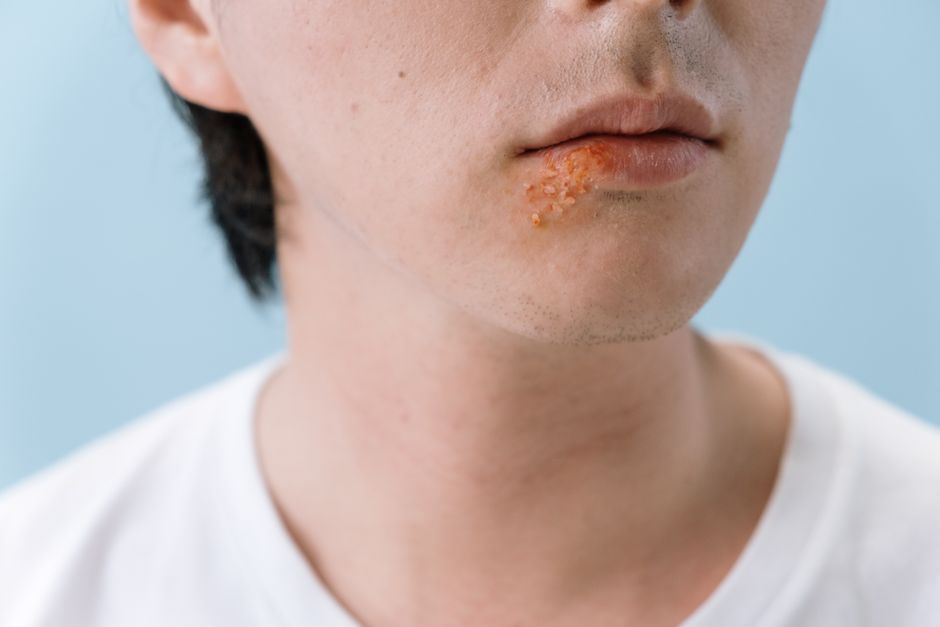
A cold sore outbreak can be genuinely painful. The tingling, burning, and throbbing can make it hard to eat, talk, or even smile. If you are dealing with this right now, you want relief, and you want it fast. The most effective way to numb a cold sore is with an over-the-counter (OTC) topical anesthetic like benzocaine or lidocaine, which directly blocks pain signals in the skin. For a natural approach, applying a cold compress can provide temporary relief, though it does not numb the area as deeply as a medicated product. The best strategy often combines a numbing agent with an antiviral cream to address both the pain and the virus itself.
What Causes the Pain of a Cold Sore?
Cold sores are caused by the herpes simplex virus (HSV-1). Once you have the virus, it stays in your body for life. It lies dormant in nerve cells near your face and can reactivate under stress, illness, sun exposure, or hormonal changes.
When the virus reactivates, it travels down the nerve to the skin surface. This process causes inflammation and damage to the skin cells. The pain you feel is a combination of nerve irritation and the inflammatory response in the tissue. The blister itself is a collection of fluid and dead skin cells, and the area around it becomes red, swollen, and highly sensitive.
Understanding this mechanism matters because it explains why numbing works. Topical anesthetics block the nerve signals in the area, preventing the pain messages from reaching your brain. They do not kill the virus, but they stop the discomfort at the source.
How Do OTC Numbing Products Work?
Over-the-counter numbing creams and gels contain active ingredients that temporarily block nerve conduction in the skin. The most common ones are benzocaine, lidocaine, and dibucaine. These are local anesthetics, the same class of drugs dentists use, just in lower concentrations.
When applied to the skin, these ingredients are absorbed into the top layers and interfere with the sodium channels in nerve cells. Without sodium moving into the nerve, it cannot fire an electrical signal. The result is a localized loss of sensation. The effect is temporary, usually lasting 30 to 60 minutes, and requires reapplication according to the product label.
Some products combine an anesthetic with an antiviral agent. These are often the most practical choice because you address both problems at once. The antiviral ingredient, such as docosanol, works to shorten healing time while the anesthetic provides immediate comfort.
Which OTC Products Should You Look For?
You do not need a prescription for most numbing agents. Pharmacies carry a range of options, and the choice depends on your preference for cream, gel, or patch form.
- Benzocaine products: These are widely available and often labeled as toothache or cold sore relief. They are effective for surface pain but may need frequent reapplication.
- Lidocaine products: Lidocaine is slightly stronger than benzocaine and is found in products like ointments and patches. Patches have the advantage of staying in place and providing longer-lasting relief.
- Combination products: Look for creams that contain both an anesthetic and an antiviral. These offer the most complete approach for a single product.
When choosing a product, read the label carefully. The concentration of the active ingredient matters. Higher concentrations numb more effectively but also carry a slightly higher risk of irritation. Start with a product containing 5% lidocaine or 5-10% benzocaine, which are standard OTC strengths.
Apply a thin layer to the cold sore and the surrounding skin. Do not rub it in aggressively. Let it dry and form a protective film. Wash your hands before and after application to avoid spreading the virus to other parts of your face or to other people.





Are Natural Options Effective for Numbing?
Natural remedies are popular, and some have genuine anti-inflammatory properties. However, none of them match the numbing power of a pharmaceutical anesthetic. They can reduce discomfort, but they do not block nerve signals the way lidocaine does.
Ice is the most effective natural option. Cold temperatures slow nerve conduction and reduce inflammation. Wrap an ice cube in a clean cloth and hold it against the sore for 5 to 10 minutes. This provides temporary relief and can be repeated as needed. Do not apply ice directly to the skin, as this can cause frostbite.
Aloe vera gel is soothing and has mild anti-inflammatory properties. It does not numb but can reduce the burning sensation. Choose a pure gel without added alcohol or fragrance, as these can irritate the sore.
Tea tree oil has antiviral properties in laboratory studies, but it can be irritating to broken skin. If you try it, dilute it heavily with a carrier oil like coconut oil. Do not apply it directly to an open blister.
Honey has been studied for wound healing and has some evidence of antiviral activity. Manuka honey, in particular, has shown promise in small studies. It can create a protective barrier and reduce discomfort, but the effect is mild compared to OTC options.
It is important to be honest about what these remedies can do. They may reduce pain slightly and provide a soothing sensation, but they will not fully numb the area. If you are in significant pain, a medicated product is the more reliable choice.
What Are the Risks of Numbing Products?
Topical anesthetics are generally safe when used as directed, but they are not without risks. The primary concern is overuse. Applying too much or too often can lead to systemic absorption, which means the drug enters your bloodstream. This can cause dizziness, confusion, or irregular heart rhythms in rare cases.
Another risk is allergic contact dermatitis. Some people are sensitive to benzocaine or lidocaine and may develop a rash, itching, or swelling at the application site. If you notice any of these symptoms, stop using the product immediately.
Do not use numbing products on large areas of skin. The cold sore should be the only area treated. Also, avoid using them inside your mouth unless the product is specifically formulated for oral use. Some numbing agents are not safe to swallow.
If you are pregnant or breastfeeding, check with your healthcare provider before using any topical anesthetic. Most are considered low risk, but individual circumstances vary.
How To Numb A Cold Sore OTC And Natural Options Combined
The most practical approach is to combine methods. Start with a cold compress to reduce initial inflammation. Then apply an OTC numbing cream or patch for longer-lasting relief. If you are using an antiviral cream, apply it first and let it absorb before applying the anesthetic.
Timing matters. The earlier you start treatment, the better. The prodromal phase, which is the tingling sensation you feel before the blister appears, is the best time to apply antiviral medication. This can sometimes prevent the blister from fully forming. Numbing agents can be used at any stage, but they are most helpful once the sore is painful and visible.
Keep the area clean and dry. Moisture can worsen the sore and increase the risk of bacterial infection. Some patches can help with this by covering the sore and absorbing excess fluid.
Pain management is not just about the topical product. Over-the-counter oral pain relievers like ibuprofen or acetaminophen can help reduce overall discomfort. These work systemically and complement the local numbing effect.
Remember that cold sores are contagious. The fluid inside the blister contains live virus. Avoid touching the sore, and wash your hands frequently. Do not share utensils, towels, or lip balm with others. The virus can spread even when no blister is visible, but the risk is highest during an active outbreak.
When Should You See a Doctor?
Most cold sores resolve on their own within 7 to 10 days. You do not usually need medical attention. However, there are situations where a doctor visit is warranted.
See a doctor if the cold sore does not heal within two weeks. This could indicate a bacterial infection or a more serious underlying condition. Also seek medical advice if you have frequent outbreaks, defined as more than six per year. Prescription antiviral medications can reduce the frequency and severity of outbreaks.
If the cold sore spreads to your eyes, this is a medical emergency. Ocular herpes can cause scarring and vision loss. If you experience eye pain, redness, or sensitivity to light, seek immediate care.
People with weakened immune systems, including those undergoing chemotherapy or living with HIV, should consult a doctor at the first sign of a cold sore. The infection can be more severe and require prescription treatment.
Frequently Asked Questions
Can I use ice directly on a cold sore?
No, always wrap ice in a clean cloth before applying it to the skin. Direct ice contact can cause frostbite and damage the already fragile skin around the sore.
Is it safe to use Orajel on a cold sore?
Yes, Orajel contains benzocaine and is safe for cold sore use when applied in a thin layer. Do not use it inside your mouth unless the product is specifically labeled for oral use.
How long does lidocaine numb a cold sore?
Lidocaine typically provides numbing relief for 30 to 60 minutes per application. Patches may last longer because they stay in place and deliver the drug steadily.
Does toothpaste numb a cold sore?
No, toothpaste does not numb cold sores and is not a recommended treatment. It can irritate the skin and delay healing due to its abrasive ingredients.
