
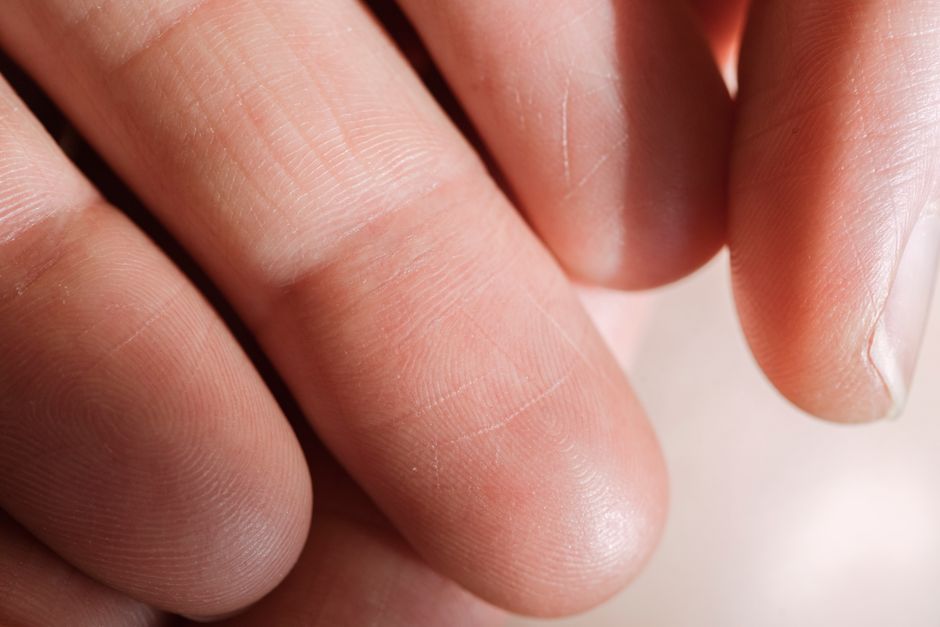
Fingerprints are mostly water, salt, and oils from your skin. When your finger touches a surface, a tiny amount of that residue transfers and stays behind. The only way to not leave fingerprints is to prevent that transfer in the first place. That means wearing gloves, using tools, or treating the surface so the residue does not stick. No lotion, spray, or special technique can make your fingers completely dry or oil-free for long. The most reliable approach is a physical barrier between your skin and the surface.
Why Do Fingers Leave Prints on Surfaces?
Your skin is not dry, even when it feels dry. Sebaceous glands produce sebum, an oily substance that keeps skin flexible. Sweat glands release water and salts. Every time you touch a smooth object, a microscopic layer of this mixture transfers to the object. This is the fingerprint you see.
The residue is invisible at first on most surfaces. It becomes visible when dust, powder, or light hits it at the right angle. On glass or polished metal, the oils themselves can be seen under direct light. On dark surfaces, the contrast makes the print obvious.
Some people leave stronger prints than others. People with naturally oily skin leave more residue. People with dry skin leave less, but still leave some. Even after washing your hands, your skin produces new oils within minutes. This is why handwashing alone cannot prevent fingerprints.
What Surfaces Show Fingerprints the Most?
Smooth, non-porous surfaces show prints most clearly. Glass, stainless steel, polished marble, and glossy plastics are the worst offenders. These materials do not absorb the oils, so the residue sits on top and stays visible.
Porous surfaces like wood, paper, and fabric absorb the oils quickly. Prints on these surfaces are often invisible to the naked eye. That does not mean they are gone. The residue is still there, but it is absorbed into the material instead of sitting on the surface.
Matte finishes hide prints better than glossy finishes. The textured surface scatters light, making the thin oil layer harder to see. The print is still present. It is just less visible.
How To Not Leave Fingerprints On Any Surface
The only guaranteed method is to prevent skin contact. This sounds obvious, but most people overlook simple tools that already exist.
- Wear gloves — Nitrile, latex, or cotton gloves create a complete barrier. For fine work, thin nitrile gloves allow good dexterity.
- Use tools — Tweezers, tongs, cloths, or suction cups keep your fingers away from the item.
- Hold by edges — When moving an object, grip only the edges or underside. This minimizes the contact area.
- Use a barrier cloth — A microfiber cloth between your hand and the surface prevents direct transfer.
For surfaces you need to touch regularly, like a phone screen or a door handle, prevention is not practical. In these cases, the goal shifts from prevention to removal. You will leave prints. The question is how quickly you remove them.





Does Handwashing or Hand Sanitizer Help?
Washing your hands removes existing oils and temporarily reduces residue. The effect lasts only a few minutes. Your glands continue producing sebum, so the protection fades quickly. Hand sanitizer dries the skin, which also reduces residue temporarily. But the drying effect is short-lived and can irritate skin with repeated use.
Some people use rubbing alcohol on their fingertips before handling delicate items. This removes surface oils for a short window. It works for a few minutes, but not long enough for extended handling. It also dries and cracks the skin with frequent use, which can actually increase residue as the skin tries to compensate with more oil.
There is no lotion, powder, or spray that makes skin permanently print-free. Products marketed for this purpose may reduce residue temporarily, but none eliminate it completely. If a product claims to stop fingerprints entirely, it is overstating what it can do.
How to Remove Fingerprints After They Happen
Removal is often more practical than prevention. The right cleaner depends on the surface.
For glass and mirrors, a microfiber cloth with a small amount of glass cleaner works well. Spray the cloth, not the glass, to avoid streaks. Wipe in one direction and flip the cloth frequently so you are not redistributing the oils.
For stainless steel, use a cleaner made for that material. Stainless steel cleaners contain mild oils that fill in the fingerprint residue and make the surface look uniform. A dry cloth alone often smears the oils rather than removing them.
For glossy plastics and electronics, a slightly damp microfiber cloth is safest. Avoid harsh solvents that can damage protective coatings on screens. If the surface has an oleophobic coating, which resists oils, use only a dry or barely damp cloth to preserve the coating.
For painted or sealed wood, a gentle all-purpose cleaner works. Avoid excess water, which can damage the finish over time.
Do Anti-Fingerprint Coatings Actually Work?
Some surfaces come with a factory-applied coating that resists fingerprints. These are called oleophobic or hydrophobic coatings. They work by reducing the surface tension, causing oils to bead up instead of spreading out. The result is that prints are less visible and easier to wipe off.
These coatings do not prevent fingerprints. They make them less noticeable and easier to remove. The coating wears off over time with cleaning and regular use. On phones and tablets, the coating typically lasts several months to a year before needing reapplication. After that, prints become more visible again.
Aftermarket anti-fingerprint sprays and wipes exist for glass and metal. Some research suggests they provide temporary protection, but the effect is inconsistent across products and surfaces. No clinical or independent testing has confirmed that any consumer spray provides long-term fingerprint resistance comparable to factory coatings.
Why Do Some People Seem to Leave No Prints?
Some people genuinely leave weaker prints. This is usually due to naturally dry skin, not any special technique. People with conditions that reduce sweating, or those taking certain medications that dry the skin, leave less residue. Older adults often leave fewer prints because sebum production decreases with age.
This is not a skill. It is a biological difference. If you have average or oily skin, you cannot train your skin to stop producing oils. You can only manage the residue through barriers or cleaning.
There is also a common myth that rubbing your fingers through your hair removes oils. This does the opposite. Hair contains its own oils, and running fingers through it adds more residue, not less.
What About Fingerprints on Paper and Fabric?
On paper, fingerprints are usually invisible unless the paper is treated with a reagent. That is why forensic examiners use powders and chemicals to reveal prints on paper. The oils are absorbed into the fibers, but they remain detectable.
On fabric, prints are even harder to see. The texture breaks up the residue pattern. However, certain fabrics, especially smooth synthetics, can show prints under strong light. The same prevention rules apply: gloves or tools are the only reliable method.
Frequently Asked Questions
Can you completely avoid leaving fingerprints?
No, not with bare hands. Your skin constantly produces oils and sweat, so any skin contact leaves some residue. Gloves or tools are the only complete prevention.
Does washing your hands stop fingerprints?
Washing removes existing oils for a few minutes, but your skin produces new oils quickly. The effect wears off before you finish handling most objects.
Do anti-fingerprint sprays really work?
Some sprays reduce how visible prints are and make them easier to wipe off, but none completely prevent fingerprints. The effect is temporary and varies by product and surface.
What is the best way to remove fingerprints from glass?
Use a microfiber cloth with a small amount of glass cleaner sprayed on the cloth, not the glass. Wipe in one direction and flip the cloth often to avoid smearing.
