
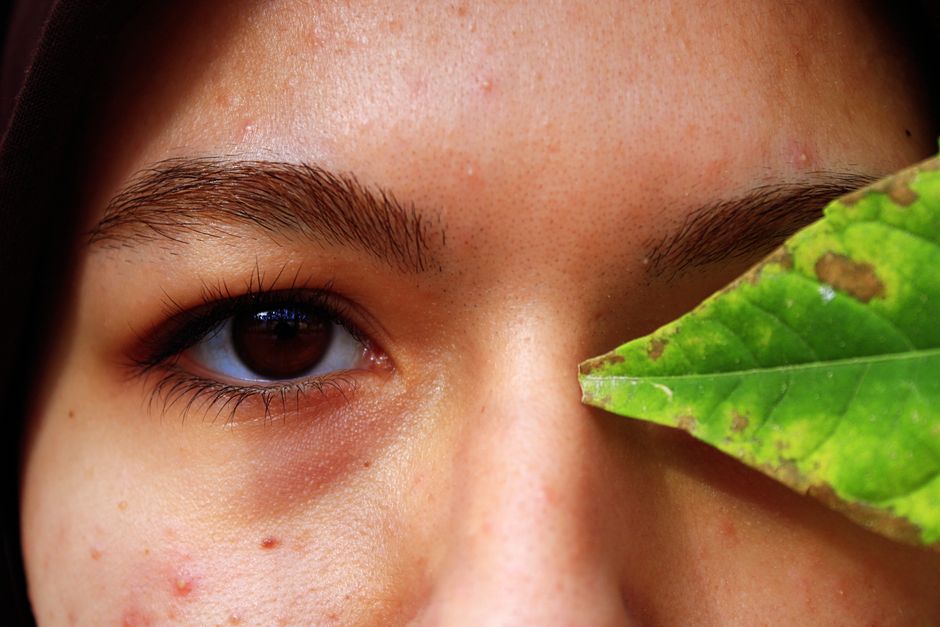
There is no home remedy that cures acne, but a small number of well-studied habits can genuinely reduce breakouts. Gentle cleansing, avoiding pore-clogging products, and using proven topical ingredients like benzoyl peroxide or salicylic acid form the backbone of at-home acne care. “Natural” approaches can help with irritation and oil, but most lack strong evidence for clearing acne itself.
What Actually Causes Acne?
Acne starts in the pilosebaceous unit — the hair follicle and its attached oil gland. Four things drive a breakout: excess oil production, dead skin cells that stick together and block the pore, the skin bacterium Cutibacterium acnes, and inflammation. All four usually have to be present for a pimple to form.
Hormones matter a great deal. Androgens increase oil production, which is why acne often flares during puberty, before menstrual periods, and in some people with hormonal conditions. This is also why acne is not a cleanliness problem. Washing harder does not fix it and can make it worse.
Diet plays a smaller and more debated role. Some research suggests high-glycemic diets and dairy may influence acne in some people, but the evidence is not strong enough to say either causes acne. Genetics matter too. If a parent had significant acne, you are more likely to have it.
How To Naturally Get Rid Of Acne Home Remedies That Have Real Evidence
A few at-home approaches have meaningful research behind them. Others are popular but unproven. Here is the honest split.
Benzoyl peroxide
This is not a plant extract, but it is available without a prescription and is one of the best-studied acne treatments that exists. It kills C. acnes and reduces inflammation. Research consistently shows it works for mild to moderate acne. Start with a lower concentration to reduce dryness and irritation. It can bleach towels and clothing, so use white bedding.
Salicylic acid
Salicylic acid helps unclog pores by encouraging dead skin cells to shed. It is widely used and reasonably well supported for mild acne, especially blackheads and whiteheads. It is gentler than benzoyl peroxide for many people but generally less effective against inflamed, deeper pimples.
Tea tree oil
Some studies suggest tea tree oil has modest antibacterial activity against acne bacteria. A small number of trials indicate it may reduce pimple counts, though the evidence is far weaker than for benzoyl peroxide. It must always be diluted — undiluted tea tree oil can cause significant skin irritation and allergic reactions.
What the evidence does not support
Many viral remedies have no reliable clinical evidence behind them. No study has confirmed that lemon juice, toothpaste, apple cider vinegar, or baking soda clear acne. Several of these can damage the skin barrier or cause chemical burns. Lemon juice and vinegar are acidic enough to irritate skin, and toothpaste dries and irritates without treating the underlying cause.
Which Everyday Habits Make Acne Better or Worse?
Daily habits influence acne more than most people realize, and the effects are well established.
- Wash gently twice a day. Use a mild, non-abrasive cleanser and lukewarm water. Scrubbing and hot water irritate skin and can worsen inflammation.
- Do not pick or pop. Picking pushes bacteria and debris deeper and increases the risk of scarring and dark spots that can last months.
- Check your products. Look for labels that say “non-comedogenic,” meaning the product is formulated not to clog pores. Heavy creams, some sunscreens, and certain cosmetics can contribute to breakouts.
- Wash pillowcases and phone screens. Oil, sweat, and bacteria build up on surfaces that touch your face. Regular cleaning is sensible even though it is not a cure.
- Manage stress where you can. Stress does not cause acne, but it can worsen it. The mechanism is thought to involve stress hormones increasing oil production.
- Do not over-wash or over-treat. More product is not better. Overuse of acne treatments damages the skin barrier and causes irritation that looks like more acne.
One non-obvious point: a “purge” after starting a new acne product is real for some ingredients, but it is often confused with irritation. If a product causes burning, stinging, or spreading redness, that is irritation, not purging, and it is a reason to stop.



Does Diet Really Affect Acne?
The evidence is mixed, and it is important to be honest about that. Some studies suggest high-glycemic diets — lots of refined carbohydrates and sugary foods — may worsen acne in some people. A smaller body of research points to dairy, particularly skim milk, as a possible contributor.
These findings are associations, not proof of cause. The studies are often small and the results vary. No clinical guideline currently recommends a specific diet as an acne treatment.
A reasonable approach is to eat a balanced diet rich in vegetables, fruit, whole grains, and protein. If you notice your skin flares with a specific food, tracking it for a few weeks is reasonable. Cutting out entire food groups without a clear reason is not necessary and can affect nutrition.
When Should You See a Doctor for Acne?
Home care works for many mild cases, but some acne needs medical treatment. See a doctor or dermatologist if you have deep, painful nodules or cysts, if acne is leaving scars, or if it is not improving after several weeks of consistent over-the-counter treatment.
Acne that causes significant distress also deserves medical attention. Acne is linked to anxiety and low mood, and that is a real reason to seek help, not a minor concern. Prescription options — including topical retinoids, oral antibiotics, and in some cases isotretinoin — are well established and effective for moderate to severe acne.
Do not wait for acne to “clear up on its own” if it is scarring. Scarring is permanent, and early treatment reduces the risk.
How Long Does It Take for Home Remedies to Work?
Acne treatments take time. Most topical treatments need several weeks of consistent use before you see clear improvement, and full results often take a few months. This timeline is well established in clinical practice.
Consistency matters more than intensity. Using a product every day, as directed, works better than using a strong product occasionally. Stopping after a week because nothing changed is the most common reason home treatment appears to fail.
Be patient and keep your routine simple. A gentle cleanser, one proven active ingredient, and a non-comedogenic moisturizer with sun protection is a reasonable foundation for most people with mild acne.
Frequently Asked Questions
Can natural remedies really clear acne?
Most natural remedies have limited or no clinical evidence for clearing acne. Proven options like benzoyl peroxide and salicylic acid have far stronger research support.
Is toothpaste a good spot treatment for pimples?
No. Toothpaste is not an acne treatment and can irritate or burn the skin. No study has confirmed it clears pimples.
Does drinking more water help acne?
There is no clinical evidence that drinking extra water clears acne. Staying hydrated supports general skin health, but it is not a treatment for breakouts.
Should I stop using moisturizer if I have acne?
No. Skipping moisturizer can dry out and irritate skin, which may worsen breakouts. Choose a non-comedogenic moisturizer instead.
