
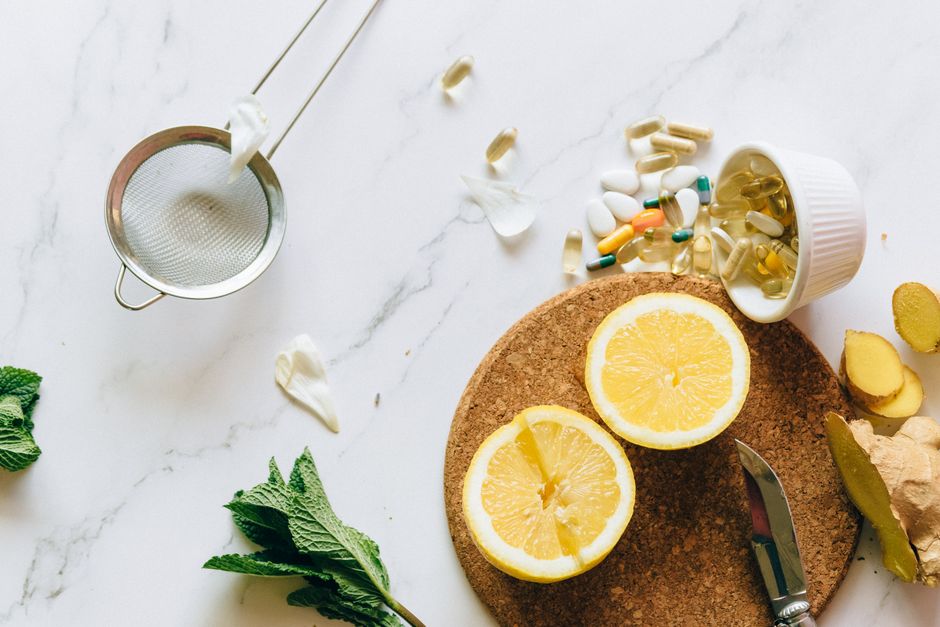
You cannot reliably “boost” estrogen with a specific food or pill, and most products sold for this purpose have no human trials behind them. What food can do is supply the raw materials and cofactors your body uses to make estrogen, and support the enzyme that converts androgens into estrogen. The effect is modest and gradual. Supplements are a different story: a few have real evidence behind them, and many do not. Here is what the research actually shows, and where the marketing runs ahead of the science.
How Does the Body Actually Make Estrogen?
Estrogen is not something you eat. It is something your body builds. Understanding the assembly line explains why food matters and why no single food can override the system.
In premenopausal women, the ovaries are the main factory. They convert cholesterol into androgens, then use an enzyme called aromatase to turn those androgens into estradiol, the most potent form of estrogen. In men and in postmenopausal women, this conversion happens mostly in fat tissue, which is why body fat percentage influences estrogen levels after menopause.
The process needs specific inputs. Cholesterol is the starting material. Aromatase requires iron and several vitamins to function. The liver then processes and clears estrogen, which is why liver health matters. This is a chain, and a weak link anywhere in it limits output.
One clarification that gets lost in supplement marketing: phytoestrogens in food are not estrogen. They are plant compounds that bind weakly to estrogen receptors. They can act like a very mild estrogen in some tissues and block estrogen’s effects in others. Calling them “natural estrogen” is inaccurate.
How To Naturally Boost Estrogen Foods And Supplements?
Food supports estrogen production indirectly. It supplies the building blocks, the minerals and vitamins that enzymes need, and healthy fats that support hormone synthesis. No food delivers estrogen directly in a meaningful dose.
Here is what the evidence supports, organized by mechanism rather than by hype.
Healthy fats
Hormones are built from cholesterol, and cholesterol synthesis depends on dietary fat. Very low-fat diets have been associated with lower sex hormone levels in some studies, though the findings are not uniform. Olive oil, nuts, seeds, avocados, and fatty fish are reasonable sources. This is about supporting normal hormone production, not pushing levels above normal.
Phytoestrogen-rich foods
Flaxseed, soy foods, sesame seeds, and legumes contain lignans and isoflavones. These bind weakly to estrogen receptors. Research on soy isoflavones is extensive and has generally found modest effects on hormonal markers, with wide variation between individuals and between studies. The evidence does not support the idea that eating soy will meaningfully raise blood estrogen in most people. What it does suggest is that these foods are safe and may have modest receptor-level effects.
Foods supplying aromatase cofactors
Aromatase, the enzyme that makes estrogen, needs iron and several B vitamins to work. Iron-rich foods like lentils, spinach, and lean meat, plus a diet adequate in B vitamins, support normal enzyme function. This is not a boost. It is preventing a deficiency that would impair the process.
Zinc and vitamin D
Both are involved in hormone metabolism. Deficiency impairs normal endocrine function. Correcting a deficiency is different from taking extra when you are already sufficient, and there is no good evidence that supplementing beyond sufficiency raises estrogen.
What does not work: no food has been shown in controlled human trials to raise estrogen levels above the normal range in a healthy person. The body regulates hormone levels tightly. Dietary changes nudge the system; they do not override it.
Do Phytoestrogen Foods Really Raise Estrogen?
This is where most confusion lives. Phytoestrogens are not estrogen, and the evidence on their effects is more nuanced than either the “soy is a hormone bomb” camp or the “soy fixes hormones” camp admits.
Isoflavones from soy bind to estrogen receptors, but their binding strength is far weaker than the body’s own estradiol. In some tissues they act weakly like estrogen. In others, particularly breast tissue, they can block stronger estrogens from binding. This tissue-specific behavior is why the same compound can be described as both estrogen-like and anti-estrogen.
Large population studies have not found soy consumption to be associated with increased breast cancer risk, and some research suggests a protective association in women who consume soy regularly from adolescence. The evidence is not strong enough to call soy protective, but it is strong enough to say soy foods are not the hormone disruptor they are often made out to be.
Flaxseed lignans have been studied for similar reasons. Some trials show modest changes in hormone metabolism, mostly related to how estrogen is processed by the liver and gut, not to how much is produced. The effects are small and inconsistent across studies.
The practical takeaway: whole soy foods and flaxseed are reasonable parts of a balanced diet. They are not a treatment for low estrogen, and they will not produce noticeable hormone changes in most people.
Which Supplements Have Real Evidence?
Most supplements marketed for estrogen support have no human trials. A few have some evidence, and it is worth knowing which is which.
Black cohosh has been studied for menopausal symptoms like hot flashes, not for raising estrogen. Results across trials are mixed. Some show modest symptom relief, others show no difference from placebo. It does not appear to act through estrogen receptors, and its mechanism is not well understood. Some regulatory agencies have flagged rare liver concerns, so anyone with liver disease should discuss it with a clinician first.
Red clover isoflavones have been studied for menopausal symptoms with mixed results. Some trials show modest benefit for hot flashes, others do not. It is a phytoestrogen supplement, so it carries the same tissue-specific uncertainty as dietary isoflavones.
DHEA is a precursor hormone, not a plant extract. Some evidence suggests it can raise androgen and indirectly estrogen levels, but it is a hormone product, not a nutrient, and its long-term safety is not well established. It is not a casual supplement.
Vitamin D, zinc, and B vitamins correct deficiencies. They do not raise estrogen in people who are already sufficient. If a blood test shows a deficiency, correcting it supports normal function. Taking extra without a deficiency has not been shown to help.
What to be skeptical of: proprietary blends, “estrogen support” formulas, and products that list dozens of herbs without doses. No clinical trial has confirmed these work, and the combination approach makes it impossible to know what, if anything, is doing something.
What About Hormone Changes Around Menopause?
Menopause is a normal transition, not a deficiency disease. Estrogen declines because the ovaries stop producing it. No food or supplement reverses that.
For bothersome symptoms, the most effective treatment is menopausal hormone therapy, which replaces estrogen directly. It requires a prescription and a conversation with a clinician about risks and benefits, which vary by individual. This is not a natural remedy, and presenting it as one would be misleading.
Diet and lifestyle can support comfort during the transition. Regular physical activity, adequate sleep, and a diet rich in vegetables, whole grains, and adequate protein support general health. Some evidence suggests phytoestrogen-rich foods may modestly help with hot flashes in some women, but the effect is small and inconsistent.
One non-obvious point: estrogen matters for bone and cardiovascular health, not just symptoms. Women approaching menopause should discuss bone density screening and cardiovascular risk with a clinician. These are the long-term issues that matter more than hot flashes, and they deserve attention regardless of what supplements you take.
When Should You Talk to a Doctor?
Low estrogen has real causes that food cannot fix. Ovarian failure, thyroid disorders, excessive exercise, eating disorders, and certain medications can all lower estrogen. So can perimenopause and menopause, which are normal but worth understanding.
Symptoms that warrant a conversation include missed periods, hot flashes, unexplained fatigue, low libido, and changes in bone health. A clinician can check hormone levels and identify whether something treatable is going on.
Do not self-treat suspected low estrogen with supplements. The symptoms overlap with thyroid problems, anemia, and depression, and treating the wrong cause delays real help. Blood tests are straightforward and worth doing before spending money on products that may not address the actual issue.
Frequently Asked Questions
Can certain foods raise estrogen levels?
No food has been shown in controlled human trials to raise estrogen above normal levels in healthy people. Foods supply building blocks and cofactors, but the body regulates hormone levels tightly.
Is soy bad for estrogen?
Whole soy foods are not the hormone disruptor they are often made out to be. Large population studies have not found soy consumption linked to increased breast cancer risk, though isoflavones act weakly and variably at estrogen receptors.
What supplements actually help with low estrogen?
Most supplements marketed for estrogen support have no human trials behind them. Black cohosh and red clover have mixed evidence for menopausal symptoms, not for raising estrogen, and DHEA is a hormone product requiring medical guidance.
Can low estrogen be fixed naturally?
If low estrogen is caused by menopause, it is a normal transition that no food or supplement reverses. If it has another cause, such as thyroid disease or ovarian failure, it needs medical evaluation and treatment.
